Analysis Of The Causes Of High-temperature Deformation in Fuse Cap And Contact And Optimization Solutions
Jun 14, 2026
In the operation and maintenance of power equipment, high-temperature deformation of Fuse Cap and Contact is a common equipment failure and a key hidden danger affecting the stable operation of power distribution systems and new energy vehicle power systems. During long-term operation, deformation and burn-out of the fuse contact and fuse cap are mostly caused by localized overheating due to abnormally increased contact surface resistance, or by the equipment being in a high-temperature environment for extended periods. This not only reduces the protective performance of the fuse but may also lead to safety risks such as line overheating and arcing. Based on practical experience in power equipment operation and maintenance, we can comprehensively analyze the causes of failures and develop targeted equipment optimization and maintenance improvement solutions, providing technical references for the stable operation of various high and low voltage fuses, EV vehicle fuses, and semiconductor fuses.

Oxidative heat
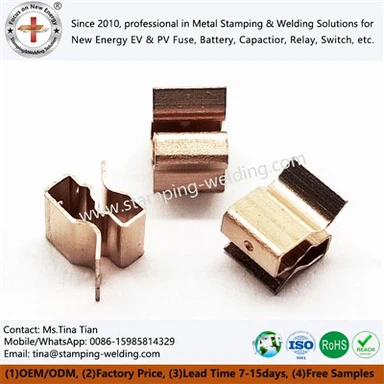
From the perspective of the core causes of failure, poor contact and surface oxidation are the main reasons for deformation of the end cap and contact. The contact caps of various fuses are exposed to the air for extended periods, making their surfaces highly susceptible to oxidation and sulfidation reactions, forming an oxide insulating layer with extremely poor conductivity. Simultaneously, the mechanical stress generated during long-term operation can cause insufficient contact fit between the moving and stationary contacts, resulting in slight structural deformation, directly reducing the effective contact area and significantly increasing contact resistance. According to Joule's law, increased resistance will cause a rapid rise in localized heat generation at the contact location, ultimately leading to high-temperature softening and permanent deformation of the metal end cap and contact. This failure phenomenon is particularly frequent in high-voltage, low-current automotive fuses such as Copper Cap Contact for High Voltage Low Current EV Fuse.
Structural and operational hazards
The degradation of the contact clamping structure is also a significant cause of failure. Fuses rely on clamping springs to provide stable pressure to the contacts. However, long-term hot and cold cycling and mechanical fatigue can lead to spring elasticity degradation and annealing failure, resulting in insufficient contact clamping force and loose contact surfaces. This makes the fuse highly susceptible to arcing and continuous overheating during operation, gradually exacerbating high-temperature deformation and aging damage to the outer cap and terminal. Furthermore, abnormal circuit operating conditions can accelerate failure. Conditions such as prolonged operation near rated current, severe three-phase load imbalance, and excessive harmonics can cause the contacts to carry excessive current for extended periods, continuously generating high temperatures that exceed the equipment's heat dissipation capacity. External wiring defects can also cause overheating and deformation. Due to equipment vibration and the thermal expansion and contraction of materials, fuse terminals are prone to bolt loosening. Increased contact gaps can lead to arcing when large currents pass through, continuously burning the contacts and terminal cap structure at high temperatures.

Routine operation and maintenance management
To address the aforementioned causes of the failures, the power operation and maintenance sector can effectively resolve the issue of high-temperature deformation of fuse end cap contacts through multiple measures, including routine operation and maintenance management, component inspection and replacement, equipment structure optimization, and standardized operating procedures. This ensures the stable operation of various equipment such as EV fuse contacts with bolt mounts and semiconductor fuse contact assemblies. At the level of routine operation and maintenance inspections, a regular power outage maintenance mechanism should be established to thoroughly clean accumulated dust and dirt from the surfaces of end caps and contact welding components, eliminating potential hazards at the contact interfaces. During peak electricity load periods, infrared thermography equipment should be used to monitor the temperature of contacts and wiring locations, accurately identifying abnormal temperature points, strictly controlling equipment operating temperature standards, and promptly shutting down and addressing any abnormal hazards.

Standardized operation and maintenance
Furthermore, standardizing equipment operation procedures is also crucial for reducing the probability of malfunctions. When operating equipment such as drop-out fuses, it is essential to ensure that the opening and closing actions are decisive and complete, avoiding interruptions that could cause arcing and burn the contacts or damage the terminal cap structure. This maximizes the protection of the integrity and stability of the Fuse Cap and Contact. Through comprehensive maintenance, upgrades, and standardized operations, the problem of high-temperature deformation of fuse terminal cap contacts can be effectively solved, thus solidifying the foundation for the safe operation of power systems and new energy vehicle-mounted power equipment.
Contact Us
If you face various maintenance challenges such as high-temperature deformation of Fuse Cap and Contact, or potential equipment overheating, and require customized component upgrade solutions and professional technical guidance, please feel free to contact us for precise solutions.