How To Select Fuse Cap And Contact Based On The Circuit: A Procurement And Selection Guide
Sep 18, 2026
When selecting Fuse Cap and Contact for applications such as new energy vehicles, energy storage systems, photovoltaics, and industrial electrical equipment, one cannot rely solely on the fuse's outer diameter. Instead, a comprehensive evaluation is required, taking into account circuit current and voltage, fuse structure, contact dimensions, materials, surface treatments, and connection methods. For procurement personnel, the optimal selection process involves first confirming the circuit and fuse specifications, then matching the end cap and contact configurations, and finally verifying specific dimensions against drawings or samples to minimize assembly and operational issues after procurement.

First, verify the basic parameters of the circuit and the fuse.
When selecting end cap contacts, the fuse's rated current and rated voltage are the primary parameters to verify. The rated current relates to the contact's current-carrying requirements, while the rated voltage must match the actual application environment. Additionally, it is important to identify the fuse type-such as EV, battery pack, PV, or industrial-as different applications may entail distinct structural designs and mounting methods. Providing these basic parameters to the supplier during the procurement stage helps narrow down the product specifications.
Match end caps and contacts based on the fuse structure
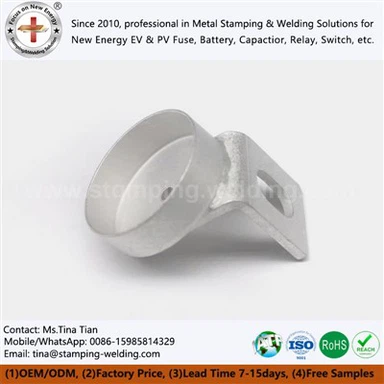
Once the basic specifications are established, it is necessary to further verify the fuse body diameter, end cap dimensions, contact shape, mounting dimensions, and connection points. Cylindrical fuses typically require compatibility with circular structures (such as copper contacts designed for round-type fuses), whereas blade-style fuses necessitate consideration of specific terminal connection forms (such as copper caps and fuse blades). For products with space constraints or unique mounting configurations, parameters such as contact width, thickness, and fixation method must also be confirmed to ensure precise mating with the fuse holder or other conductive components.
For cylindrical fuses, the dimensional relationship between the end cap and the fuse element requires careful verification; for instance, the overall dimensions of the round copper end caps and fuse link contacts must align with the fuse link itself. If the product utilizes a bolted mounting design, the mounting hole locations, contact surfaces, and fastening method for the bolted-tag fuse contacts should be verified to prevent dimensional mismatches during subsequent assembly.
Need a Fuse Cap and Contact matched to your fuse dimensions and mounting structure?
Request Fuse Contact Specification & Quote

Materials, coatings, and connection methods need to be confirmed concurrently
Material selection is typically based on considerations of electrical conductivity, forming requirements, and cost. Copper is frequently used for contacts requiring high conductivity, while brass is suitable for structural components that demand a balance between formability and mechanical strength; for instance, copper caps and fuse contacts are utilized in various electrical connection configurations. Regarding surface treatment, options such as tin, silver, or nickel plating are selected based on the operating environment and contact requirements; tin-plated copper end caps, in particular, are commonly used in applications requiring surface protection and stable electrical connections.
Joining methods must also be determined prior to procurement. Depending on the materials and structural design, techniques such as resistance welding, brazing, soldering, or riveting may be employed. For example, resistance welding is suitable for the mass joining of certain metal components, while tin brazing and soldering are appropriate for various end-cap and contact assemblies. For components requiring delivery as a complete unit, the dimensions and connection specifications of the welded outer end cap and terminal assembly set must also be verified.
Standard parts or custom parts?
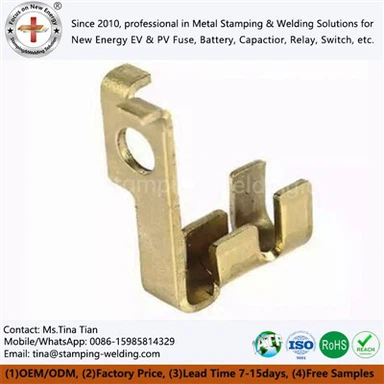
Standard configurations should be prioritized when they meet requirements regarding fuse dimensions, installation space, materials, and surface finishes. Custom solutions should be considered for applications involving unique mounting locations, non-standard dimensions, or specialized terminal designs. For instance, configurations such as copper cap and fuse terminal contacts or copper cap and fuse link contacts must be verified against actual installation requirements; additionally, some products may involve various end-connection types, such as copper cap and fuse end tags or copper cap and fuse terminals.
When sourcing custom products, it is recommended to provide-at a minimum-fuse specifications, 2D engineering drawings, 3D models, or physical samples, while clearly specifying materials, plating, joining processes, and projected order quantities. For projects requiring the delivery of assembled components (such as fuse cap contact assemblies), the overall dimensions and assembly fit must be verified, rather than simply checking individual parts.

Pre-purchase Checklist
| Item to Confirm | Parameters requiring confirmation prior to procurement |
| Fuse Type | EV fuse, battery fuse, PV fuse, industrial fuse, etc. |
| Current & Voltage | Rated current, rated voltage, and actual operating range |
| Fuse Dimensions | Fuse diameter, length, and end-cap mating dimensions |
| Contact Structure | Contact shape, width, thickness, and contact area |
| Mounting Dimensions | Mounting holes, fixing slots, interface locations, and overall dimensions |
| Materials | Copper, brass, etc. |
| Surface Finish | Tin plating, silver plating, nickel plating, etc. |
| Connection Method | Resistance welding, brazing, soldering, riveting, etc. |
| Drawings or Samples | Provision of 2D engineering drawings, 3D models, or physical samples |
| Non-standard Structures | Confirmation of interface dimensions between the copper cap/fuse terminal and the fuse holder or other conductive components |
Verifying the parameters above helps minimize specification discrepancies prior to quotation, prototyping, and bulk procurement, while also improving the compatibility of the Fuse Cap and Contact with the overall assembly structure.
Contact Us
If you are finalizing procurement specifications for fuse end caps, contacts, or assembled components, please provide product drawings, samples, or basic fuse parameters; we can assist in determining the appropriate structural design based on dimensions, materials, plating, and connection methods.