Analysis On The Impact Of Lithium Iron Phosphate Battery Life
Jan 02, 2025
Development status of lithium iron phosphate batteries
Lithium iron phosphate batteries have high energy density, good safety and stable charge and discharge performance. Its energy density is basically close to the theoretical limit, and the electrical energy stored per unit volume is quite high, providing a reliable power source for new energy vehicles. At the same time, compared with other types of batteries, lithium iron phosphate batteries have significant cost advantages and lower manufacturing costs, which helps reduce vehicle production costs and improve market competitiveness. In terms of safety, lithium iron phosphate batteries have almost no combustion accidents, which makes new energy vehicles safer and more reliable during use.
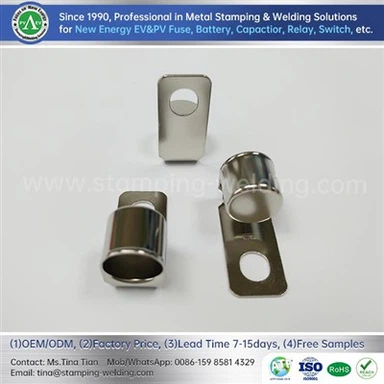
Our company is dedicated to the production of new energy hardware materials. Among them, the lithium battery aluminum shell we produce is specifically designed for lithium iron phosphate batteries. These aluminum shells are made of high-quality aluminum alloy, which not only has excellent strength and corrosion resistance but also can effectively protect the internal battery components. The precise manufacturing process ensures a perfect fit and good heat dissipation performance, which is conducive to the stable operation of lithium iron phosphate batteries.
As the global demand for new energy continues to grow, the service life of batteries has become a focus of attention. The service life of lithium iron phosphate batteries directly affects its application effect and economic benefits in the field of new energy. It is of great significance to analyze its life and carry out accelerated experimental research.
On the one hand, through the analysis of the life of lithium iron phosphate batteries, we can gain an in-depth understanding of its performance changes and provide a reference for optimizing battery design and improving battery performance. For example, research has found that the cycle life of a battery is related to the depth of discharge, and the number of cycles under different depths of discharge is significantly different.
On the other hand, accelerated experimental research can obtain relevant data on battery life in a shorter period of time, providing reference for battery R&D and production. For example, by simulating different environmental conditions and charging and discharging parameters, the battery aging process can be accelerated to quickly evaluate the battery life under different conditions. This helps shorten the research and development cycle, improve production efficiency, and promote the continuous progress of lithium iron phosphate battery technology.

Analysis of factors affecting battery life
Charge and discharge system: the "chronic killer" of overcharge and overdischarge
During the charge and discharge process of lithium iron phosphate batteries, the charge and discharge rate and depth have a significant impact on the battery life. The charge and discharge rate refers to the amount of charge and discharge of the battery per unit time. When the rate is too fast, the chemical reaction inside the battery will accelerate and generate a large amount of heat, causing the battery temperature to rise, thereby affecting the performance and life of the battery. For example, during fast charging, the current of the battery is large, and a large number of lithium ions are embedded in the negative electrode material in a short period of time, which may cause structural changes in the electrode material and increase the internal resistance of the battery. The depth of discharge refers to the proportion of battery discharge to the total battery capacity. Deep discharge will cause irreversible changes in the active materials inside the battery, reducing the battery's capacity and cycle life.
Temperature: Performance challenges between hot and cold
Temperature has an important impact on the performance of lithium iron phosphate batteries. In a high-temperature environment, the chemical reaction rate inside the battery accelerates, and the volatilization and decomposition of the electrolyte intensify, causing the internal resistance of the battery to increase and the capacity to decrease. At the same time, high temperatures will also cause the battery's electrode materials to age and reduce the battery's cycle life. For example, when the temperature is high in summer, the performance of the battery may be degraded due to excessive temperature when used outdoors or during charging.
On the contrary, a low-temperature environment will reduce the ion conduction rate of the battery and slow down the electrode reaction kinetics, resulting in reduced charge and discharge performance of the battery. At low temperatures, the internal resistance of the battery will increase, and the output power of the battery will also be affected. For example, during low temperatures in winter, the battery life of electric vehicles may be shortened in low temperature environments.
Battery materials: quality basically determines lifespan
The performance of the cathode material directly affects the charge and discharge efficiency and capacity of the battery. For example, lithium iron phosphate cathode material has high energy density and good stability, but it is prone to structural changes in high temperature environments, affecting battery performance. The performance of the negative electrode material also has an important impact on the charge and discharge performance and life of the battery. For example, graphite anode materials have good reversibility during the charge and discharge process, but they are prone to lithium ion precipitation in low temperature environments, affecting battery performance.
In order to improve the performance and life of battery materials, material improvement directions mainly include optimizing material structure, improving material purity, and enhancing material stability. For example, by improving the structure of the cathode material, its stability in high-temperature environments is improved; by optimizing the surface treatment of the anode material, its performance in low-temperature environments is improved. At the same time, new separator and electrolyte materials can also be developed to improve battery performance and life.