Analysis Of Mainstream Welding Methods For Capacitor Stainless Steel Can
May 09, 2026
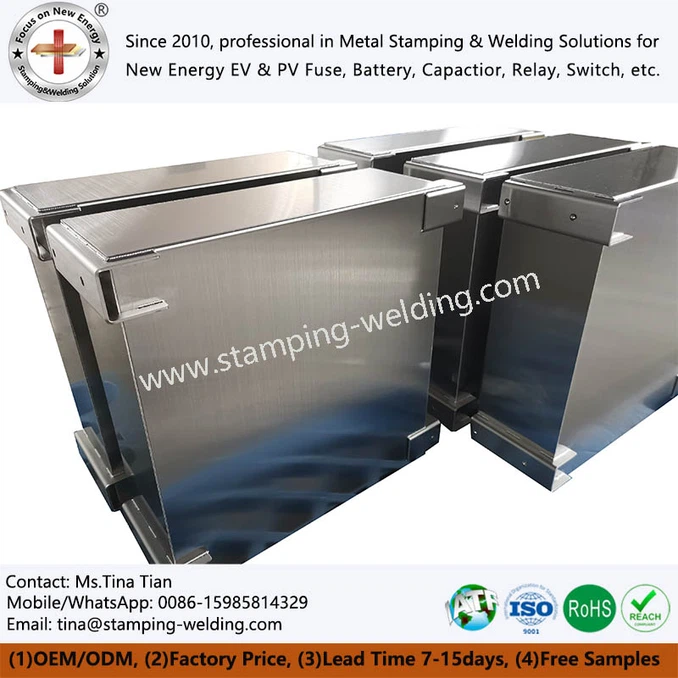
In the field of capacitor manufacturing, the quality of the casing welding directly determines the product's sealing performance, stability, and service life. Among them, the selection of welding methods for Capacitor Stainless Steel Can welded parts has become a key focus of the industry because they need to meet the core requirements of high sealing performance, low thermal deformation, and aesthetically pleasing welds. Different welding technologies are adapted to different production scenarios, providing diverse solutions for capacitor manufacturing.
Preferred Technology: Laser Welding for High-Precision Production
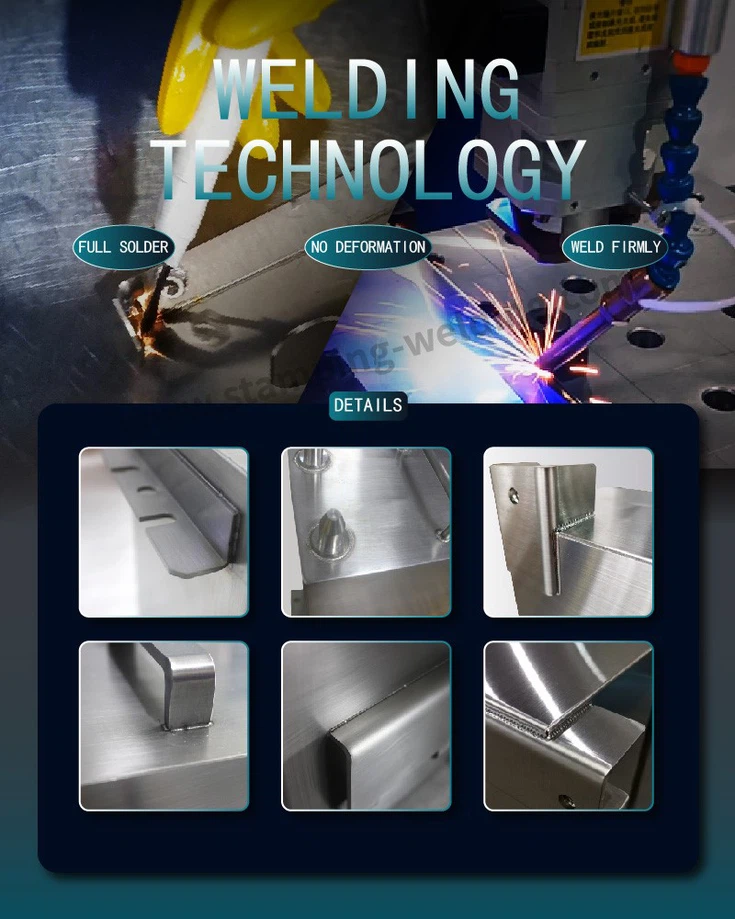
As a core component of capacitors, the thin walls, high precision, and high sealing performance of stainless steel cans place stringent demands on welding technology. The industry has developed various mature welding methods to meet different production needs, with laser welding currently being the preferred technology. Laser welding is suitable for high-speed automated production of thin stainless steel sheets (typically <1mm), especially for sealing capacitor casings. With its high precision and high energy density, it can control the heat-affected zone to a very small extent, significantly reducing deformation. It is also easily integrated into computer-controlled (CNC) automated production lines, producing high-quality, fine welds that fully meet the sealing requirements of capacitors, making it suitable for the production needs of high-end products such as stainless steel cans for high-voltage film capacitors.

Standard Choice: TIG Welding Suitable for Multiple Scenarios
Besides laser welding, tungsten inert gas welding (TIG/GTAW) is currently the most commonly used traditional welding method for stainless steel capacitor shells. It combines manual and semi-automatic operation and is particularly suitable for structures requiring filler metal or with special shapes. This welding method relies on the excellent protective effect of argon gas to effectively prevent stainless steel from oxidizing at high temperatures, forming a dense weld with stable and reliable quality. It is suitable for welding thin stainless steel sheets ranging from 1-3mm in thickness. However, it requires a high level of operator skill, and heat input must be strictly controlled during the welding process to avoid shell deformation.
High sealing performance preferred: Plasma arc welding improves reliability
For scenarios requiring extremely high sealing performance, plasma arc welding is the preferred solution. This technology is similar in principle to tungsten inert gas (TIG) welding, but boasts a more stable arc and higher energy density. Compared to TIG welding, it produces narrower welds, less deformation, and stronger penetration, perfectly suited for welding capacitor stainless steel cases with stringent sealing requirements, further enhancing the reliability of capacitors.
Mass production: Resistance welding balances efficiency and cost
For large-scale automated production scenarios, resistance welding plays a vital role due to its high efficiency and convenience. It is mainly divided into two types: seam welding and spot welding, suitable for longitudinal and circumferential seam welding of cylindrical or square capacitor casings. This welding method boasts extremely high production efficiency, requiring no welding wire or shielding gas, effectively reducing production costs and adapting to the needs of large-scale production. It provides efficient support for the mass production of products such as Stainless Steel Can for Storage Capacitors.
Irregular shape adaptation: Brazing fills a technological gap
In addition, brazing (including vacuum brazing) is suitable for irregularly shaped capacitor components with complex sealing structures. Its welds are strong and have good sealing performance. It can also achieve sealing of different materials, filling the technical gap in welding irregularly shaped shells and further enriching the selection range of welding stainless steel shells for capacitors.

Selection Summary: Choosing the Right Welding Method to Meet Requirements
Industry experts summarize that the choice of welding method for stainless steel capacitor casings should be based on production precision, batch size requirements, and product characteristics: laser welding is preferred for high-precision, automated production; tungsten inert gas (TIG) welding can be used for conventional production and products with varying thicknesses; and resistance welding is suitable for large-scale, rapid production. Meanwhile, to prevent deformation and embrittlement of thin-walled stainless steel, DC reverse polarity (DCEN) is typically used during welding, and a low-current, high-speed welding operation is recommended. As the capacitor industry develops towards high-end and large-scale production, welding technology will continue to be optimized, providing more efficient and reliable support for the manufacturing of Capacitor Stainless Steel Can.
Contact Us
If you need precise matching of the welding method for the Capacitor Stainless Steel Can or to obtain a customized solution, please feel free to contact us for consultation and coordination, and we will provide professional support for your production needs.