Laminated Inverter Busbars Selection Guide: Efficient Conductivity Solution For High-Power Inverter Systems
Mar 08, 2026
In the field of high-power power conversion and inverter equipment, Laminated Inverter Busbars are precision engineering conductors specifically designed for high-voltage and high-frequency operating conditions, and are the core choice for conductive connections in current high-power inverter systems. Unlike traditional single-layer busbars and ordinary cables, this product uses a process of alternating stacking and integral pressing of multiple layers of conductive substrate and insulating dielectric layers. It is primarily responsible for the high-power power transmission between the inverter's DC link and power devices such as IGBTs and MOSFETs. Its unique structure significantly reduces stray inductance and optimizes thermal management performance, making it a preferred conductive component in new energy, industrial frequency conversion, and other fields. It is also the core product category in the Laminated Bus Bar series suitable for inverter applications.
Structure and Principles: The Core Logic of Laminate Design
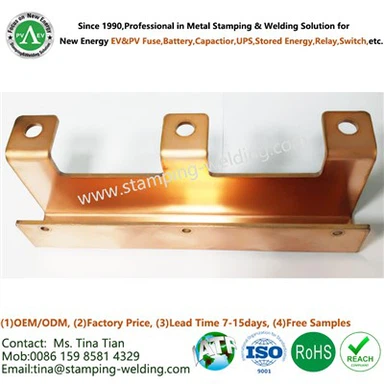
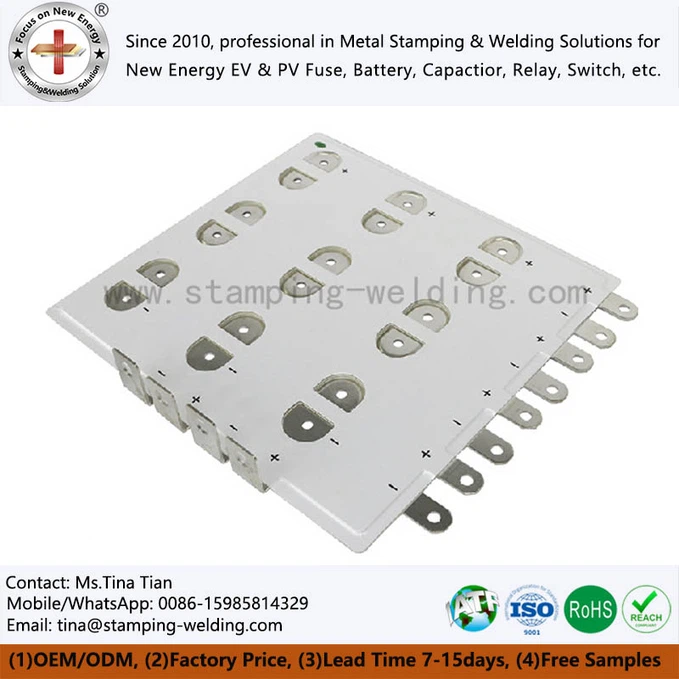
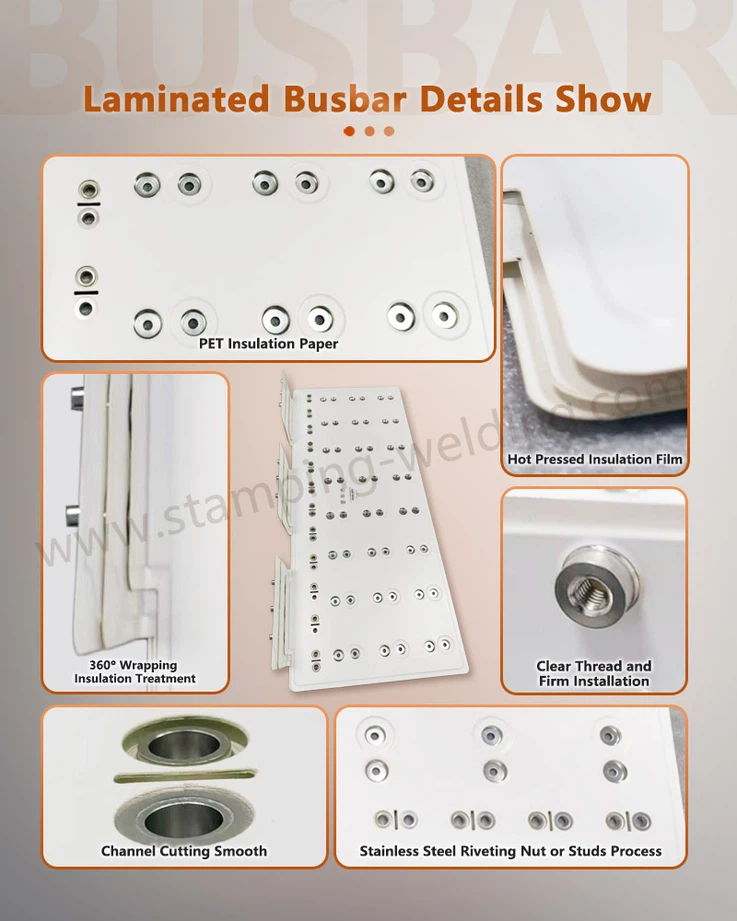
Laminated inverter busbars achieve performance breakthroughs through a multi-layered composite structure. The conductive layers are primarily made of copper, corresponding to the Laminated Copper Bar category. Aluminum materials are also suitable for some applications. The intermediate layers are precisely separated by ultra-thin insulating layers such as polyimide and epoxy resin, forming a highly integrated and compact conductive component. The core highlight of the Laminated Busbar Design lies in the closely parallel arrangement of the positive and negative conductors. Utilizing the electromagnetic coupling effect of mutually canceling reverse current magnetic fields, it fundamentally reduces system parasitic inductance, meeting the stable operation requirements of high-frequency switching conditions. For different operating conditions, there are also sub-structures such as high-temperature resistant Laminated Bus Bars for High-Temperature Applications and Two-Layer Laminated Bus Bars, matching the installation and performance requirements of different scenarios. Simultaneously, Laminated Bar Connectors are provided for stable connection, completing the overall conductive circuit.

Key advantages of this selection: Compared to traditional solutions
For high-power systems such as electric vehicles, photovoltaic inverters, and industrial frequency converters, the performance advantages of laminated busbars directly determine the system selection priority and are the core value of Laminated Bar Power Solutions. Firstly, ultra-low parasitic inductance significantly suppresses high-frequency switching voltage spikes, providing comprehensive protection for power modules and meeting the high-frequency operating requirements of Laminated Bus Bar for High Frequency Inverters. Secondly, outstanding thermal management efficiency; the flat structure provides a larger heat dissipation area, resulting in a much lower temperature rise under high current conditions compared to traditional busbars, leading to stronger long-term operational stability. Thirdly, extremely high space utilization; the compact stacking design significantly reduces volume, perfectly adapting to space-constrained scenarios such as automotive and integrated inverter equipment. Fourthly, outstanding reliability and anti-interference capabilities; reduced wiring and connection points, built-in electromagnetic shielding, optimized system EMC performance, and reduced failure risk.
Selection Summary and Practical Suggestions
Laminated inverter busbars, as high-performance conductive connection components, have become key parts for upgrading high-power inverter systems. Selection requires consideration of core indicators such as system current, voltage, installation space, temperature resistance requirements, and high-frequency characteristics, matching the appropriate number of layers, materials, insulation specifications, and interface types. Whether for on-board inverters in new energy transportation, energy conversion in wind, solar, and energy storage systems, or industrial frequency converters and power supporting equipment, the Laminated Bus Bar series provides stable and efficient power transmission solutions, balancing performance, space, and reliability-three core selection criteria-to help the entire power system achieve efficient, stable, and long-life operation. It is also the preferred component for the current lightweight, integrated, and high-performance upgrades of power equipment.
Contact us
If you require specific recommendations for Laminated Inverter Busbars selection, customized solution design, or detailed product parameter explanations, please feel free to contact us for professional technical support and one-stop procurement services.