New Energy Accelerates The Reshaping Of The Auto Market
Dec 23, 2024
As 2024 draws to a close, China's auto industry has once again delivered a gratifying answer sheet. The China Association of Automobile Manufacturers (hereinafter referred to as CAAM) recently predicted that this year's auto production and sales are expected to exceed 30 million again.

The Passenger Car Market Information Joint Branch of the China Automobile Dealers Association (hereinafter referred to as the Passenger Car Association Branch) predicts that this year's passenger car retail growth rate will reach 5.8% to 6%, exceeding last year's growth rate. Among them, new energy passenger car sales are expected to reach 11 million, and the retail penetration rate has exceeded 50% for five consecutive months since July this year. Against this background, traditional auto companies are changing their "kings", new power brands are starting another round of elimination and integration, price wars are becoming normalized, and technological competition is intensifying, and the domestic auto market is accelerating the reshaping of the pattern.
New energy upstarts become the "big brother" in sales
The penetration rate of new energy exceeds half, the "big brother" in sales changes, and the new power has gone through 10 years... In 2024, there are many memorable nodes in the Chinese auto market.
According to data from the China Passenger Car Association, in July, the penetration rate of new energy passenger vehicles in the retail market finally broke through the 50% mark, and remained above 50% for the next five months. New energy vehicles have risen strongly, and a group of "kings" who dominated the market in the era of fuel vehicles have begun to fall from the throne. SAIC Group, which has been the top domestic automobile sales for 18 consecutive years, was surpassed by new energy upstart BYD in the first three quarters. Entering the fourth quarter, BYD's sales hit a new high, with monthly sales exceeding 500,000 vehicles for two consecutive months, breaking the record of domestic auto companies and being crowned the domestic auto sales champion for the whole year. Not only SAIC has encountered setbacks, but overseas brands such as BBA (BMW, Mercedes-Benz, and Audi), which once dominated the luxury car market for many years, have also shown a decline due to slow transformation. In the first three quarters of this year, the three major brands collectively "stalled" and all experienced negative sales growth in China.
Traditional auto companies have re-arranged their seats, and the battlefield for new forces is even more fierce. In 2024, the first generation of domestic new car-making forces represented by Xiaopeng, Weilai, and Nezha (Hezhong) will celebrate their 10th anniversary. At the same time, "new new forces" such as Xiaomi and Hongmeng Zhixing are still pouring into the market. Judging from the annual sales of new forces, Ideal Auto is likely to win the championship again, and Hongmeng Zhixing, led by Huawei, may be in second place. Leapmotor, Weilai, Xiaopeng, Xiaomi, Zeekr, Deep Blue, etc. maintain a good momentum, while new brands such as Nezha, Feifan, and Polestar are sliding to the edge of the market. In the increasingly fierce market competition, from the withdrawal of Gaohe Auto in the first half of the year to the "flash crash" of Jiyue Auto at the end of the year, another round of elimination of new forces and new brands has begun.

Intelligent competition intensifies
Since last year, price wars have become a keyword in the auto market. Entering this year, price wars are still showing a normal trend. However, compared with the irrational price wars in some regions relying on subsidies in 2023, this year's price wars rely more on the decline in overall supply chain costs, gradually becoming rational, and stabilizing at the end of the year.
At the beginning of 2024, BYD launched two new plug-in hybrid models, with the starting price significantly lowered to more than 70,000 yuan. Unlike the past bidding between new energy vehicle companies, this time BYD aimed at fuel vehicles and shouted the slogan "Oil is more expensive than electricity", further squeezing out the fuel vehicle market. Since then, more car companies have joined the price war, and the once high-end luxury car companies such as BBA have also jumped back and forth in the price war. Reducing the production cost of car-related accessories such as New Energy Fuse is also a part of gaining an advantage in the price war.
In addition to the price war, intelligence has become the focus of competition in the second half of new energy, attracting car companies to increase their layout. In particular, after Tesla launched the "end-to-end" technology route for intelligent driving, many companies such as Xiaopeng, Ideal, Weilai, Huawei, and BYD have also accelerated the technology research and development in this new field this year. At the same time, following car companies such as Seres, BAIC, and Chery, traditional car companies such as GAC and SAIC have also reported news of cooperation with Huawei to accelerate the intelligent transformation. Tesla's FSD (fully autonomous driving system) may enter China next year. The industry predicts that next year, automakers will compete fiercely in the intelligent driving sector.

Next year, the total sales of new energy vehicles may surpass
Looking at the automobile market this year, the overall trend is "low at the beginning and high at the end". Especially from the third to the fourth quarter, the policies such as old-for-new and replacement subsidies have a significant boosting effect. Lang Xuehong, deputy secretary-general of the China Automobile Dealers Association, said that the auto market has gone out of the trend of "Silver September, Gold October, Platinum November", and it is expected that there will be a prominent tail-end market in December.
Under this wave of sales boom, the China Automobile Association predicts that automobile production and sales will continue to remain above 30 million throughout the year, and calls for the continuation and early introduction of policies to promote automobile consumption next year.
In the second half of this year, the retail penetration rate of new energy passenger vehicles continued to be higher than 50%, but from the perspective of cumulative total sales, the total sales for the whole year may still be lower than that of traditional fuel vehicles. This situation is expected to be reversed next year. Cui Dongshu believes that the year-on-year growth rate of new energy vehicle sales continues to outperform the market, and it is expected that there will be no suspense in 2025 to surpass fuel vehicles, which will be achieved in the second quarter at the latest.
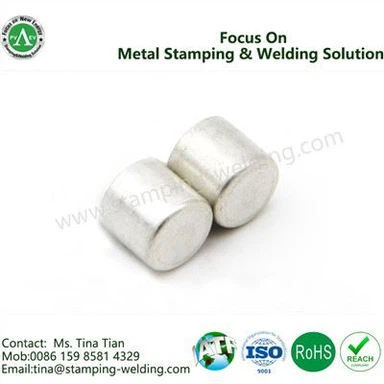
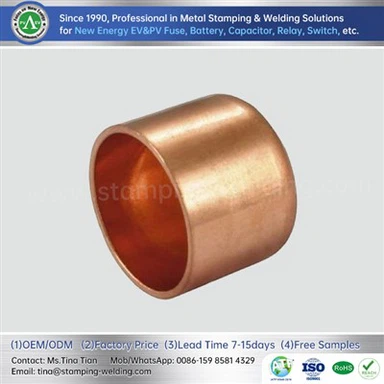
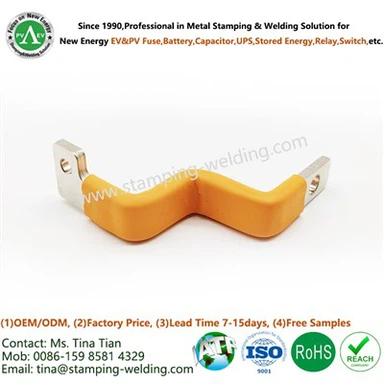
We are a new energy hardware accessories manufacturer located in Xiamen, China. We have our own factory and advanced production equipment. We can provide you with high-quality new energy vehicle fuse accessories such as New Energy Fuse, EV Fuse, etc. At the same time, we also have professional engineers who can provide you with technical consulting services. If you are interested in our products and services, please click the business card below to contact us!