Soft Connection Copper Busbar: The Flexible Conductive Core Of High-current Equipment
Jan 16, 2026
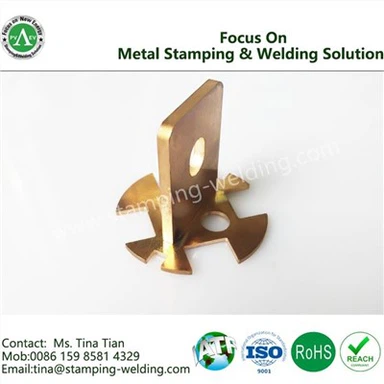
In modern electrical systems with high current and high reliability requirements, Soft Connection Copper Busbar is becoming a key technological solution to overcome the limitations of rigid connections. As a flexible conductive element made of multiple layers of ultra-thin copper foil or high-purity copper wire through molecular diffusion bonding or precision braiding processes, it not only possesses excellent conductivity but also effectively absorbs vibration, compensates for thermal expansion and contraction, and addresses assembly errors during equipment operation, significantly improving system safety and service life.

Product Advantages
The adaptability advantage of flexible copper busbars stems from their diverse types and precise structural design. In terms of product type, copper foil flexible connectors and copper braided flexible connectors are the mainstream in the market. The former uses layers of 0.05-0.3mm thick copper foil, achieving a tight connection through polymer diffusion soldering technology. The contact surface can be tin-plated or silver-plated to improve conductivity. The latter consists of bare copper wire or tin-plated copper braided wire/stretched wire, which can be made into round or flat shapes and possesses excellent fatigue resistance and bending resistance. Furthermore, flexible copper busbars, as a sub-category, precisely adapt to the complex internal structures of equipment such as battery packs due to their arbitrarily bendable characteristics. It is worth noting that, for the insulation requirements of special scenarios such as new energy, the industry has developed specialized products such as PVC Dipping Nickel Plated Copper Bus Bar for EV Battery and Tin Coated Insulated Flat Copper Bus Bar for Battery. Through insulating coatings or plating treatments, these further enhance safety performance, meeting the high safety standards of new energy vehicle battery packs, charging piles, and other scenarios.

Application scenarios
In the power equipment sector: the electrical connections of core equipment such as high and low voltage switchgear, circuit breakers, transformers, and busbars all rely on flexible conductive supports to ensure the stability and safety of power transmission.
In the new energy sector: battery packs and charging piles for new energy vehicles are core application scenarios. Specialized products such as Battery Bus Bars and Insulated Bus Bars, with their advantages in insulation and flexibility, have become key to ensuring the safety of energy transmission, meeting the high safety standards of new energy scenarios.
In heavy industry and special fields: high-current electrolytic cells in industries such as metallurgy, electrolysis (aluminum, zinc), and chemicals (electroplating) rely on their high current-carrying capacity to achieve stable operation. In addition, scenarios such as rail transportation, aerospace, and computer room grounding also have continuous demands for their flexible conductivity and safety performance.

Production process
High-quality flexible copper busbars rely on stringent production control, with the core process consisting of three stages: First, carefully selecting high-conductivity oxygen-free copper as raw material to solidify the performance foundation; second, differentiated processing, with copper foil flexible connections being cut, stacked, and molecular diffusion welded into shape, and copper braided flexible connections being made through braiding and crimping welding, and tin plating, PVC dipping, and other treatments as needed; and third, full inspection of finished products to ensure that conductivity, insulation, flexibility, and other indicators meet the standards.

summary
Soft Connection Copper Busbar, with their high conductivity, flexibility, and vibration resistance, effectively compensate for displacement and thermal expansion and contraction, and are widely used in new energy vehicles, power equipment, and industrial electrolysis systems. Combining insulation coating and customized design, they balance safety, reliability, and installation efficiency, making them a key solution for modern high-current connections.
Contact Us