Technical Analysis Of The Structural Features Of Copper Braided Flexible Busbar
Jun 14, 2026
In medium and low voltage electrical systems, equipment connections, and seismic conductive applications, the Copper Braided Flexible Busbar, with its excellent flexible conductive properties, has become an indispensable flexible conductive transition component in the field of electrical engineering. It is widely adaptable to conditions such as equipment vibration absorption, dynamic displacement compensation, and flexible conductive connections, effectively making up for the shortcomings of traditional rigid busbars in dynamic working scenarios.
Core structural design
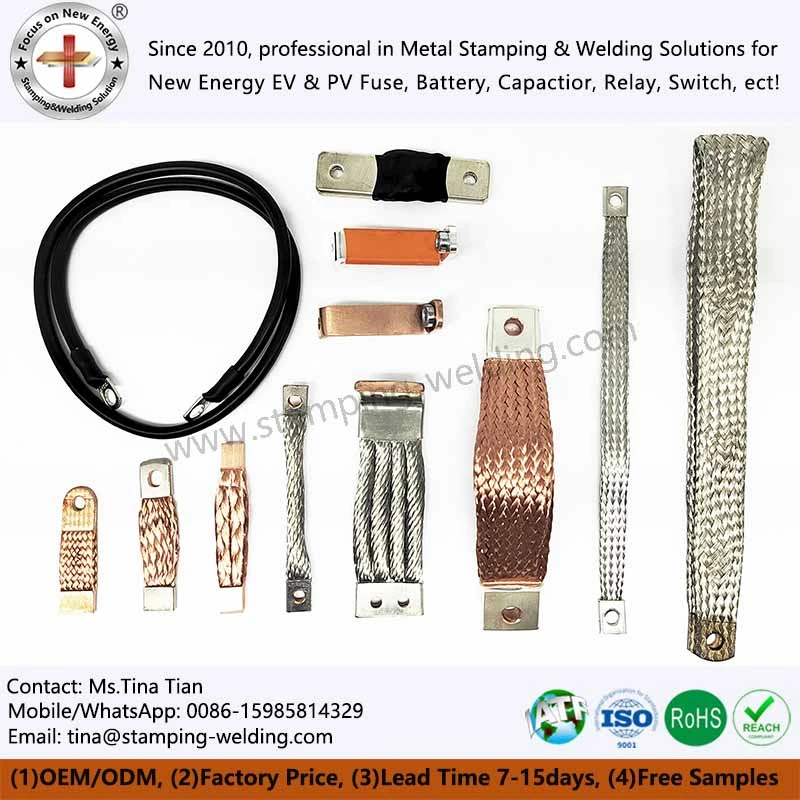
From a core structural design perspective, most mainstream flexible conductive components are manufactured using a fine braiding process. Braided Copper Wire serves as the basic forming carrier, with multiple ultra-fine Soft Bar Copper Wires or Soft Copper Tinned Wires as raw materials. The diameter of each filament is precisely controlled between 0.10 and 0.15 mm, and they are interwoven using specialized braiding equipment. This multi-strand twisted braided mesh structure gives the Flexible Braided Copper Busbar excellent flexibility and bending performance, allowing for free expansion and contraction. It is not prone to breakage even after long-term repeated bending operations, making it suitable for various electrical equipment connection scenarios involving frequent opening and closing and displacement. For high-current applications, the industry has also introduced Flat Copper Braided Wire with a flat structure. Through multi-layer flat pressing technology, it retains its flexibility while increasing the conductor cross-sectional area to meet the standards for high-current operation.
Connection protection design
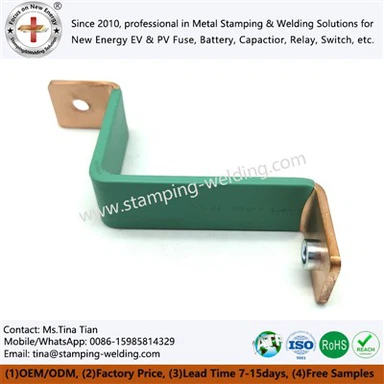
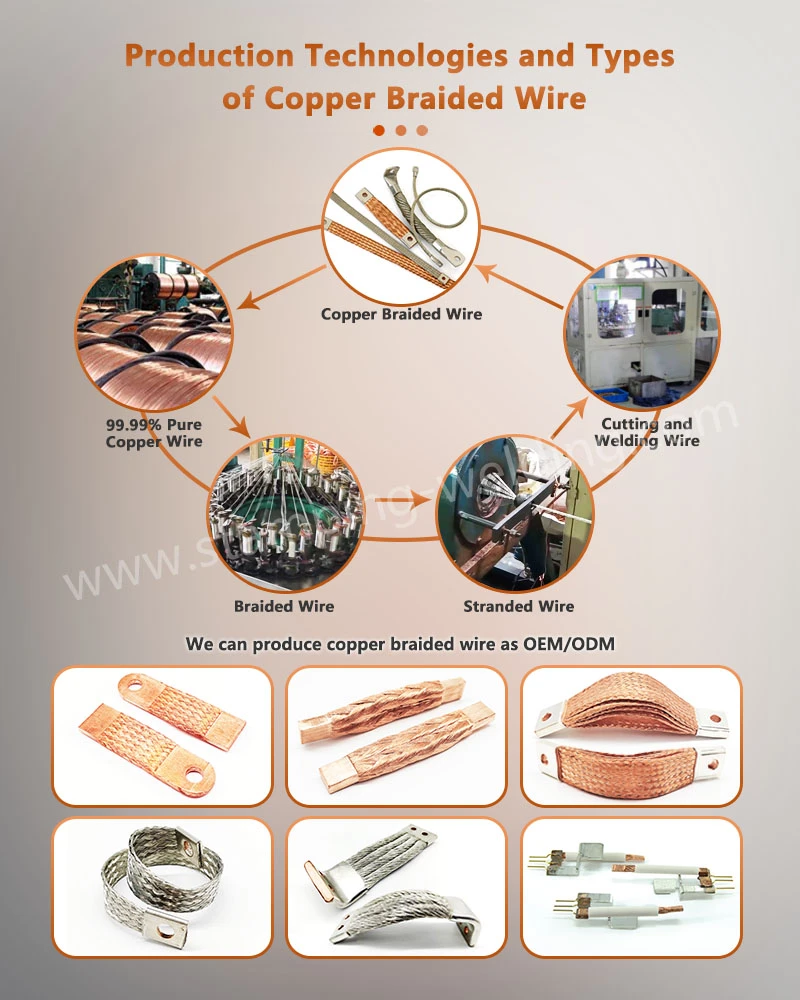
In terms of connection structure design, these flexible electrical components adopt an integrated seamless pressing process. At both ends and the middle connection points, pure copper tubing is combined with a cold-pressing process and oxygen-free copper blocks for compaction and fusion, achieving a unified molding. The ends can be customized with punching, bolt drilling, and other processes according to on-site installation requirements, adapting to diverse equipment installation interfaces and significantly improving assembly compatibility. Meanwhile, Braided Copper BusBar Heat Shink PVC Sleeves can be used as an optional protective structure. Through external heat-shrinkable PVC insulating sleeves, insulated flexible copper bars are created, providing insulation and mechanical protection for the equipment, preventing short-circuit faults, and improving equipment operational safety.
Material and process characteristics
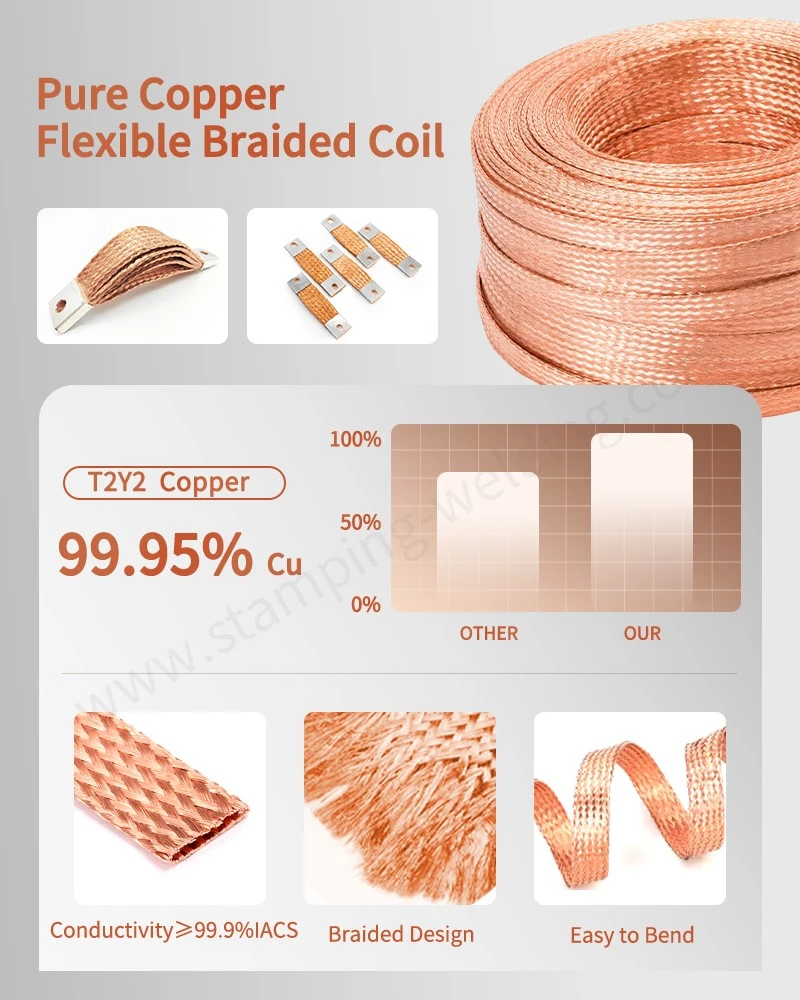
Materials and surface treatment processes are crucial for ensuring the electrical performance and lifespan of Low-to-medium Voltage Flexible Connectors. The main body of the products generally uses high-conductivity T2 copper or oxygen-free copper, leveraging the conductivity of high-quality copper to establish a solid foundation for efficient current carrying capacity. To adapt to complex operating conditions, most products undergo overall or connector tin plating. The Grounding Braids Wire Tin Plated Busbar design effectively improves the components' oxidation and corrosion resistance, reduces contact resistance at connection points, and stabilizes long-term conductivity. Furthermore, the special braided mesh structure effectively expands the equivalent surface area of the conductor, significantly reducing skin effect losses under high-frequency, high-current conditions and continuously improving overall current carrying capacity.
Core functional value
Compared to traditional rigid conductive connectors, the core advantages of Copper Braided Flexible Busbar lie in two main dimensions: vibration and fatigue resistance, and dynamic compensation. Mechanical vibrations and displacement deviations caused by thermal expansion and contraction during equipment operation can be effectively absorbed by the component's own expansion and contraction characteristics, completely avoiding stress damage problems associated with rigid busbar connections. Based on this characteristic, Flexible Connectors are widely used in dynamic electrical components such as transformers, switchgear moving contacts, and distribution box doors. Furthermore, thanks to their flexible customization capabilities, Flexible Braided Custom Connectors can also be adapted to emerging scenarios such as lithium battery connections, providing a reliable flexible conductive solution for Lithium-ion Batteries Connectors.
Contact Us
For customized Copper Braided Flexible Busbar and connector solutions to suit various working conditions, please feel free to contact us for professional selection and customization services.