Low-cost Laminated Busbars Have Become An Important Direction For Cost Reduction And Efficiency Improvement in New Energy Power Systems
Jun 08, 2026
With the rapid development of industries such as new energy vehicles, energy storage equipment, industrial automation, and data centers, efficient, reliable, and economical power transmission solutions are attracting increasing attention from various industries. Against this backdrop, low-cost laminated busbars, with their superior electrical performance and cost advantages, are gradually becoming an important component of modern power systems and showing promising application prospects in multiple fields.
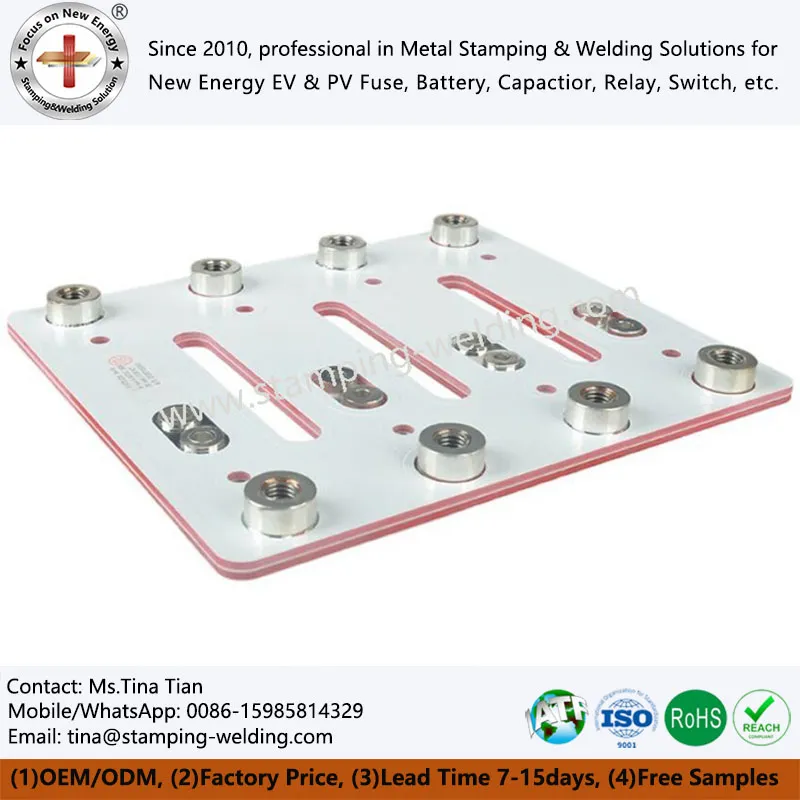
Laminated busbars are conductive components manufactured from multiple layers of conductors and insulating materials through a special lamination process. Compared with traditional cable connection solutions, they have lower parasitic inductance, superior current-carrying capacity, and a more compact structural design, thus being widely used in industries such as new energy, power electronics, and rail transportation.
In recent years, with the continuous maturation of manufacturing processes, low-cost laminated busbars have gradually broken through the traditional high-cost limitations. By optimizing material selection, improving automation levels in production, and refining structural design, products achieve more competitive cost control while maintaining high reliability.
In terms of material application, some products adopt copper-aluminum composite structures or optimized conductor designs, effectively reducing material costs while meeting conductivity requirements. Meanwhile, continuous upgrades to insulation materials have enabled products to combine heat resistance, insulation, and long-term stability. This design philosophy allows them to meet diverse needs, ranging from Power Distribution Unit Busbars to large-scale energy systems.
From a manufacturing perspective, the application of automated lamination, precision stamping, and CNC machining technologies has significantly improved production efficiency. Continuous production reduces material waste and enhances product consistency, creating favorable conditions for high-volume project applications. Stable manufacturing quality is particularly important for devices requiring a highly reliable power supply, such as Motor Controller Busbars and Uninterruptible Power Supply System Busbars.

In terms of performance, one of the most significant advantages of laminated busbars is their low parasitic inductance. By rationally arranging the positive and negative conductor layers, electromagnetic interference and voltage spikes can be effectively reduced, improving the operating efficiency of power devices. This feature makes them particularly suitable for high-frequency power electronic equipment, such as Laminated Bus Bars for Compact IGBT DC Power and Laminated Bus Bars for Industrial Inverter Low-inductance IGBT Phase.
With the accelerated development of communication and digital infrastructure, the application of laminated busbars in data centers and network equipment is becoming increasingly widespread. For example, solutions such as Laminated Bus Bars for Telecom Power Distribution, Laminated Bus Bars for Internet Router Backplanes, Web Server Bus Bars, and Mainframe Bus Bars effectively optimize the internal power supply layout of equipment, reduce cabling space occupation, and improve overall system reliability.
In the field of industrial automation, compact design and high current-carrying capacity are significant advantages. When applied to equipment such as Laminated Bus Bars for Rack Mount Power Distribution and Laminated Bus Bars for Frequency Incerter Power Distribution Systems, laminated busbars not only simplify the installation process but also improve system integration, supporting equipment miniaturization.
The new energy transportation sector is also an important application area for laminated busbars. With the continuous upgrading of electric vehicles and rail transit systems, products such as Transportation Locomotive Power Bus Bars, Traffic Tram Electric Bus Bars, and DC and AC Laminated Bus Bars for Fork Lift Trucks are playing an increasingly important role. Their lightweight structure and excellent conductivity help improve energy efficiency and enhance system operational stability.
In rail transit power supply systems, composite busbars for train power supply four-quadrant power modules effectively reduce losses and improve system operating efficiency by optimizing current transmission paths. Meanwhile, in the medical equipment field, laminated busbars for medical imaging testing devices have extremely high requirements for electrical stability and safety; the low impedance and high reliability of laminated busbars can meet the long-term operational needs of precision equipment.
Notably, stage lighting and special power supply systems are also beginning to adopt laminated busbar technology. Applications such as laminated busbars for PDA assembly (a hit-in stage lighting system) place higher demands on product compactness and power supply stability, and laminated busbars can achieve efficient current transmission within limited space.
From a life-cycle cost perspective, low-cost laminated busbars not only reduce initial procurement investment but also reduce maintenance frequency and energy consumption. Due to fewer connection points and lower contact resistance, their long-term operational reliability is generally superior to traditional connection methods, thereby helping equipment operators reduce the total cost of ownership (TCO).

Looking ahead, with the continued advancement of the new energy industry, high-end equipment manufacturing, and digital infrastructure construction, the market demand for laminated busbars is expected to maintain a growth trend. The development of new conductor materials, advanced insulation technologies, and intelligent manufacturing processes will further improve product performance and cost-effectiveness. Low-cost laminated busbars are gradually evolving from a high-end application solution into a crucial technological choice for achieving efficient transmission, energy conservation, and structural optimization in modern power systems.
As electrical systems continue to evolve towards higher power density and higher reliability, laminated busbars, which balance performance and cost advantages, are expected to play a key role in more industry sectors and drive power connection technology into a more efficient development stage.
contact us