Tinned Copper Busbar: Core Materials And New Trends in The Field Of Power Transmission
May 26, 2025
Market growth and technological innovation drive industry upgrade
With the acceleration of global energy structure transformation and digitalization, the market demand for tinned copper busbars, as a key material for power transmission and distribution, has shown a significant growth trend. According to industry research reports, the global busbar market size is expected to reach US$18.64 billion in 2025, of which copper busbar occupies an important share due to its high conductivity and corrosion resistance. As a high-end segment of copper busbars, the application of Tin-Plated Insulated Bus Bars in emerging scenarios such as new energy and data centers has expanded rapidly, promoting industry technology iteration and capacity improvement.

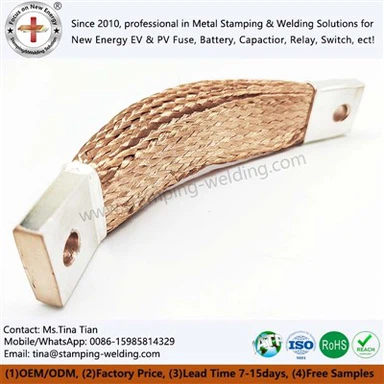
Technological innovation is the core driving force for the development of the Tinned Copper BusBar industry. In recent years, the industry has made significant breakthroughs in material technology and product design. For example, the high-flexibility tinned braided copper busbar uses a special braiding process to significantly improve flexibility while maintaining high conductivity, which is suitable for electric vehicles, robots, and other scenarios with high cable flexibility requirements. The high-voltage tin-plated copper busbar improves compressive performance and heat dissipation efficiency through structural optimization (such as built-in reinforcement rods and heat dissipation tooth grooves), meeting the high-reliability requirements of industrial equipment and power systems. In addition, the popularization of the chemical tin plating process further strengthens the environmental protection characteristics of the product. Its lead-free surface treatment technology meets international environmental protection standards and has become the mainstream choice to replace the traditional tin plating process.

Application field expansion and policy support
The application scenarios of tin-plated copper busbars extend from the traditional power field to emerging fields such as new energy and data centers. In the field of new energy, with the rapid development of photovoltaics, energy storage systems, and new energy vehicles, the demand for tin-plated copper busbars as efficient conductive materials has surged. For example, the busbars in photovoltaic modules need to be tinned to improve oxidation resistance to ensure long-term stable operation. Battery packs and motor systems of new energy vehicles also use tin-plated copper busbars in large quantities to meet high current transmission and corrosion resistance requirements. In the data center field, the deployment of high-power density servers and AI computing clusters has driven the demand for high-end copper busbars. It is estimated that the global data center high-end copper busbar market will reach US$1.8 billion to US$2.5 billion in 2025, with an annual growth rate of about 8% to 12%.
At the policy level, countries' support for renewable energy and green development has provided continuous impetus for the tinned copper Busbar Coating industry. China's "Implementation Plan for High-Quality Development of the Copper Industry (2025-2027)" clearly proposes to strengthen the key technology research and development of the copper industry chain and promote green and intelligent development. The EU's "Critical Raw Materials Act" requires 40% of key raw materials to be processed locally and 25% to be recycled by 2030, further standardizing the industry's sustainable development path. In addition, infrastructure construction and industrial upgrading plans in North America, Southeast Asia, and other regions have also created opportunities for the export and localized production of Galvanized busbars.

Challenges and Future Trends
Despite the broad prospects of the industry, Tin Plated Copper Busbars still face multiple challenges. Fluctuations in the price of raw material copper directly affect production costs, and trade policies in the international market (such as tariff adjustments) may exacerbate supply chain uncertainties. At the same time, the advancement of aluminum-to-copper technology (such as the use of aluminum battery busbars in Tesla Model 3) and the rise of alternative materials such as composite current collectors pose a potential threat to the market share of Tin Coated Copper BusBars. In addition, increasingly stringent environmental regulations require companies to improve the energy efficiency of production processes, such as using recycled copper or low-carbon copper busbars to respond to global carbon neutrality goals.
In the future, the Tinned Copper BusBar suppliers industry will show the following development trends: First, the technology will evolve towards high flexibility, high voltage resistance, and intelligence. For example, the intelligent busbar system with integrated temperature/current sensors has been piloted in data centers; second, the application scenarios will be further subdivided, such as edge computing driving the demand for compact busbars, and liquid cooling technology promoting the development of high-temperature resistant products; third, sustainable development has become an industry consensus, and the application ratio of recycled copper and environmentally friendly tinning processes will continue to increase. With the deepening of global energy transformation and digitalization, Tin Plated Copper Bars, as the "blood vessels" of power transmission, will play an increasingly critical role in building an efficient and reliable energy network.

contact us