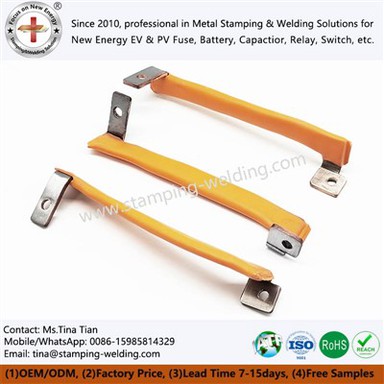


Plastic Insulation Busbar
Injection-molded insulated busbars are components that play a key role in modern electrical systems. It combines the conductive function of traditional busbars with advanced injection molded insulation technology to provide a safe, efficient and compact solution for power transmission and distribution.
- Fast Delievery
- Quality Assurance
- 24/7 Customer Service
Product Introduction
Product Profile
Plastic molded insulated busbars are produced using advanced technology and high-quality materials, with a variety of specifications and customization options to meet the needs of different customers in various application scenarios. Whether in high-voltage, high-current industrial environments or in the field of electronic equipment with extremely high space and safety requirements, our products can provide reliable power connection solutions to help the efficient operation of electrical systems.

Product Advantages
Product Advantages
High security
The integrated structure of the plastic molded insulated busbar avoids safety risks such as leakage and short circuit that may occur due to loose insulation wrapping of traditional busbars, providing reliable safety guarantee for the electrical system.
High space utilization
Compared with the traditional busbar plus insulating sleeve structure, the injection molded insulated busbar has a compact structure and can achieve more circuit connections in a limited space. It is especially suitable for electronic equipment and small electrical control cabinets with strict space requirements.


heat resistance
Whether in high-temperature industrial environments or in the heat environment generated when electronic equipment is running, injection molded insulated busbars can maintain stable performance, and their insulating materials and conductive materials will not deteriorate in performance within a certain temperature range.
Chemical resistance
It can resist a certain degree of chemical corrosion and is suitable for various complex working environments, such as industrial sites with chemical pollution or corrosive gases.
Product Production Process
| Raw material procurement and inspection | First, conductive materials (copper or aluminum) and insulating materials (such as polycarbonate particles or nylon particles) undergo strict quality inspections. Ensure that the purity and size of raw materials meet production requirements. For conductive materials, pre-processing such as cutting and grinding is required to achieve the appropriate size and surface roughness for subsequent processing. |
| Busbar processing | According to the design requirements, the conductive material is processed into the basic shape of the busbar through stamping, bending and other processes. In this process, the dimensional accuracy and shape accuracy of the busbar need to be precisely controlled to ensure that it can cooperate well with other electrical components. At the same time, the busbars are surface treated, such as tin plating, galvanizing, etc., to improve their conductivity and corrosion resistance. |
| Injection molding | The pretreated busbar is placed in the injection mold, and then the insulating material particles are injected into the mold. During the injection molding process, parameters such as injection temperature, pressure and time are precisely controlled to ensure that the insulation material can be evenly wrapped around the busbar to form a tight, bubble-free insulation layer. After the injection molding is completed, the molded injection molded insulating busbar is demoulded. |
| Heat curing | The coated busbars are heated and cured to ensure that the insulation layer adheres firmly and reaches the required insulation strength. |
| Post-processing | Post-process the demoulded injection molded insulating busbar, including removing flash, burrs, etc. Then conduct electrical performance tests, such as insulation resistance test, continuity test, etc., to ensure that the electrical performance of the product meets standard requirements. At the same time, visual inspection will also be carried out to ensure that there are no defects on the surface of the product. |
| Quality inspection | Conduct various tests such as electrical performance, insulation strength, and mechanical strength. |

Packaging and Transportation
| Protective Packaging | For injection molded insulated busbar products, we use special packaging materials for packaging. First, individual products are wrapped in anti-static plastic bags to prevent product damage due to static electricity during transportation. |
| Customized Solutions | For larger orders or special sizes, custom packaging solutions are available to ensure secure and safe delivery. |
| Global Shipping | Choose the appropriate transportation method according to customer needs, such as road transportation, rail transportation or air transportation. During the transportation process, the logistics company will operate strictly according to the characteristics of the product to ensure that the product is not affected by vibration, collision, moisture and other factors. At the same time, we will purchase transportation insurance for our products to deal with possible unexpected situations. |
our partners


Use high-purity copper or aluminum as the conductive body of the busbar. Copper has excellent electrical conductivity and good thermal conductivity, which can effectively reduce resistance and reduce the loss of electrical energy during transmission. Aluminum, with its lighter weight and relatively lower cost, is widely used in some weight- and cost-sensitive application scenarios.
Hot Tags: plastic insulation busbar, China, manufacturers, suppliers, factory