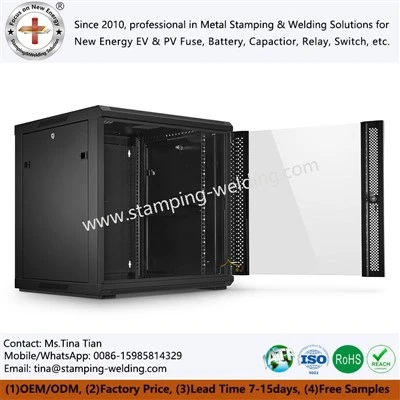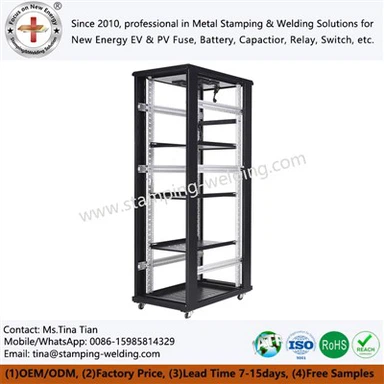
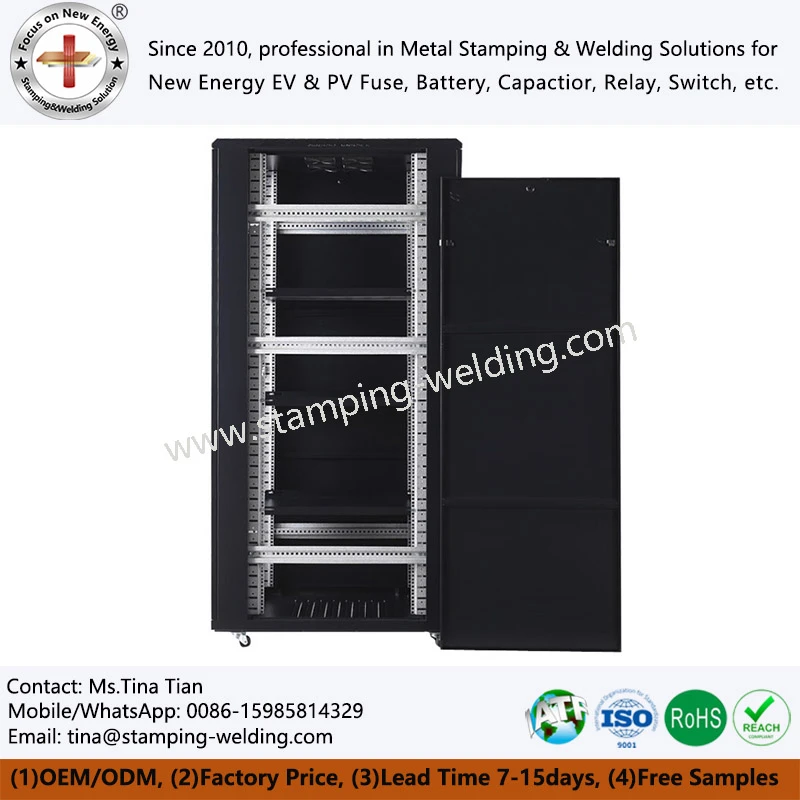

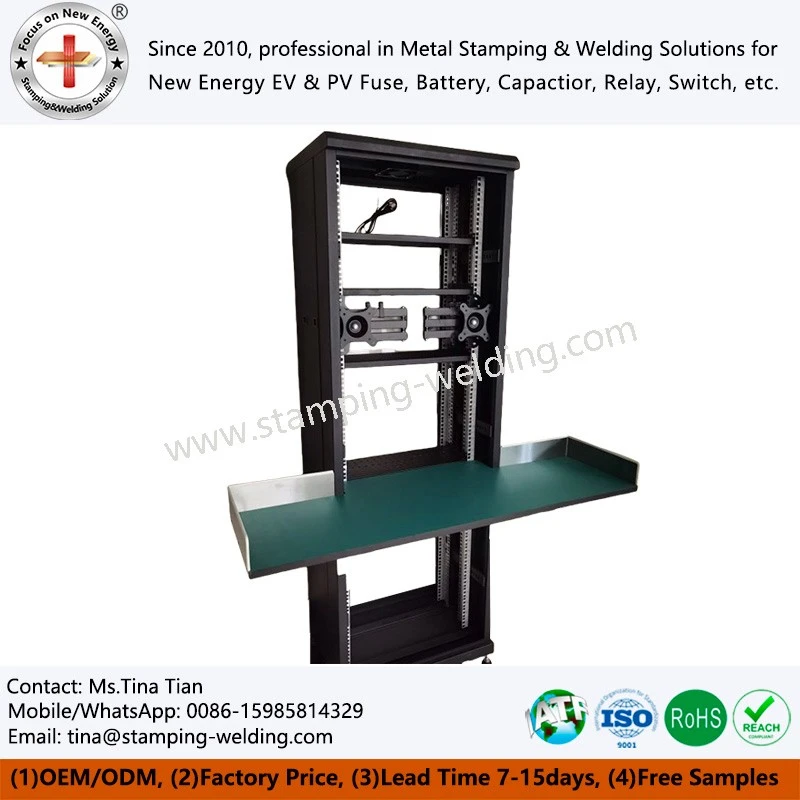
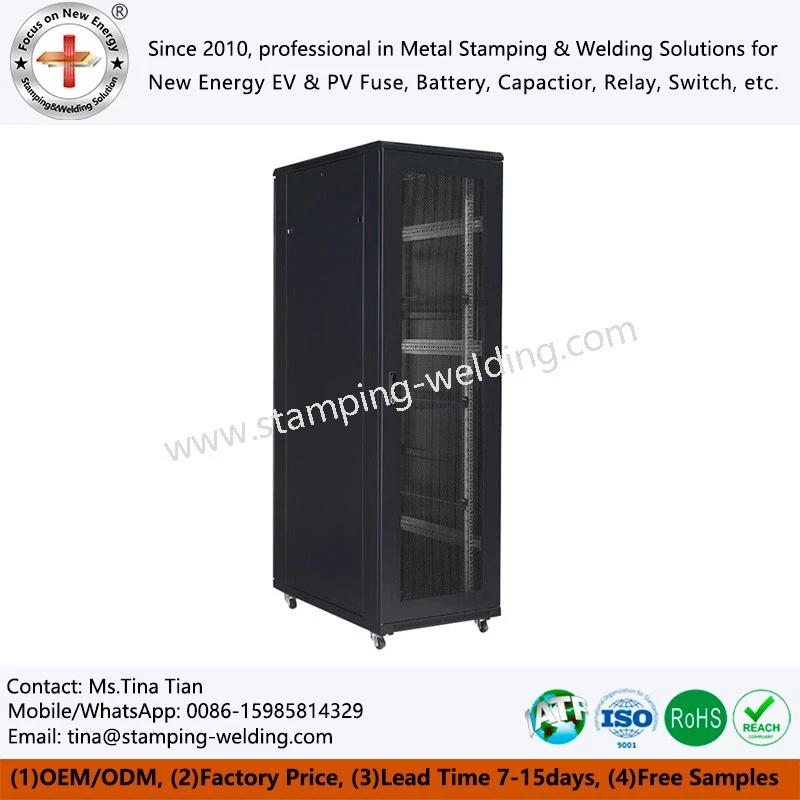
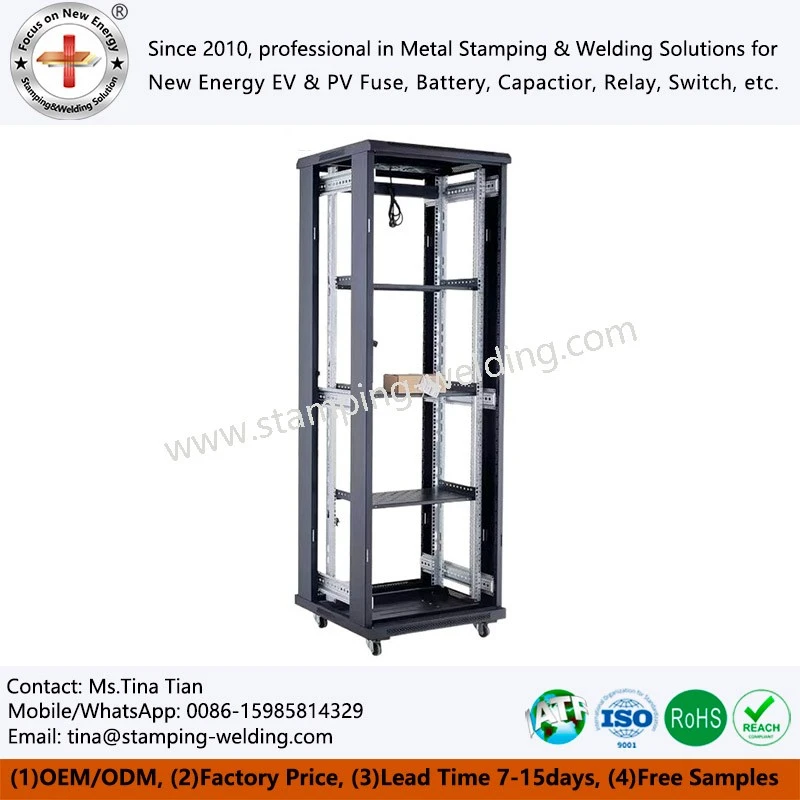
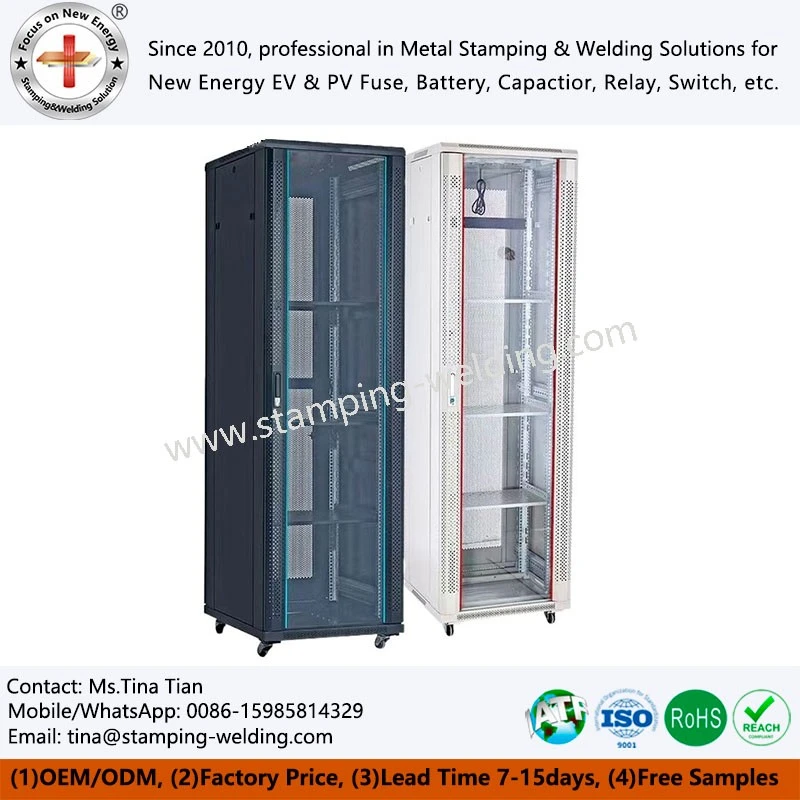
Wall Mount Rack Enclosure
A wall mount rack enclosure is an enclosed cabinet designed for installation on a wall or a load-bearing structure. It primarily houses network switches, routers, patch panels, fiber-optic termination equipment, surveillance gear, and other standard rack-mountable electronic devices. Compared to floor-standing server cabinets, wall-mount enclosures utilize vertical space, thereby minimizing their footprint. They are well-suited for use in offices, telecommunications closets, low-voltage utility rooms, retail stores, industrial control rooms, and small-scale data network nodes.
- Fast Delievery
- Quality Assurance
- 24/7 Customer Service
Product Introduction
Most instances of rework during the equipment selection phase stem not from the cabinets themselves, but from incomplete site information. It is recommended to verify the following four aspects internally before proceeding to configuration discussions:
Base wall material: Whether the wall is cast-in-place concrete, solid masonry, hollow blocks, or a light-gauge steel stud partition-each requires a completely different anchoring approach. Lightweight partitions often necessitate anchoring through to the structural layer or the installation of additional horizontal steel backing; no matter how robust the cabinet itself is, these requirements cannot be bypassed.
Clearance for maintenance access: Whether access is limited to the front (with fixed or removable doors) or requires side access determines hinge orientation, required distance from the wall, and space needed for cable management.
Cable entry/exit points: Whether cables enter from the top, bottom, rear, or sides dictates the placement of knockouts, dust-proofing measures, and interfaces for cable trays.
Equipment depth and orientation: Maintenance requirements for components such as optical modules, power supply modules, and fiber pigtails determine the usable space between the front and rear vertical mounting rails-a factor that cannot be assessed solely from the equipment's nominal depth.
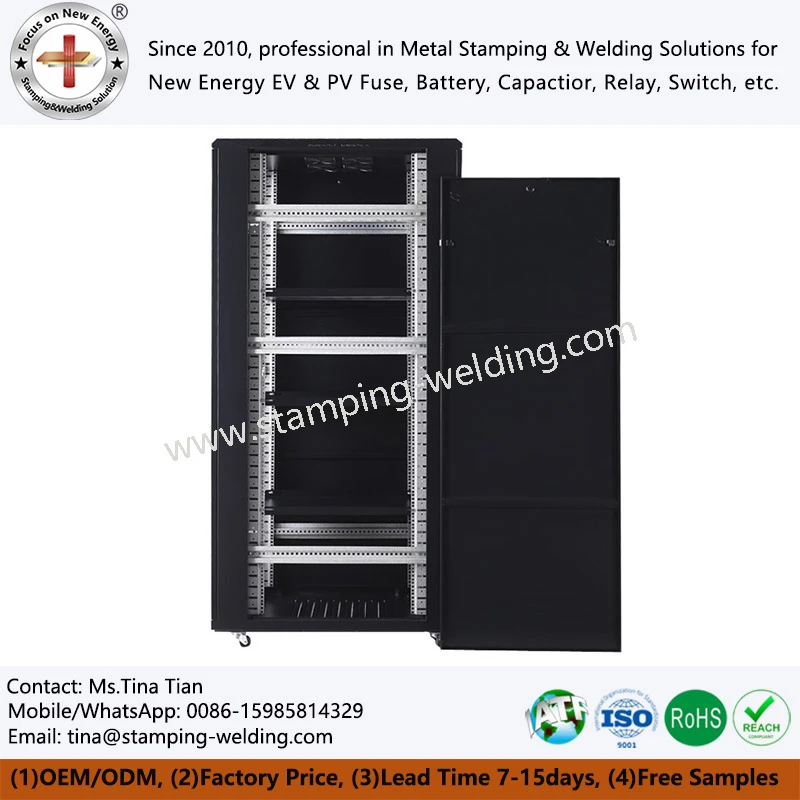
Manufacturing Advantages and Production Processes for enclosed server rack
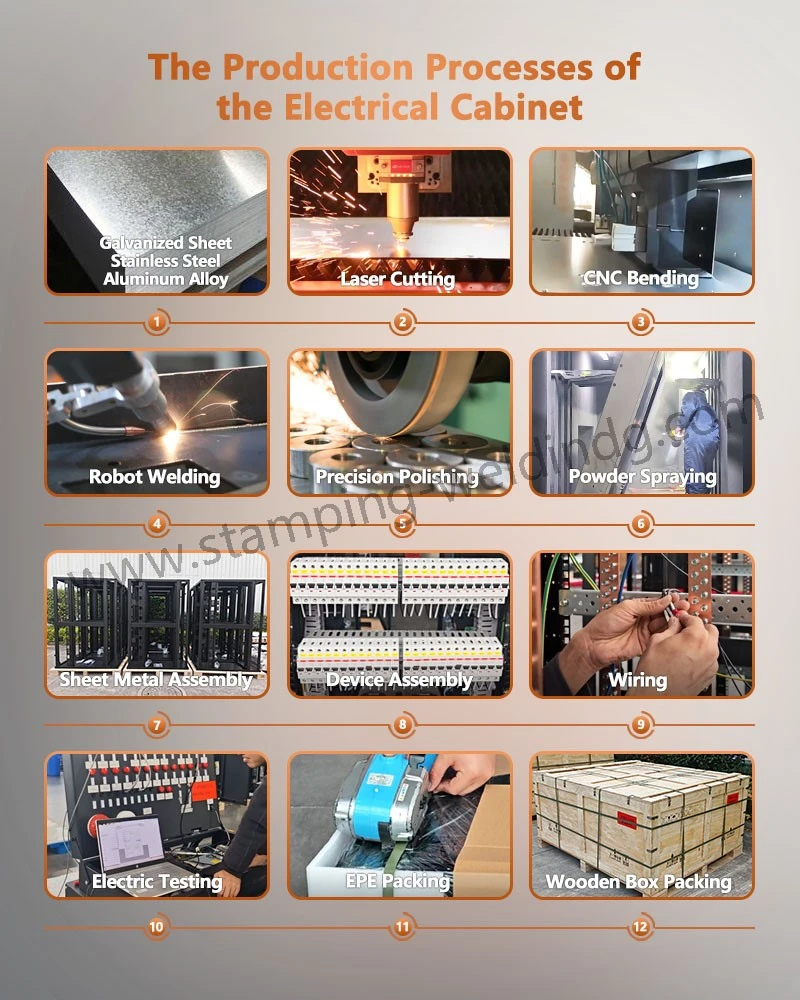
Our facility possesses comprehensive in-house sheet metal fabrication capabilities. By keeping core cabinet production processes under our own control, we ensure consistent quality and reliable lead times:
Laser Cutting
CNC laser cutting ensures precise positioning of apertures and consistent door-gap dimensions-the essential foundation for uniform gaps.
01
CNC Bending
Critical bends are executed using CNC press brakes, guaranteeing consistent angles and ensuring that the assembled cabinet remains perfectly square, without any distortion.
02
Welding and Alignment
Following frame welding, each unit undergoes an alignment check to verify diagonal dimensions. This eliminates a common industry issue where a cabinet might look square but actually forms a parallelogram upon assembly.
03
Phosphating and Electrostatic Powder Coating
A pre-treatment phosphating process enhances coating adhesion. The subsequent powder coating is cured to provide a durable finish that is resistant to scratches and minor corrosion.
04
Assembly and Final Inspection
Each unit is fully assembled-including the installation of doors and locks-to ensure smooth operation. The unit is then disassembled for packaging, with every single cabinet undergoing a thorough visual and assembly inspection before leaving the factory.
05
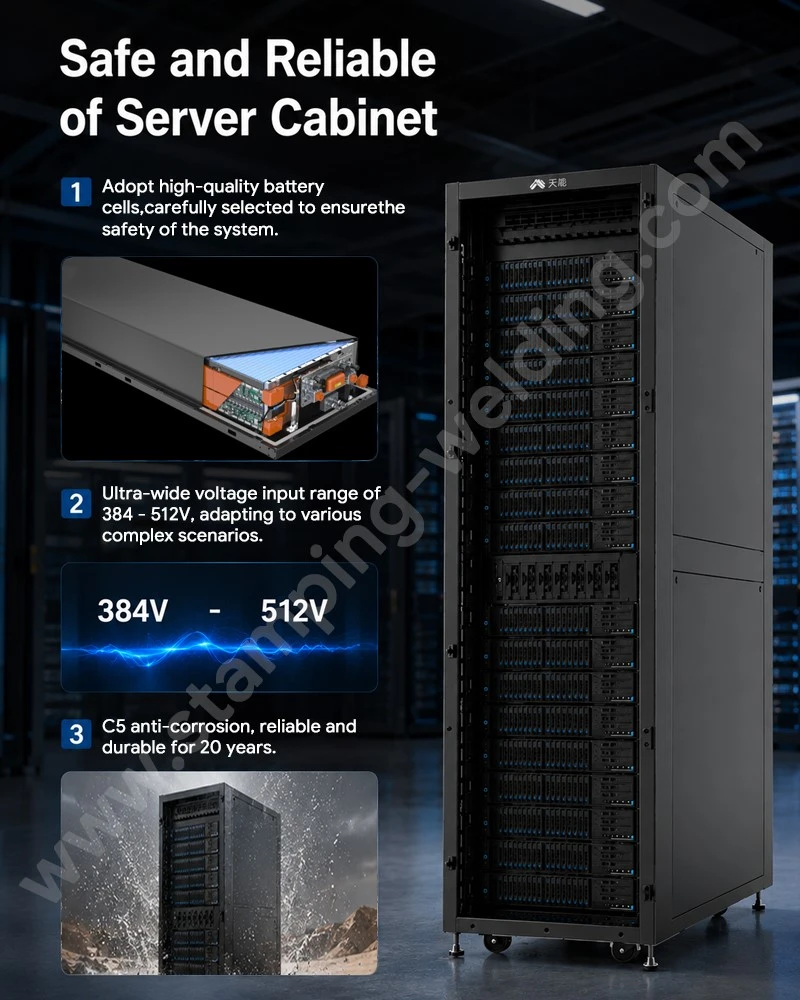
Broad Application Advantages for IT rack cabinet
Thanks to their exceptional adaptability to various environments, this series of wall-mount enclosures has been extensively proven in projects across a wide range of global industries:
Corporate Branch Offices
Discreetly installed in corridors or utility rooms, these enclosures securely house core routing and switching equipment while keeping office spaces neat and organized.
Smart Buildings and Security Systems
Ideal for the centralized management of CCTV systems, access control controllers, and fire safety networks, offering protection against dust and electromagnetic interference.
Edge Computing and Retail IoT
Providing a highly reliable hosting environment for micro-data centers within space-constrained, unmanned, or semi-unmanned locations.
Frequently Asked Questions for server rack mount
1. How should I choose between a wall-mount cabinet and a floor-standing cabinet?
-
Wall-mount cabinets are generally more suitable when installation space is primarily limited to walls (with little available floor space), or when the quantity of equipment and the heat generated are relatively low to moderate. If you have a large number of devices, high heat output, or require frequent access to the front and rear of the equipment for maintenance, a floor-standing cabinet is the more reliable choice. The decision should be based on an assessment of the available site space, the equipment inventory, and your operational/maintenance requirements.
2. How should I determine the appropriate cabinet depth?
-
Shallow-depth cabinets are ideal for slim equipment such as network switches and patch panels. If you need to house servers, equipment with front and rear cabling, or require extra space for cable bend radii, you should opt for a deeper model. It is recommended to calculate the required depth by taking the depth of the longest piece of equipment and adding the necessary space for cabling and heat dissipation, rather than relying solely on the nominal depth of the equipment itself.
3. What are the basic requirements for the wall when installing a wall-mount cabinet?
-
The wall must have sufficient load-bearing capacity, and mounting points should be clear of utility lines or structurally weak areas. Use appropriate fasteners-such as expansion bolts or chemical anchors-suitable for the specific wall material, and ensure the cabinet is perfectly vertical after installation. If mounting on a lightweight partition wall, additional reinforcement may be required; this should be evaluated based on the specific site structure.
4. What should I consider regarding heat dissipation?
-
Because wall-mount cabinets are positioned flush against a wall, natural airflow is somewhat restricted. Plan your equipment layout carefully to ensure clear paths for air intake (at the bottom) and exhaust (at the top); if necessary, incorporate or install cooling fans. Avoid stacking high-heat-generating equipment too densely, and monitor the ambient temperature of the installation environment.
5. Are customizations available, such as non-standard depths, specific door-opening directions, or custom colors?
-
Yes, adjustments can be made based on our existing manufacturing processes. To ensure an accurate assessment of feasibility and lead times-and to avoid the need for repeated clarifications-please provide clear details regarding your operational requirements, equipment list, and any site-specific constraints.
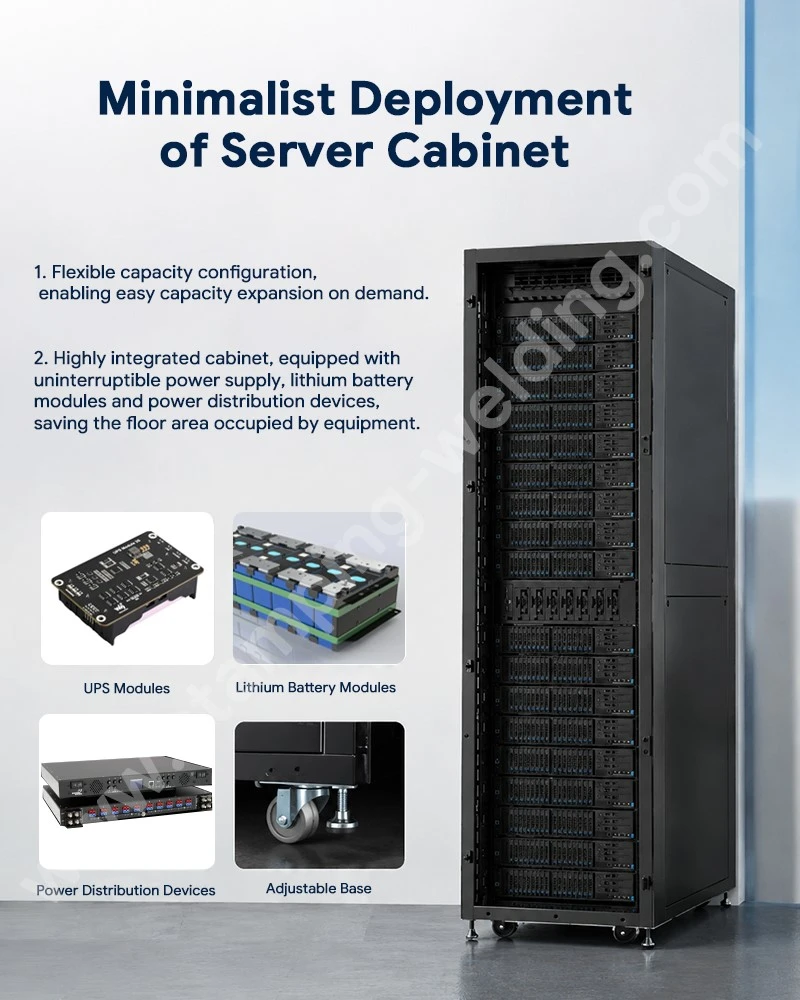
contact us
If you are selecting equipment for distributed sites, or need to determine anchoring and load-bearing solutions for existing walls, simply provide us with the wall type, equipment list, and available installation space. We will analyze load paths and thermal management to offer structural recommendations and mounting verification procedures. Our approach focuses on engineering compatibility to shorten your selection cycle-prioritizing technical suitability over mere price-based decision-making for a 6U vertical wall-mount rack.
Hot Tags: Wall Mount Rack Enclosure, Wall Mount Server Cabinet, Wall Mounted Network Rack, Wall Mount Data Cabinet, Wall Mounted IT Enclosure