
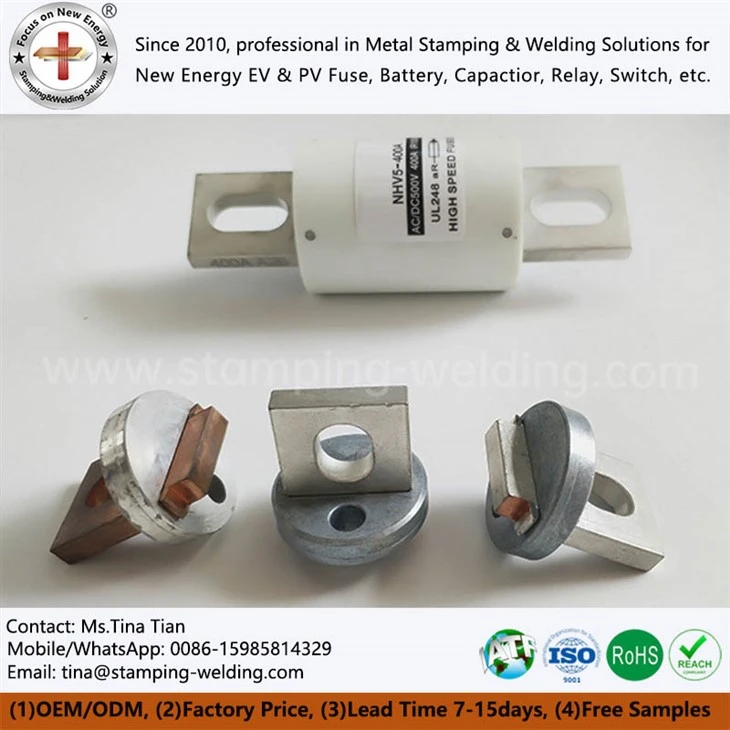
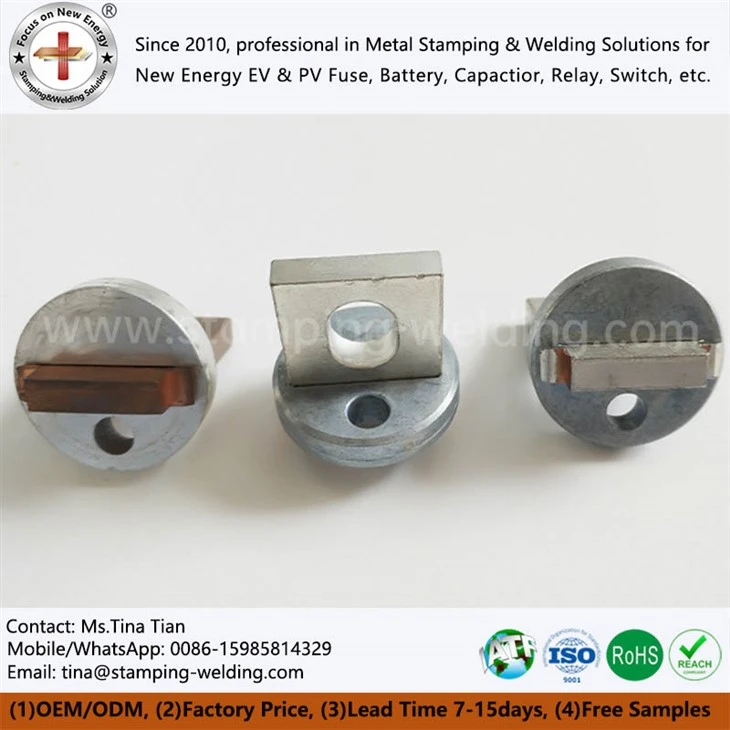
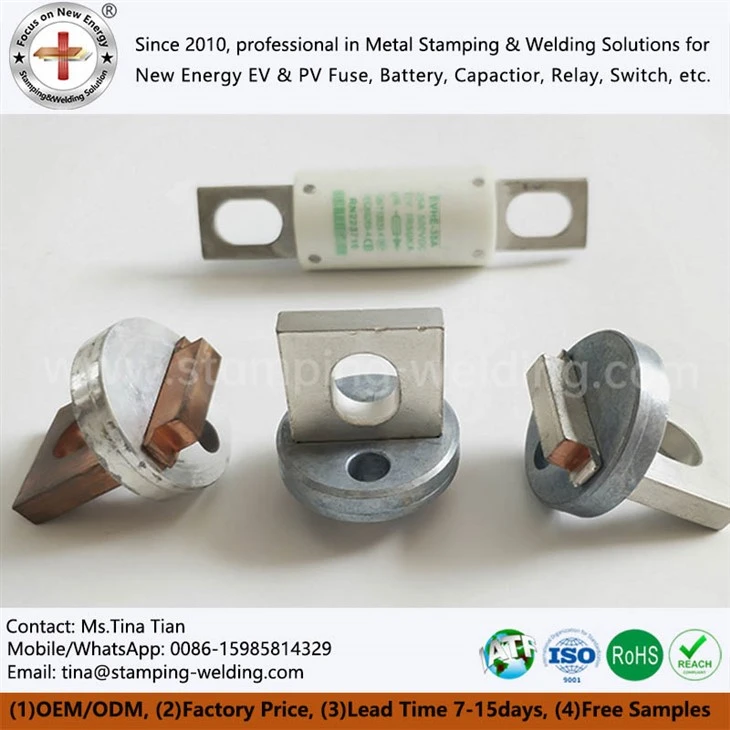
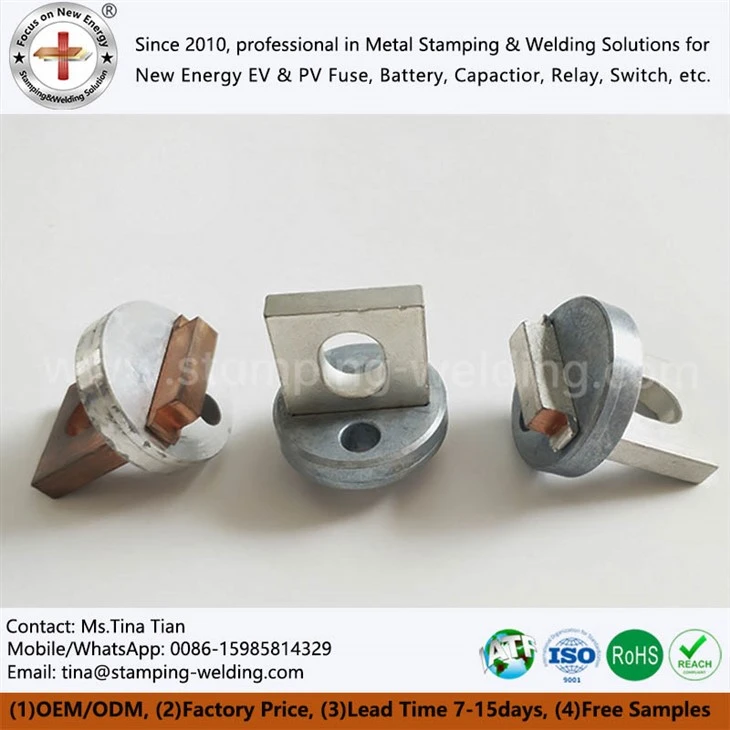
Fuse Knife Contact For EV
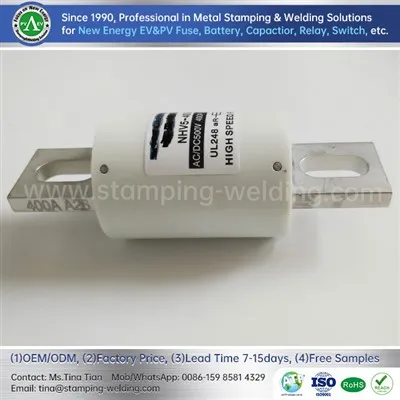
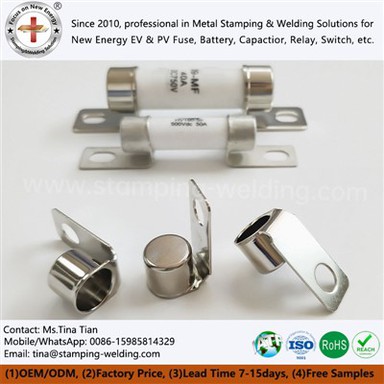
The Fuse Knife Contact for EV is a critical conductive component within the high-voltage electrical protection systems of new energy vehicles. It is primarily utilized in fast-acting fuse assemblies for EV battery systems, high-voltage power distribution units (PDUs), battery management systems (BMS), energy storage systems, and high-power electrical equipment. As a key structural element facilitating both internal current transmission and external electrical connection, the blade contact must not only handle continuous high-current flow but also meet stringent requirements for rapid response, safety, reliability, and long-term stable operation.
- Fast Delievery
- Quality Assurance
- 24/7 Customer Service
Product Introduction

What is A Fuse Knife Contact For EV?
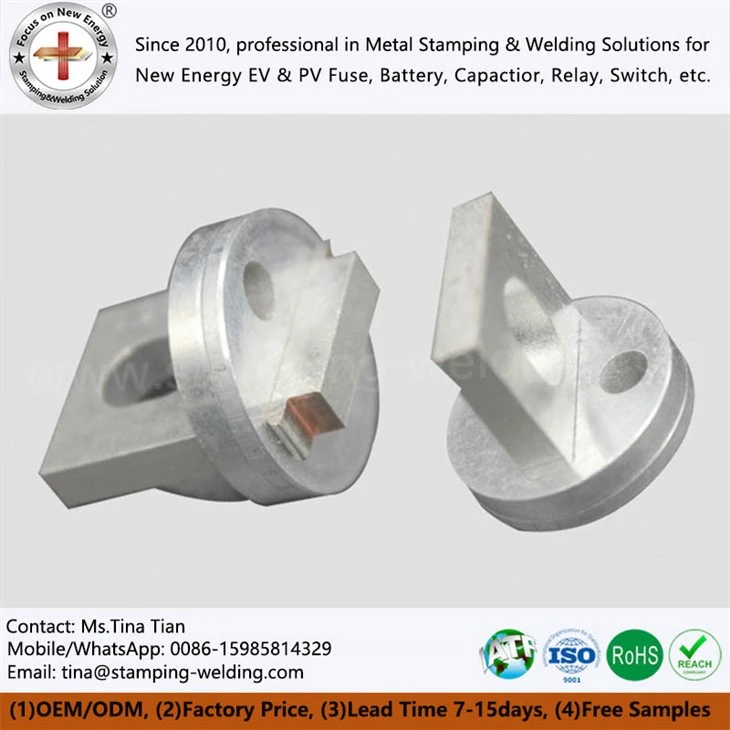
The fuse knife contact is a critical conductive metal component within high-voltage, fast-acting fuses. Its primary functions include:
1. Current Transmission and Connection
Serving as the interface between the fuse and the external circuit, the knife contact structure ensures stable current transmission via a low-resistance conductive path.
2. Connection for Rapid Protection Systems
When abnormal currents occur in new energy vehicles or energy storage systems, the fuse must rapidly interrupt the faulty circuit; the highly reliable knife contact ensures a stable connection throughout the fusing process.
3. Mechanical Securing and Electrical Alignment
Beyond its conductive role, the knife contact must maintain a precise fit with the fuse holder, enabling stable insertion/removal and reliable securing.
4. Safety Assurance for High-Voltage Systems
When used in the high-voltage circuits of new energy vehicles, the fuse blade contact helps mitigate risks associated with poor contact, abnormal temperature rise, and connection failure.
Forged Copper Components Multidimensional Application Advantages and High-Voltage System Compatibility
This series of fuse knife contacts is specifically designed to meet the rigorous demands of modern high-voltage electrical architectures:
Electric Vehicle Main Traction Battery Packs (PDU/BDU)
Serving as core contacts for main circuit protection fuses, they withstand continuous operating currents of up to 800A–1000A and pulse currents of several thousand amperes.
DC Fast Charging Stations
Suitable for fast-acting fuse components within high-power charging guns and cabinets, offering durability against frequent mating cycles and resistance to high heat and humidity.
Energy Storage System (BESS) Container Power Distribution Units
Capable of handling high-voltage DC short-circuit protection for megawatt-scale battery arrays while withstanding significant heat accumulation.
Rail Transit and Auxiliary Power Units (APU)
Engineered to withstand environments with intense vibration while providing highly reliable circuit isolation.

High-Speed Fuse Contact Detail Showcase: Quality Reflected in Every Micro-Feature
Contact Blade Finish
All contact blade edges undergo deburring and radiusing; the absence of sharp corners prevents injury to operators or damage to insulation components during assembly.
Plating Quality
The plating is uniform in thickness; it shows no peeling or cracking after a 180° bend test and achieves a Grade 0 rating in the cross-hatch adhesion test, ensuring no coating detachment that could lead to contact surface oxidation.
Dimensional Precision
Critical dimensions for mass-produced parts are controlled within a tolerance of ±0.03mm, ensuring perfect compatibility with fuse bases from various manufacturers without the need for on-site modification.
Traceability System
Each contact blade is laser-marked with specifications, material batch details, and the production date, enabling full-process traceability and meeting the audit requirements of automotive-grade clients.

Frequently Asked Questions for Fuse Links With Knife Contacts
Q1: How should I choose between T2Y2 pure copper and H65 brass?
-
A: T2Y2 pure copper is better suited for circuits requiring extremely high electrical conductivity and low temperature rise; H65 brass offers advantages in strength and formability, making it ideal for applications requiring high mechanical durability or complex structural shapes. The specific choice depends on factors such as current, mating frequency, and the operating environment.
Q2: When are cold pressing, hot forging, and machining appropriate?
-
A: Cold pressing is suitable for pure copper parts with good plasticity and moderate deformation requirements, as it preserves high conductivity. Hot forging is used for structures requiring significant deformation or improved material flow. Machining is employed to ensure the precision of critical mating surfaces and dimensional accuracy. The actual manufacturing process is determined based on the specific part structure.
Q3: How is the contact reliability of the contact blade ensured?
-
A: Reliability is ensured by controlling contact surface flatness, surface condition, and material conductivity, combined with a design that matches the base or fuse link to guarantee uniform contact pressure upon insertion. Critical dimensions and surface quality are inspected during production to ensure batch consistency.
Q4: Is customization available for different fuse types or mounting methods?
-
A: Yes. We can adjust the contact blade shape, cross-section, and surface treatment based on fuse specifications, current ratings, connection methods (riveting, welding, bolting), and installation space constraints, all while maintaining a controlled manufacturing process.
Q5: What are the common surface treatment options, and how do they affect performance?
-
A: Common options include tin plating, silver plating, or other protective coatings. These coatings help reduce contact resistance, enhance oxidation resistance, and improve compatibility with mating components; the specific choice depends on the operating environment and connection process.

contact us
Leveraging material advantages, precision manufacturing processes, and engineering expertise in the new energy sector, Apollo provides customers with stable and reliable Knife Blade Fuse Link for Low Voltage solutions. We help global clients enhance product performance, mitigate development risks, and establish long-term supply chain partnerships.
If you are developing fast-acting fuse components for new energy vehicles or energy storage systems, Apollo offers professional engineering support and customized manufacturing solutions based on your blueprints, performance specifications, and application environments, ensuring high-reliability, high-consistency mass production and delivery.
Hot Tags: Fuse Knife Contact for EV, EV Fast Fuse Blade Contact, Fast Fuse Blade Contact, Copper T2Y2 Fuse Contact, Brass H65 Fuse Blade, EV Battery Fuse Parts