

Fuse Cap Contact Assembly
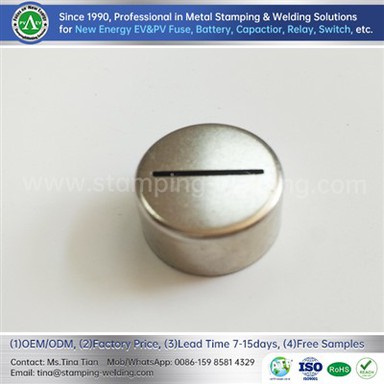
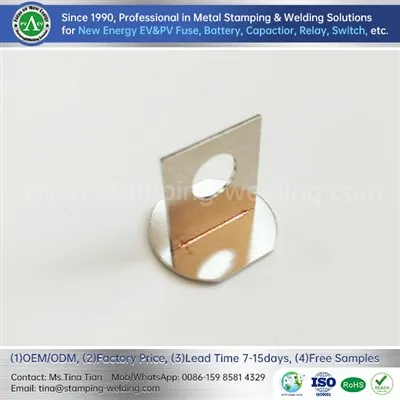
Xiamen Apollo specializes in the R&D and manufacturing of Fuse Cap Contact Assembly. Our core product lines include Resistance Welding Cap Contact for EV Fuse, One Piece Cap Contact for EV Fuse, Soldering Cap Contact for EV Fuse, and Nickle and Tin Plated Cap Contact. Our service network covers the fields of electric power, the new energy industry, rail transit systems, industrial equipment manufacturing, and data center infrastructure. Relying on the three core competitiveness of high conductivity, strong corrosion resistance, and customized service capabilities, we continue to provide safe, reliable, efficient, and energy-saving electrical connection system solutions to global customers.
- Fast Delievery
- Quality Assurance
- 24/7 Customer Service
Product Introduction
Overview of product series
Xiamen Apollo is a leading provider dedicated to researching, developing, and producing Fuse Cap Contact Assembly solutions. Our key product portfolio encompasses Resistance Welding Cap Contacts for EV Fuses, One Piece Cap Contacts for EV Fuses, Soldering Cap Contacts for EV Fuses, and Nickel and Tin Plated Cap Contacts. Serving diverse sectors including electric power, new energy industries, rail transit systems, industrial equipment manufacturing, and data center infrastructure, our global service network delivers tailored solutions.

Product classification and characteristics
1. Resistance Welding Cap Contacts for EV Fuse
The Resistance Welding Copper Contact Cap is for the TESLA EV Fuse, the Fuse Copper Contact is Copper Knife, and the Fuse Outer Cap is a Round Polished Copper End Cap. We use Resistance Brazing to join the Fuse Terminal and Outer End Cap.

1.1 Base Material
Red Copper Stamping Parts: 99.99% Copper T2Y2(SECu/C1100), %IACS≥97, HV: 80~110s;
Brass Stamping Parts: 65% Brass H65 (CuZn36/C2700), tensile strengthσb MPa≥440
1.2 Surface Treatments:
Silver plating
Bright tin plating
Lead-free fog tin plating
Nickel plating
Ultrasonic cleaning
1.3 Technology Processes: Stamping--Stretching--Riveting-Plating--Tin Brazing--Silver Brazing--Laser Welding--Resistance Welding
As a key component of circuit protection, the performance of new energy vehicle fuses directly affects the safety and stability of the vehicle.
In the process of fuse manufacturing, the process of resistance welding, brazing, and new energy fuse terminal resistance welding an important factors determining the performance of the fuse. In particular, resistance welding technology, because of its superior process stability and high efficiency, has shown significant advantages in the field of new energy vehicle fuse welding.
1.4 The Advanced Nature of the Resistance Welding Process
1. Efficient and stable welding process
Copper contact cap resistance welding melts copper material by heating current and applying pressure to complete welding, compared with traditional welding:
▶ Faster welding speed
▶ Less heat-affected zone
▶ Higher solder joint stability and consistency
2. Accurately control welding parameters
Precise control of resistance welding equipment:
■ Welding current
■ Welding time
■ Welding pressure
Realized:
● Welding quality controllable
● Uniform solder joint
● Small contact resistance
● Improved electrical conductivity
3. Reduce material consumption and defects
Comparison of the brazing process:
✓ No additional solder required (environmental protection)
✓ Avoid solder contamination
✓ Non-melting connections reduce crack/porosity risk
✓ Improved welding reliability

2. One Piece Cap Contact for EV Fuse

2.1 Core Technological Advantages
▶ Design innovation
✓ Integrated molding design: stamping process one-time molding (instead of multi-part assembly)
✓ Structure optimization: customized shape and size, matching the overall performance of the fuse
▶ Process upgrade
■ Single process molding:high-precision die stamping (instead of cutting → welding, → grinding)
■ Efficient use of materials: copper sheet utilization rate increased (reduced waste generation)
■ Size consistency: Totolerance±0.05mm (batch stability guarantee)
▶ Performance enhancement
◆ Mechanical properties: no welded design (strength ↑30%, fatigue life ↑25%)
◆ Electrical Performance : Contact resistance ↓20μΩ (conductive efficiency ↑15%)
◆ Heat dissipation capacity : copper thermal conductivity + overall structure (temperature rise ↓10℃@1000A)
2.2 Manufacturing and Cost Advantages
| Dimension | One-piece molding solution | Comparison with traditional processes |
| Number of processes | 1 stamping | 5-7 processes (welding/assembly) |
| Material cost | Utilization rate 95%+ | Utilization rate 70-80% |
| Labor cost | Automated production (1 person in charge of 10 units) | Multi-station manual operation |
| Unit cost | Scale dilution (↓30%) | High fixed cost |
2.3 Overview of technical points
| Technical dimension | Core content |
| Process | Copper stamping one-piece molding (accuracy ±0.05mm) |
| Material | Highly conductive copper (conductivity > 98% IACS) |
| Structure | Weld-free design (eliminating the risk of welding defects) |
| Performance indicators | Contact resistance < 80μΩ / Bonding strength > 80MPa |
| Environmental protection | No solder / no pollutants (RoHS / REACH compliant) |
2.4 Application scenario matrix
| Field | Typical application | Technology adaptability |
| New energy vehicles | 800V battery pack fuse | High current carrying/impact resistance (IP67 protection) |
| Industrial equipment | 1500V traction system protection | High reliability (10-year design life) |
| Household appliances | 250V small fuse | Low cost / high consistency (mass production) |

3. Soldering Cap Contact for EV Fuse
In new energy fuses, the welding of contact blades and outer caps is the core process to ensure the reliability of electrical connections and mechanical strength. Soldering has become the mainstream process for fuse contact cap welding due to its flexibility, reliability, and low cost. The following are the core technical points:

3.1 Process Basis
1. Process selection
Soldering advantages: Suitable for manual/automatic welding, low equipment cost, and suitable for large-scale production.
Technical properties: Tin-based solder (such as Sn-Ag-Cu alloy) connects to copper, brass, nickel-plated, and other materials, which belong to the category of soft soldering.
2. Process characteristics
Material properties: Tin-based solder has excellent wettability and conductivity, suitable for high current scenarios.
Temperature advantage: Low thermal impact (200-300℃), avoiding damage to material performance.
3.2 Equipment and Process Implementation
3. Equipment type
Manual soldering: Flexible but inefficient, suitable for small batches or repairs.
Automated soldering: Wave soldering, reflow soldering, and high-temperature tunnel furnace, to ensure consistency and efficiency of mass production.
High-frequency soldering: Rapid heating using the skin effect of high-frequency current, suitable for high-precision scenarios.
3.3 Quality control and reliability
5. Quality standards
Wettability: Fully wet the surface to avoid cold solder joints and false solder joints.
Mechanical strength: Optimize parameters (temperature, time, pressure) to ensure solder joint strength.
Appearance requirements: Smooth, free of bubbles/cracks, taking into account both performance and aesthetics.
3.4 Application advantages and challenges
Advantages in the new energy field
| Mature and reliable | Widely used in the automotive electronics field, mature technology. |
| Cost-effectiveness | Low cost of equipment and solder, suitable for large-scale production. |
| Material adaptation | Compatible with diverse materials such as copper, nickel, and steel. |
| Low thermal damage | Low-temperature process protects material performance. |

4. Nickel and Tin Plated Cap Contact

4.1 Material and Design Requirements
As the core component for external circuit connection, the fuse contact cap assembly must meet the requirements of conductivity, mechanical strength, and heat resistance at the same time. In the design of new energy fuses:
• Main material: copper or copper alloy
• Surface treatment: silver plating/tin plating process (improving conductivity and corrosion resistance)
4.2 Differentiated terminal structure design
Adopting a double-end differentiated terminal solution:
▶ Non-hole contact cap end (closed design)
✓ Improve structural strength
✓ Optimize installation and welding processability
▶ Hole contact cap end (open design)
✓ Adapt to sand-filling process requirements
✓ Ensure internal filling uniformity
✓ Support automated production adaptation
4.3 Standardized assembly process
1. Contact cap assembly installation
▸ Non-hole end: fuse and contact cap are soldered/brazed
▸ Hole end: fuse positioning installation (double-end synchronous fixation)

Our Production Strength
1. Group Strength
Strong financial strength, advanced technical support, and sufficient production capacity guarantee.
2. Localized service network
-Sales branches are set up in Europe (Spain), the Middle East (Iran), Southeast Asia (India, Malaysia), and Northeast Asia (Japan), providing reliable credit support and fast after-sales service.
3. Quick response ability
- Free samples: 1-2 days; new mold samples: 20-30 days (including molds and samples); batch order delivery time: 15-20 days (after payment confirmation).
4. Industry performance
- Annual turnover of the new energy industry: about 120 million yuan (including factories);
- Annual turnover of the low-voltage electrical industry: about 80 million yuan (including factories).
5. Industry experience accumulation
The technical backbone comes from Xiamen Hongfa Group, a state-owned listed company (the world's number one in the relay and switch industry), with more than 30 years of experience in the electrical industry, providing qualified products, cost reduction, and efficiency improvement solutions, and new technologies in the industry.
6. Multi-process production system
- Metal cold heading: silver contacts, relay cores, screw fasteners, etc.;
- Metal stamping: capacitor busbars, fuse contact caps, stamping parts, etc..
- Metal welding: laser welding, resistance welding, tin welding, high-frequency welding, TIP welding, tunnel furnace welding, vacuum welding, diffusion welding;
- Metal stretching: lithium battery aluminum shell;
- Metal CNC processing: various precision parts;
- Metal bending: sheet metal bending;
- Metal electroplating: gold, silver, nickel, tin, copper, and other plating;
- Laser cutting and CNC process: support sample/small batch flexible production, reduce mold investment costs.

7. Industrial chain synergy advantage
- Provide full-chain services such as metal stamping/welding products, stamping dies, electrical product assembly equipment, and electrical performance testing instruments.
8. Independent production system
- Own workshops: stamping, welding, dies (stamping/stretching), CNC machining, cold heading, electroplating, cleaning automated equipment assembly, mastering core technologies, and production links.
9. Quality system certification
- Passed ISO 9001-2015, IATF 16949, ROHS, REACH, and other international certifications.
contact us

Hot Tags: Fuse Cap Contact Assembly, EV Fuse Contact, Fuse Cap Manufacturer, Copper Fuse Cap, Fuse Terminal Assembly, Electric Vehicle Fuse Components, High Voltage Fuse Contact, Copper Contact Cap Supplier, Fuse Link Contact Assembly, Battery Fuse Components