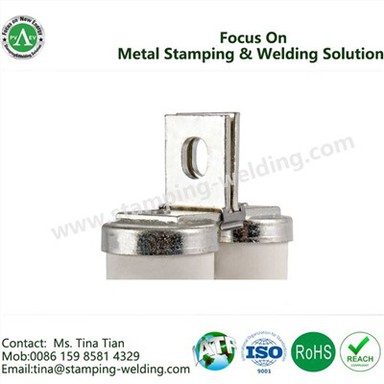


Copper Pipe End Cap For Fuse
Material:Copper
Application:EV/PV/NH Fuse link
MOQ:1000pcs
- Fast Delievery
- Quality Assurance
- 24/7 Customer Service
Product Introduction
Products Profile
The outer cap of a fuse typically has a cylindrical shape, commonly resembling a copper pipe end cap for fuse. The specific dimensions and design of the outer cap may vary depending on the type and specifications of the fuse. Its shape is carefully crafted to ensure compatibility with the fuse holder, enabling secure and proper installation.
The primary function of the outer cap is to establish an electrical connection between the contact part of the fuse and the fuse holder or socket. This connection allows the flow of electric current through the fuse. The outer cap serves as a critical pathway for the current to pass through, enabling the fuse to perform its protective function effectively.
In the event that the current exceeds the rated value of the fuse, the fuse is designed to open the circuit. This action interrupts the flow of current, providing protection against overcurrent and preventing potential damage or hazards. The outer cap, along with the contact part and other components of the fuse, work in tandem to ensure the safe and reliable operation of electrical systems.

Processing Technologies
When soldering Fuse Link Contact, it is important to avoid using excessive flux. While the right amount of flux is crucial, it is essential to understand that more does not necessarily mean better. Using an excessive amount of rosin flux can lead to several issues that can impact the welding process.
- Excessive rosin flux increases the workload of cleaning around the solder joints after welding Fuse End Blade Ferrules. This not only consumes additional time and effort but also hampers overall work efficiency. The excess rosin flux melts, volatilizes, and takes away heat, resulting in prolonged heating times.
- Insufficient heating time can lead to a "Slag inclusion" defect, where the flux is inadequately melted and mixes into the solder, causing undesirable flaws. This can compromise the integrity of the soldered joint, affecting its performance and reliability.
- When welding Fuse Fuse End Tag, an excess amount of flux can flow to the contacts. This can create a barrier between the contacts, leading to poor electrical contact and potential functional issues.
To ensure optimal soldering results, it is crucial to use an appropriate amount of flux, avoiding both excessive and insufficient quantities. Finding the right balance will not only streamline the cleaning process but also improve work efficiency and promote high-quality, reliable soldering connections.

Products Application
In the energy sector, the application of FUSE CAP AND CONTACT extends to various renewable energy systems, including solar power generation and wind power generation. These systems rely on complex circuits to capture, convert, and distribute energy efficiently.
FUSE CAP AND CONTACT play a crucial role in safeguarding these circuits and ensuring the smooth operation of energy equipment. By providing circuit protection, they prevent overloads and faults from compromising the performance and safety of the entire system.
In solar power generation systems, FUSE CAP AND CONTACT are utilized to protect the intricate network of solar panels, inverters, and batteries. They help maintain the integrity of the electrical connections and safeguard against potential issues caused by excessive current or abnormal conditions.
Similarly, in wind power generation systems, FUSE CAP AND CONTACT are employed to protect the electrical components, such as turbines, converters, and transformers. They act as the first line of defense against overcurrents, short circuits, and other electrical faults that can arise due to environmental factors or system malfunctions.
By incorporating FUSE CAP AND CONTACT in energy systems, operators can ensure the reliable and uninterrupted generation of renewable energy. These protective components contribute to the overall efficiency, durability, and longevity of the equipment, enabling the sustainable harnessing of solar and wind power resources.
Our Certificate
ISO 9001 certification holds immense significance as it represents the most globally recognized quality management standard. It applies to organizations across diverse industries, including our own. This esteemed certification validates that our company has successfully implemented a robust quality management system. By attaining ISO 9001 certification, we demonstrate our unwavering dedication to meeting customer expectations and delivering exceptional products and services. Our quality management system enables us to consistently enhance our processes, address customer requirements, and drive continuous improvement. ISO 9001 certification serves as a tangible manifestation of our commitment to maintaining the highest standards of quality in all aspects of our operations. It also serves as a solid foundation for establishing trust and fostering long-term relationships with our valued customers and esteemed partners. With ISO 9001 certification, we ensure that quality remains at the core of our organizational culture, driving our pursuit of excellence and bolstering our position as a reliable and customer-focused industry leader.

FAQ
How long can our tin-plated fuse caps be stored, and what are the recommended storage conditions?
Our tin-plated fuse caps are designed to maintain their quality and performance when stored correctly. When packaged and delivered, they can be stored for up to one year from the date indicated on the packaging label. To ensure optimal storage conditions, please adhere to the following guidelines:
Temperature: Store the fuse caps in an environment with a temperature range between -15°C and +30°C. It is important to avoid extreme temperatures that could compromise the integrity of the product. Additionally, prevent the presence of condensation, as moisture can lead to corrosion or other forms of damage.
Humidity: Maintain a relative humidity of 85% or less in the storage area. High humidity levels can promote corrosion and impact the performance of the fuse caps. Consider using dehumidifiers or storing the caps in moisture-controlled environments to mitigate humidity-related risks.
Avoid Corrosive Gases: Ensure that the storage area is free from corrosive gases. Exposure to such gases can lead to corrosion and deterioration of the tin-plated surface of the fuse caps, potentially affecting their functionality.
No Visible Dust: The storage area should be clean and free from visible dust particles. Dust can accumulate on the surface of the caps and interfere with their performance. Regular cleaning and maintenance of the storage area will help prevent dust contamination.
Protect from Direct Sunlight: Shield the fuse caps from direct sunlight during storage. Prolonged exposure to sunlight can cause discoloration, heat buildup, or other forms of damage. Store the caps in shaded areas or use opaque covers to protect them from sunlight.
Avoid Deformation: Do not subject the fuse caps to excessive loads or forces that may cause deformation or degradation. Proper handling and storage techniques should be employed to prevent any physical damage that could compromise the integrity of the product.
By adhering to these storage guidelines, you can ensure that our tin-plated fuse caps remain in optimal condition and perform reliably when needed.

Hot Tags: copper pipe end cap for fuse, China, manufacturers, suppliers, factory, Inner Cap, Fuse Holder Cap, Fuse Contact, Outer Cap And Contact For Automotive Fuse, End Cap And Contact Fuze Welding Components, T2 Copper End Caps And Fuse Contact