A Brief Analysis of the Causes of Metal Fracture: Common Failure Mechanisms and Analysis Methods
Mar 26, 2026
Metal structural components play a crucial role in the load-bearing and connection functions of industrial equipment and electronic products. A fracture often signifies a serious failure in system reliability. For stamped parts, conductive connectors, and structural components, fracture not only affects equipment lifespan but can also pose safety risks. Therefore, a systematic analysis of metal fracture mechanisms is particularly important in mechanical manufacturing, electronic components, and conductive connection systems. Especially in high-precision structural applications such as copper sheet stamping parts, material condition, stress conditions, and service environment all significantly influence fracture behavior.
Common Types of Metal Fracture
In engineering practice, metal fracture is typically caused by a variety of factors. Common failure modes include overload fracture, fatigue fracture, stress corrosion cracking, hydrogen embrittlement, creep fracture, and brittle cleavage fracture. For stamped structural parts, such as copper sheet stamping or conductive terminals, these failure modes are often closely related to material properties, structural design, and manufacturing processes.
1. Overload Fracture
Overload fracture occurs when the actual stress on a metal component exceeds its tensile strength. This type of fracture is usually accompanied by significant plastic deformation, such as necking or a pronounced shear lip structure. Tough materials often exhibit a cup-cone fracture surface, while brittle materials may show a relatively smooth fracture. The fracture surface is often dark gray, fibrous, or has a metallic sheen.
The main causes of overload fracture typically include insufficient structural safety factors, loads exceeding design limits, or low material strength. Similar failures can also occur in conductive connection structures, such as electrical copper stamping parts, if the design does not adequately consider actual load conditions.
2. Fatigue Fracture
Fatigue fracture is the most common type of fracture in engineering, accounting for 80% to 90% of all metal fractures. This type of fracture is mainly caused by long-term cyclic loading or alternating stress. Even when the stress level is far below the material's yield strength, cracks can form and gradually propagate after prolonged cycling.
A typical characteristic of fatigue fracture is the almost complete absence of plastic deformation before fracture. A fracture surface typically comprises three regions: the fatigue initiation region, the fatigue propagation region, and the final instantaneous fracture region. The fatigue propagation region often exhibits a conchoidal or beach-like structure. In electronic connection systems, such as conductive springs or terminals made of copper strip stamping, fatigue cracks are also prone to occur if sharp corners, notches, or stress concentration structures are present.

3. Stress Corrosion Cracking (SCC)
Stress corrosion cracking is a brittle fracture form that occurs when a material is subjected to tensile stress and a corrosive medium. The fracture surface usually exhibits both corrosion and mechanical fracture characteristics, with cracks often arranged in a dendritic pattern and possibly accompanied by the deposition of corrosion products.
This problem typically occurs when there is a mismatch between the material and the environmental medium, such as stainless steel structural components in a chloride ion environment. Similar problems may also arise in certain conductive structural components or copper-stamped components if they are exposed to a humid or corrosive environment for a long period of time, while residual stress is present.
4. Hydrogen Embrittlement Fracture
Hydrogen embrittlement is a brittle fracture caused by hydrogen atoms entering the interior of the metal lattice, significantly reducing the material's toughness. This type of fracture is typically delayed, meaning the material fails suddenly only after a certain period of time following stress.
The fracture surface is often relatively smooth, and microstructurally it often exhibits intergranular fracture. Hydrogen embrittlement is usually related to electroplating processes, welding environments, or hydrogen-containing media. In the production of certain metal stamping parts and electric copper structural components, improper control of electroplating or cleaning processes can also lead to hydrogen embrittlement risks.
5. Creep Fracture
Creep fracture mainly occurs in high-temperature environments. Even when the stress is below the material's yield strength, the metal will gradually undergo plastic deformation over time and eventually fracture. This type of fracture is usually accompanied by significant plastic deformation and numerous microcracks or creep cavities appear near the fracture surface.
Creep fracture is common in high-temperature equipment, such as boiler pipes or turbine components. In some high-temperature electrical structural components or pressing copper stamping and bending connection parts applications, if exposed to high-temperature environments for extended periods, the creep properties of the material also need to be monitored.
6. Brittle Cleavage Fracture
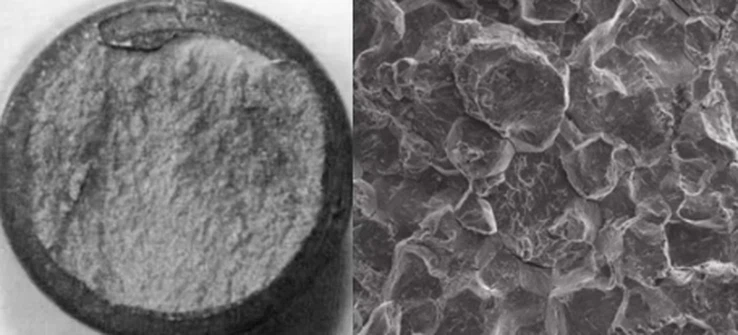
Brittle fracture typically occurs very suddenly, with almost no obvious plastic deformation before fracture. The fracture surface usually exhibits a crystalline or mirror-like structure and may display radial patterns or "herringbone" features.
This type of fracture often occurs in low-temperature environments, under impact loads, or when the material itself has defects. For certain high-strength conductive connection structures, such as cross-copper metal stamping or complex stamped structures, brittle fracture may also occur if the material has coarse grains or severe stress concentration.
Analytical Methods for the Causes of Metal Fracture
In engineering practice, fracture analysis usually requires a comprehensive assessment using multiple techniques. Through macroscopic observation, microscopic analysis, and material testing, the crack origin and failure mechanism can be gradually determined.
1. Macroscopic Fracture Surface Analysis
Macroscopic observation is the most direct analytical method. By observing the fracture surface with the naked eye or a magnifying glass, characteristic structures such as fatigue striations, shear lips, or radial ridges can be identified, thus providing a preliminary judgment of the fracture type.
For stamped conductive structural components, such as custom copper stamping or copper stamping processing connect parts, fracture often occurs in stress concentration areas; therefore, the fracture location itself is an important clue.
2. Microscopic Morphology Analysis
Scanning electron microscopy (SEM) is one of the most important tools in fracture analysis. High-magnification observation can identify typical microscopic features of different fracture mechanisms, such as dimples, fatigue striations, and cleavage steps.
In electronic connection structural components, such as copper stamping spring contacts for electrical switches, SEM analysis can clearly trace crack propagation paths and determine crack initiation locations.
3. Composition and Metallographic Analysis
Chemical composition analysis confirms whether the material meets design standards. Simultaneously, metallographic microscopy observation of grain structure, inclusion distribution, and surface decarburization can reveal potential material defects.
For complex structural components, such as custom copper rod stamping bending connect parts, metallographic analysis often reveals internal microstructural variations and processing defects.
4. Mechanical Property Testing
Tensile, hardness, and impact tests can be used to evaluate the strength, ductility, and toughness of materials and compare them with design specifications. This test data is crucial for determining whether fracture is caused by insufficient material properties.
In some conductive contact components, such as Copper Metal Stamping Electrical Silver Contact Parts, the balance between mechanical and electrical properties is particularly critical.
5. Comprehensive Analysis
The final determination of the fracture cause requires a comprehensive analysis considering factors such as the stress state of the part, the working environment, and the manufacturing process. Especially in the practical application of complex structural parts or OEM Factory Customized Copper Metal Stamping Parts, fracture is often not caused by a single factor, but rather is the result of the combined effects of materials, design, and processes.

Typical Fracture Surface Features under an Electron Microscope
At the microscopic level, different fracture mechanisms result in distinctive fracture morphologies.
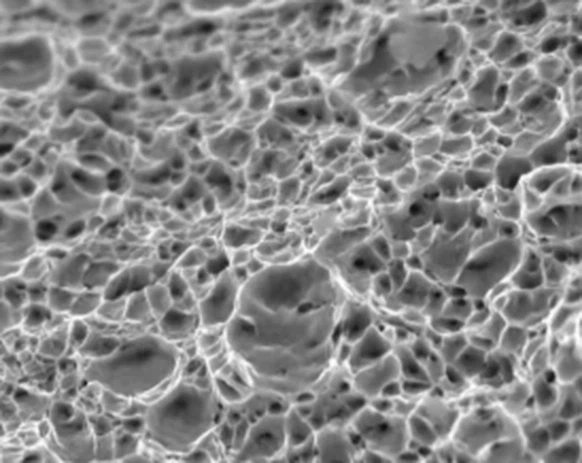
Ductile fracture typically exhibits a dense dimple structure, a typical characteristic of micropore aggregation. The size and depth of the dimples reflect the material's ductility level.
Fatigue fracture produces parallel fatigue striations, each typically corresponding to one stress cycle. Measuring the striation spacing allows for estimation of the crack propagation rate.
Brittle fracture exhibits cleavage steps and river patterns, while intergranular fracture displays grain boundary fractures resembling a candy-like structure. These characteristics are crucial for determining crack propagation paths.
Conclusion
Metal fracture is a complex material failure phenomenon, often closely related to material properties, structural design, processing technology, and service environment. Systematic fracture surface analysis, microstructural observation, and material testing can effectively identify fracture mechanisms, providing vital information for product design optimization and process improvement.
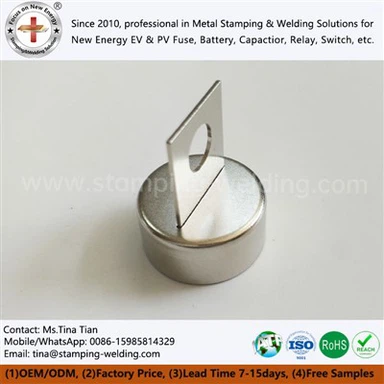
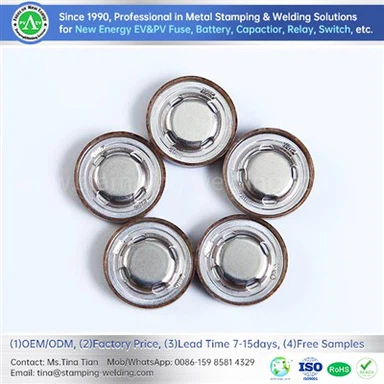
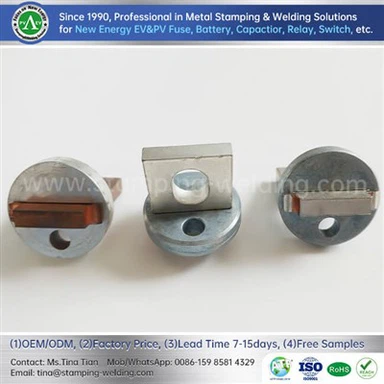
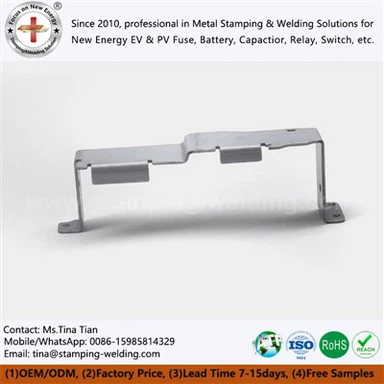
In the manufacturing of electronic connectors, electrically conductive components, and precision structural parts, high-quality copper stamped structural components are critical to system reliability. Advanced stamping technology and strict quality control enable the production of stable and reliable copper-stamped components and conductive connectors, providing long-term stable structural and conductive support for electrical equipment and electronic systems.

contact us