


Analysis and Solutions for Insulation Layer Cracking in Insulated Busbar for EV Capacitor
May 10, 2026
In the high-voltage systems of new energy vehicles, the insulation performance of the Insulated Busbar for EV Capacitor directly affects vehicle safety. Insulation layer cracking is a typical potential hazard; if not addressed promptly, it can easily lead to leakage, short circuits, and even trigger insulation fault alarms in the vehicle's high-voltage system, posing a serious threat to driving safety. Industry experts point out that resolving such faults requires a combination of emergency repairs and root cause optimization. Only by integrating the characteristics of BusBar Automotive products into a comprehensive solution can safety risks be fundamentally mitigated.
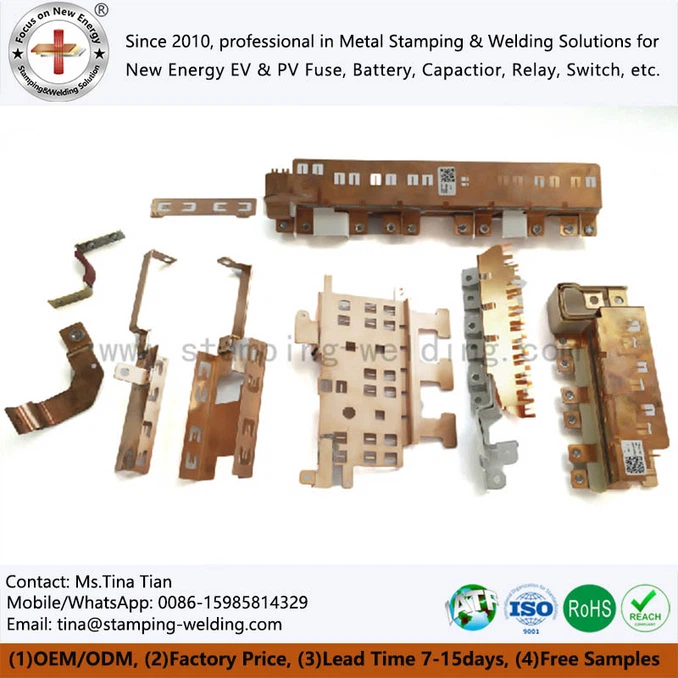
Emergency Treatment: Safe Repair Plans After Cracking
For the identified insulation layer cracking issues, emergency handling and repair must adhere to the principle of safety first, eliminating secondary hazards caused by improper operation. Once a physical fracture or significant crack is detected in the insulation layer of the Insulated Bus Bar, the relevant component must be immediately shut down, and a busbar assembly of the same specification must be replaced by a professional technician to ensure that the high-voltage protection performance is fully restored. For minor damage that complies with safety regulations, emergency reinforcement measures can be taken: First, thoroughly clean the cracked area to ensure the surface is dry, free of oil, and free of impurities; then, use high-voltage self-adhesive tape or insulating tape that meets vehicle high-voltage standards to reinforce external protection; next, fill the cracks with professional high-temperature resistant, high-insulation-strength silicone rubber or epoxy resin; finally, it is essential to use a megohmmeter (insulation resistance tester) or high-voltage tester to ensure that the high-voltage system insulation resistance reaches a standard of 500Ω to 1000Ω per volt before resuming use.
Root cause optimization: Upgrade path for insulation materials
If insulation layer cracking occurs in batches or frequently, a fundamental solution must be found by addressing the issue at the production design and process levels. This is the core path to improving the reliability of EV Bus Bars. Regarding insulation material upgrades, ordinary PET film can be replaced with polyimide film (PI) or high-performance reinforced composite materials, which offer superior mechanical strength, toughness, and aging resistance. Simultaneously, additional local insulation can be added, employing a double insulation scheme to improve the insulation layer's crack resistance from a material perspective. This optimization approach is also applicable to related products such as Film Capacitor Busbar for HEV / EV Motor Control Unit.

Process optimization: a key measure to solve stress concentration
Optimizing the busbar structure design and manufacturing process is key to solving stress concentration-induced cracking. During the fabrication of the laminated bar, a flexible film coated with an adhesive layer can be added to the structure, which is more likely to maintain integrity during thermal cycling. The adhesive layer material also needs to be optimized. At bar bends, increasing the radius of curvature reduces mechanical stress concentration and prevents localized insulation breakage. During processing, burrs on M6/M8 nuts and sharp metal corners must be thoroughly removed to prevent them from piercing the insulation film. Precise temperature and pressure control during lamination ensures uniform adhesive distribution and prevents micro-cracks in the insulation layer. This provides important guidance for the production and processing of the Copper Busbar for DC link EV Film Capacitor.

Environmental optimization: an auxiliary means to reduce the probability of cracking
Furthermore, improving the stability of the operating environment can effectively reduce the probability of insulation cracking. It is necessary to strengthen the fixation of high-voltage control boxes and capacitor components, enhance shock resistance, and prevent busbar fatigue cracking caused by vibrations during vehicle operation. Simultaneously, improving heat dissipation conditions in the driver and capacitor areas prevents excessively high temperatures from accelerating insulation material aging and extends the service life of insulated bus bars. Industry experts conclude that cracked busbar components should be replaced first. If cracking is widespread, the stability of the bar manufacturing process and the high-temperature aging resistance of the insulation materials used should be thoroughly investigated to reduce the failure rate at its source.
Industry Trends: Upgrading of Busbar Insulation Protection Technology
Currently, as new energy vehicles upgrade towards high-end and intelligent features, the reliability requirements for Bar automotive products are constantly increasing, and the insulation protection technology of core components such as Insulated Busbar for EV Capacitor is also being continuously optimized. In the future, the industry will further focus on material upgrades, process improvements, and structural optimization to continuously improve the safety performance of electric vehicle high-voltage systems, providing a guarantee for the high-quality development of the new energy vehicle industry.
Contact Us
For those seeking assistance with selection optimization, troubleshooting, and technical support for cracked insulation layers in Insulated Busbar for EV Capacitor, please contact us. We will provide professional solutions to help companies mitigate high-voltage safety hazards and improve product reliability.


