Analysis of electrostatic powder spraying technology principles and industry applications
Apr 24, 2026
Electrostatic powder spraying technology, often referred to as powder spraying, is an advanced process widely used in metal surface treatment. Its core is not simply coating, but a comprehensive application process involving physics, materials science and engineering. To understand this technology, we can start from a seemingly contradictory phenomenon: Why can dry solid powder be evenly and firmly adsorbed on the surface of the workpiece like liquid paint? The answer to this question points directly to the electrostatic adsorption effect, the cornerstone of electrostatic powder spraying technology.

Adsorption, covering and curing: from physical bonding to chemical transformation
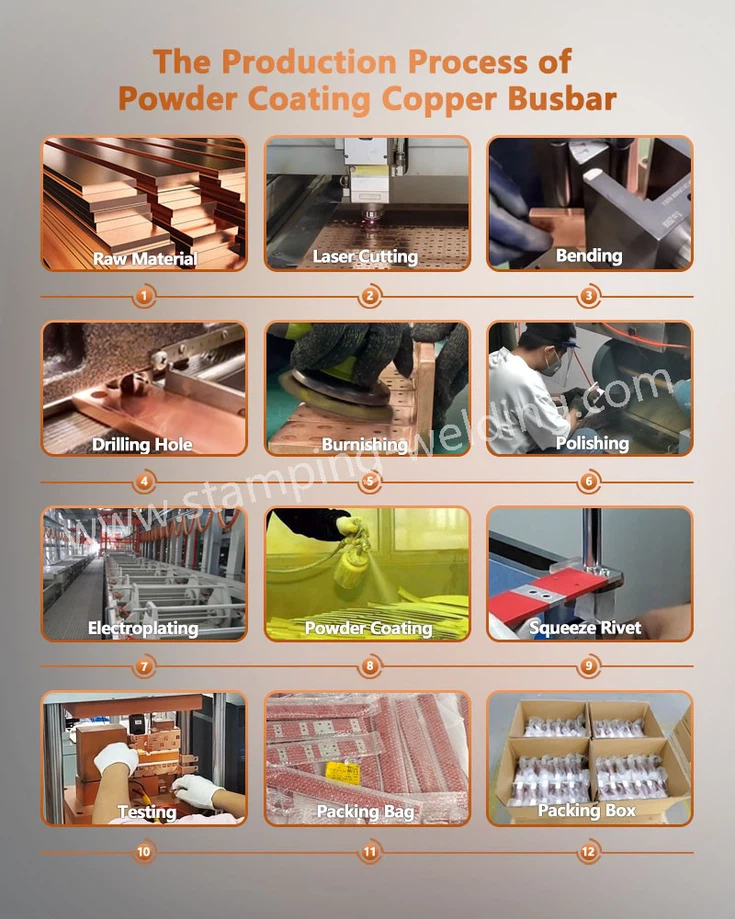
The charged powder particles are driven by the Coulomb force in the electrostatic field and fly toward the grounded workpiece along the direction of the electric field line. The initially adsorbed powder layer will form a certain insulating layer, but because the powder layer is loose and porous, the electrostatic force can still penetrate. Subsequent powders continue to be adsorbed until they reach a certain thickness. The surface charge and powder charge repel each other, the adsorption force weakens, and the deposition process tends to stop. This is called the "self-limiting effect." This feature makes it easy to obtain a uniform thickness of powder coating on flat surfaces.
After the powder is evenly attached, the workpiece enters the solidification stage. Curing ovens typically provide a temperature environment of 180°C to 200°C. During this process, the powder particles change from a glassy state to a viscous flow state, and undergo a series of physical changes such as melting, leveling, and wetting the surface of the workpiece. Subsequently, a cross-linking chemical reaction occurs between the resin and the curing agent to form a dense, continuous, and solid paint film. This step completes the final transformation of the coating from physical adsorption to chemical bonding, giving it excellent mechanical properties and corrosion resistance.
Not all powders can be used in this process. Electrostatic powder coatings are specially formulated and their ingredients usually include resins (such as epoxy, polyester), curing agents, pigments, leveling agents and additives. The resin determines the basic properties of the coating, such as weather resistance or chemical resistance; the curing agent ensures that cross-linking reactions occur when heated; and the leveling agent helps the molten paint spread evenly. These ingredients must meet demanding requirements such as being able to be electrostaticized, melt, level and solidify at specific temperatures, and remain physically and chemically stable during storage.
The intrinsic physical and chemical roots of technological advantage
Many advantages of electrostatic powder spraying technology stem from its basic principles. The high material utilization is directly attributed to the directional attraction of the electrostatic field and the efficient powder recovery mechanism. The coating performance is excellent because the curing process forms a fully cross-linked network polymer structure, and the coating can reach a thick thickness (usually 50-150 microns) with one spraying, without the need for multi-layer spraying. Environmental friendliness is reflected in the fact that the entire process involves almost no volatile organic compounds, since powder coatings contain no organic solvents.
However, the technology also has physical limitations. For example, the workpiece must be able to withstand a curing temperature of around 200°C, which excludes heat-sensitive materials such as plastic and wood. The workpiece must be a good conductor of electricity to ensure effective grounding. For non-conductive materials, surface pretreatment (such as spraying conductive primer) is required, which increases the complexity of the process.
Under a microscope, a high-quality powder coating presents a uniform, dense continuous phase, and the resin and pigment are fully integrated. For many liquid coatings, especially solvent-based coatings, the film formation process is accompanied by solvent evaporation, which can easily leave microscopic pores in the film or cause uneven distribution of pigments. Powder coatings also typically have a higher cross-link density, which is the microchemical explanation for their greater resistance to scratches and corrosion.
Application field expansion and evolution direction
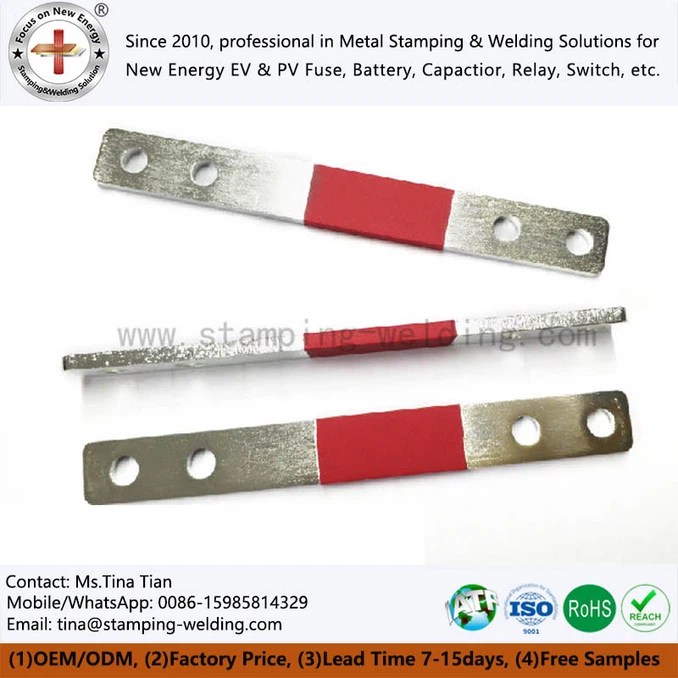
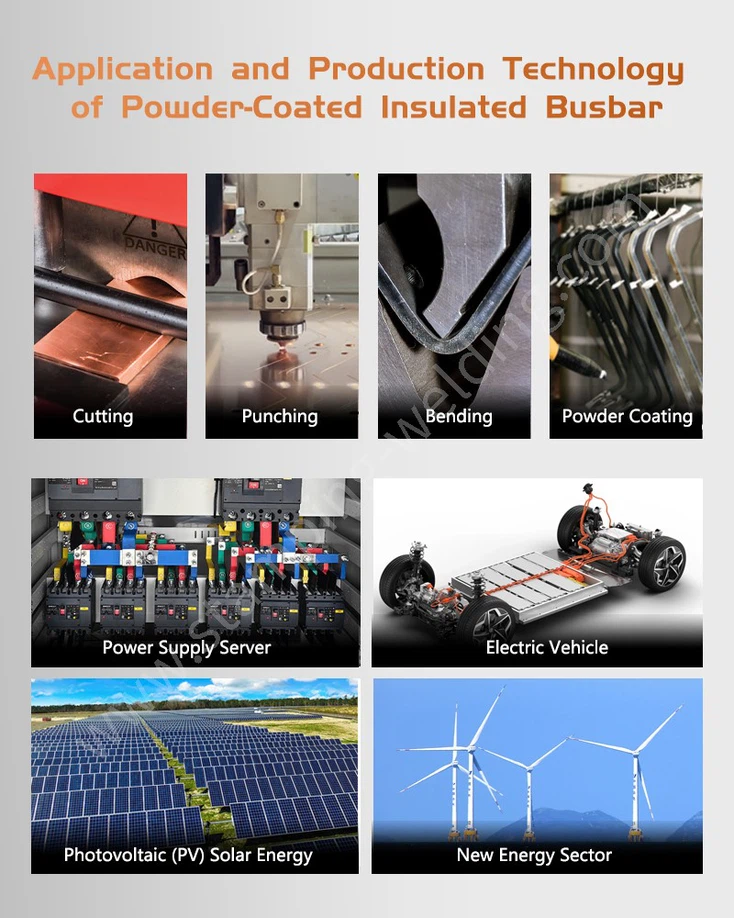
Based on the above principles, the application of this technology has expanded from traditional home appliances, furniture, and building materials to automotive parts, outdoor facilities, functional coatings for electronic products, etc. Car wheels and engine chassis parts take advantage of their high anti-corrosion properties; some electronic product shells use powder coatings with conductive or insulating properties to achieve electromagnetic shielding or insulation protection. In the power and electrical field, in application scenarios such as Insulation Coating Busbar, Electroplating and Powder Coating Busbar, and EV Busbar Powder Coating, powder spraying technology provides busbars with reliable insulation protection and environmental corrosion resistance.
Technology evolution closely revolves around core principles. The development of low-temperature curing powder aims to break through the limitations of heat-sensitive substrates; finer powder particle size control helps achieve thinner coatings and smoother surfaces; the intelligent control system automatically optimizes parameters to deal with different workpieces by monitoring current, voltage and powder flow in real time. Future research directions include the development of more efficient powder charging methods, electrostatic spraying solutions for non-conductive materials, and new material systems that further reduce curing energy consumption.
contact us
Our company specializes in the processing of various busbar insulation coatings and can provide diversified surface treatment solutions such as epoxy powder spraying, electroplating and coating. The products cover Epoxy Powder Coating Insulated Busbar, electric vehicle busbars and customized epoxy powder coated busbars, etc., and are committed to meeting customers' professional needs in terms of conductive performance, insulation withstand voltage and durability. If you have any relevant needs, please feel free to inquire and negotiate.