Mechanisms of deformation and systematic prevention approaches for Lithium solar batteries
Apr 24, 2026
Overview of the causes of deformation in Lithium solar batteries
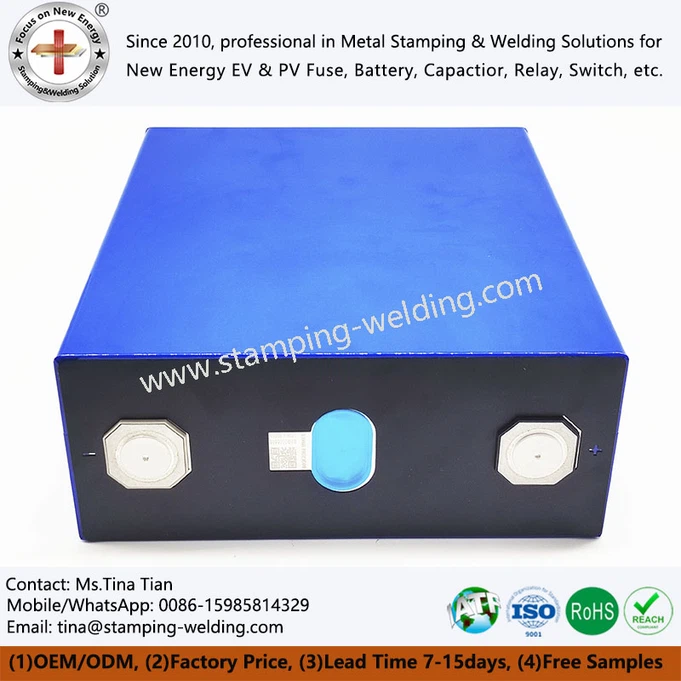
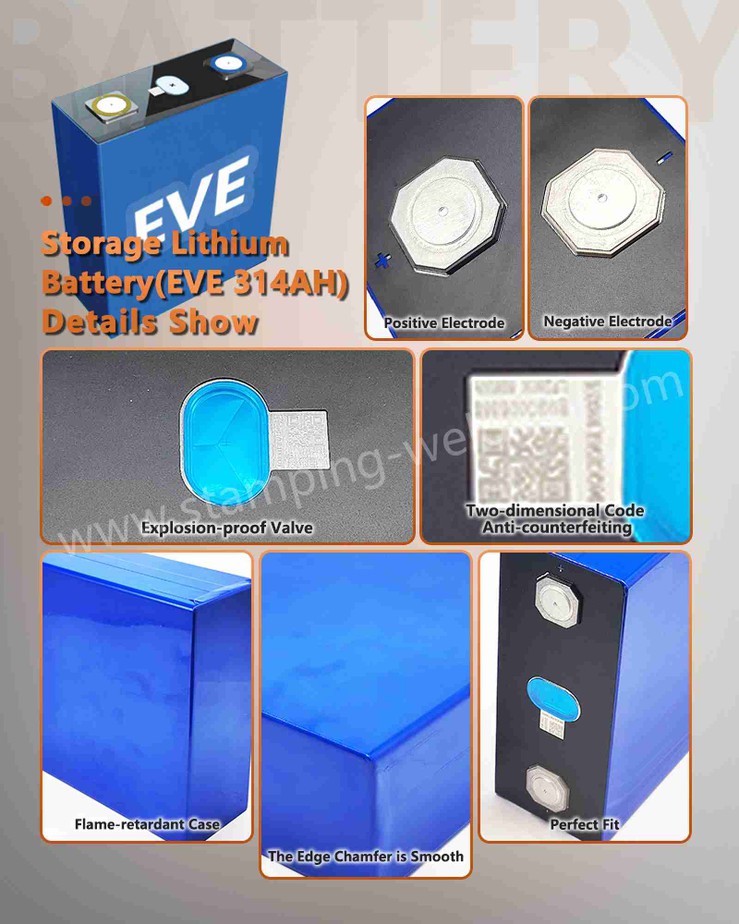
Power battery cells have been widely used in fields such as new energy vehicles due to their regular structure and high energy density. However, due to the anisotropic characteristics of the material itself, uneven forces are applied in the length and width directions during the production process, which can easily lead to deformation phenomena such as unevenness in the shell, thereby affecting the safety performance and service life of the battery.
The occurrence of deformation problems in Lithium-ion batteries is closely related to the material characteristics, manufacturing processes, and internal environmental control of battery cells. It is necessary to systematically analyze the causes from multiple dimensions and take targeted prevention and control measures. This article analyzes the deformation mechanism of lithium iron phosphate power batteries, proposes systematic prevention strategies, and provides technical references for industry production.
The core reason for deformation of lithium solar batteries
In the Lifepo4 power cell production system, the structural stability of the shell is directly related to product reliability, and deformation issues are usually the result of the combined effects of material properties, process control, and internal thermodynamic states. From the perspective of material and structural dimensions, the material selection and strength design of aluminum shells are fundamental factors. If 3003 aluminum alloy with lower tensile strength or shell thickness less than 0.6 mm is used, it is prone to yield deformation under internal pressure and thermal stress.
In addition, the welding heat affected zone experiences a 20% to 30% decrease in local strength due to lattice reorganization, becoming a high-risk area for stress concentration and deformation. If the laser welding process is not properly controlled, such as when the power exceeds 300 W or the welding speed is below 30 mm/s, it can cause local temperatures to far exceed the melting point of aluminum (660 ℃), the molten pool to be too deep, and the cooling shrinkage stress to significantly increase; Unreasonable weld bead design, such as the lack of stress relief notches in continuous circular welding or weld bead width less than 0.8 mm, can also reduce the load-bearing capacity of the weld and exacerbate the risk of deformation.

Deformation prevention and control strategy
In response to the deformation mechanism of the Solar energy storage systems lithium batteries pack mentioned above, a prevention and control system can be constructed from the aspects of materials, structure, welding processes, etc. In terms of material and structural optimization, efforts should be made to improve the load-bearing capacity of the shell. It is recommended to use 5052 aluminum alloy with higher tensile strength, add 0.5 to 1.0 mm high reinforcement ribs in the top cover area, and increase the thickness of the shell to 0.8 to 1.0 mm.
At the same time, the Lithium battery pack adopts a composite process combining laser welding and ultrasonic welding to reduce single point heat input and enhance the stability of the welding area. The welding process needs to be finely controlled, and it is recommended to use a gradient power welding scheme, such as a parameter combination of 200 W/30 mm/s for the starting section, 250 W/25 mm/s for the middle section, and 180 W for the ending section, to control the depth of the heat affected zone within 0.5 mm. The weld bead design has been changed from continuous welding to segmented welding mode, with each section length ranging from 5 to 8 mm, leaving a 2 mm stress release zone, and increasing the weld bead width to 1.2 mm to enhance the weld bead bearing capacity.
Deformation prevention and control strategy
The internal pressure control of the Battery pack kit needs to be carried out from two directions: expansion compensation and gas production suppression. In terms of structural design, an elastic buffer layer with a compression rate exceeding 50% can be installed on the inside of the cover plate, with a reserved expansion space of 0.5 to 1.0 mm to alleviate the pressure impact caused by negative electrode expansion. In terms of chemical system optimization, adding 1% to 2% FEC film-forming additives during the injection process can effectively suppress abnormal damage to the SEI film, control the gas production under full charge within 0.5 ml/Ah, and reduce internal pressure accumulation from the source.
In terms of process control, the Lithium-ion battery pack should introduce intelligent detection technology and use a visual positioning system in the assembly process to control the positioning accuracy within ± 0.05 mm; Upgrade the welding fixture to constant force clamping mode to ensure that the clamping force fluctuation of 20 to 30 N does not exceed 5%, reducing the risk of deformation caused by assembly deviation. Add a pressure detection station during the formation stage, which will automatically sound an alarm when the detected pressure exceeds 5 kPa. At the same time, combined with X-ray detection of shell deformation rate, the threshold will be controlled within 0.3% to achieve early identification and intervention of deformation problems.
contact us
If you encounter technical difficulties related to deformation of Lithium solar batteries or need process optimization support during the production process, please feel free to contact us through the platform, and we will provide you with professional solutions and technical consultation.