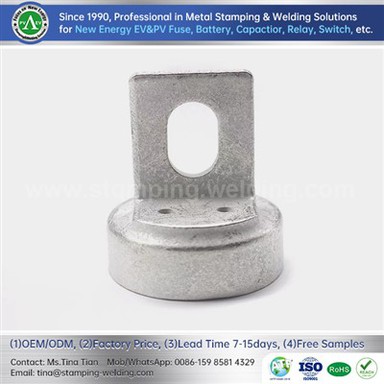
Analysis of the EV Capacity Busbar Market and Potential New Application Areas
Feb 12, 2026
Industry Application Overview
Against the backdrop of the continuous promotion of carbon neutrality goals, EV Capacity Busbar, with it excellent electrical performance, continue to expand their applications in key fields such as new energy vehicles, photovoltaic power generation, wind power generation, and flexible direct current transmission. The overall market demand is showing a steady expansion trend. As an indispensable basic component in power electronic equipment, its filtering, voltage regulation, buffering, noise reduction and other functions provide important support for the efficient, stable and safe operation of new energy systems.

Core application areas
In the field of new energy vehicles: EV Capacity Busbar is mainly used in electric drive systems, on-board chargers (OBC), and supporting charging stations in new energy vehicles. As the core component, the electric drive needs to convert the DC power of the power battery into AC power, which can cause severe current fluctuations and oscillating voltages during operation, threatening the lifespan of semiconductor devices and generating noise. BusBar Automotive can effectively absorb pulse voltage, filter out high-frequency interference, buffer circuit impact, and protect the stable operation of the vehicle's electrical system.
Photovoltaic power generation field: The photovoltaic inverter is the core equipment of the photovoltaic power generation system, responsible for converting the direct current generated by the photovoltaic array into alternating current and integrating it into the power grid. Automotive BusBar PET Insulation, as a key internal component of inverters, participates in power conversion, voltage stability, and harmonic suppression. It plays an important role in improving inverter efficiency, ensuring system reliability and service life, and is an important basic component for efficient operation of photovoltaic systems.

Technical Principles
The core technological advantages of composite current collectors are mainly reflected in three aspects: structural design, energy density improvement, and enhanced safety mechanisms. Structurally, it adopts a typical "sandwich" sandwich structure, using PET, PP, PI and other polymer materials with a thickness usually less than 8 μ m as the base film. Through vacuum coating, magnetron sputtering, electroplating and other processes, copper or aluminum conductive layers are deposited on both sides of the base film of the Automotive Ground Bus Bar to form a stable "polymer metal layer polymer" composite structure. In terms of performance, due to the much lower density of polymer materials compared to traditional metals, it can reduce the overall weight of the current collector by 50% -70%, indirectly increase the energy density of lithium battery cells by 10% -15%, and significantly reduce the amount of metal materials used, achieving the dual goals of lightweight and high efficiency. In terms of safety assurance, composite current collectors have two key mechanisms: one is the short-circuit effect. When the battery is subjected to extreme situations such as puncture, the middle polymer insulation layer can quickly block current conduction, effectively suppressing the risk of thermal runaway; The second is excellent resistance to lithium dendrites. The base film of Car Battery Bus Bars can block lithium dendrites from penetrating the separator, significantly reducing the probability of internal short circuits in the battery and further improving its safety during use.

Industrialization prospects and market value
Composite current collectors, with their advantages of lightweight, high safety, and high efficiency, are gradually becoming an important direction for upgrading lithium battery technology. At present, the EV BusBar industry is in the stage of technical validation and small-scale trial production. The industry chain is gradually improving in equipment, materials, applications, and other aspects, and the mass production capacity continues to increase. With the maturity of manufacturing processes, efficiency improvement, and cost optimization, composite current collectors are expected to achieve large-scale applications in the future, promoting the development of lithium batteries towards higher energy density and higher safety, and also bringing new market space for Auto Bus Bar related materials and processes.
Contact Us
With the continuous iteration of new energy technology, both the performance upgrade of EV Capacity Busbar and the innovative application of composite current collectors require high-quality material and process support. If you need to explore more technical solutions or customized needs, please feel free to contact our professional team at any time, and we will provide you with accurate product services.