In-depth analysis of Industrial BusBars: Clarifying understanding and promoting efficient industrial development
Feb 13, 2026
In various core industrial scenarios such as industrial power supply and distribution, high-end manufacturing, new energy, and substations, Industrial BusBar and related products are the core foundational support for ensuring stable production operations, running through the entire process of power transmission, equipment power supply, and precision machining. Whether it is power distribution in factory workshops, power transfer in substations, or power transmission to new energy equipment, all rely on the efficient empowerment of busbars. The selection of materials, specifications, surface treatment processes, and scenario adaptability directly affect the efficiency and safety of power transmission, the service life and operational stability of industrial equipment, and even the smoothness and economy of the entire production process. They are indispensable and irreplaceable core basic components in industrial production and important supporting facilities for the digital and intelligent transformation of industry.

Busbar: Core component of power transmission
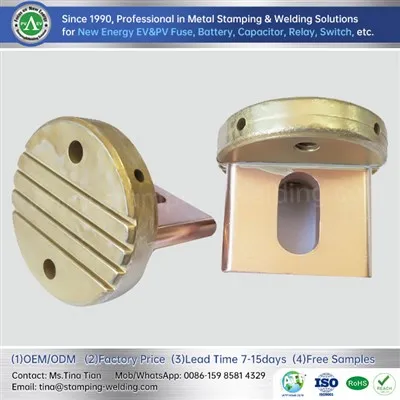
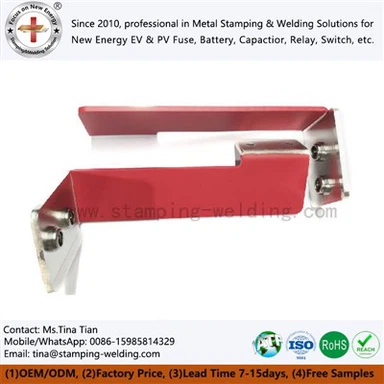
In industrial power distribution scenarios, the BusBar is the mainstream term for "industrial busbar" and a core component of the power transmission system. Its technical specifications directly determine the stability and efficiency of the power distribution system. From a technical definition, a Bar Electric is a conductor connecting various current-carrying branch circuits in a power distribution device. Its core function is to collect, distribute, and transmit electrical energy, building a power transmission bridge between transformers, distribution cabinets, and various industrial electrical equipment. Regarding materials and specifications, bars primarily use copper and aluminum as base materials. Tinned Copper Bars, due to their tin-plated surface, effectively improve corrosion resistance and conductivity stability, making them suitable for complex scenarios such as precision industrial power distribution and high-frequency start-stop operations. Product shapes are divided into three categories: rectangular bars, tubular, and flat. Rectangular bars are suitable for conventional power distribution scenarios, tubular bars offer better heat dissipation, and flat bars are suitable for space-constrained installation environments. In terms of technological advantages, compared with traditional cables, bars have the core characteristics of high current density, low resistance loss, convenient installation and high space utilization. They are especially suitable for high current and high power industrial scenarios. Among them, BusBar in Substation has become a core component of substation power distribution system due to its high current carrying capacity and impact resistance, which can significantly improve the stability and safety of power transmission.

Key points of busbar surface treatment
- Core Principles of Surface Treatment: Busbar surface treatment is a crucial process for ensuring bar performance and extending service life. The treatment method must be rationally selected based on the characteristics of the substrate, application scenario, and performance requirements. The core purpose is to improve the bar's corrosion resistance, conductivity, and insulation, mitigating the impact of complex industrial environments on transmission efficiency and laying the foundation for long-term stable operation of the busbar.
- Mainstream Surface Treatment Methods: Currently, there are three main types of mainstream bar surface treatment methods in the industry: Tin plating is the most widely used, namely Tinned Copper Busbar (as mentioned earlier). By plating a uniform tin layer onto the copper bar surface, it isolates the copper substrate from air and moisture, preventing oxidation, reducing contact resistance, and improving conductivity stability, making it suitable for precision power distribution and humid environments. Silver plating is mostly used in high-precision scenarios, offering optimal conductivity and low resistance loss, but at a higher cost, suitable for industrial equipment with high transmission efficiency requirements. Passivation treatment is mainly applied to aluminum busbars, forming a dense protective film through chemical passivation to inhibit oxidation and improve corrosion resistance, suitable for conventional industrial power distribution scenarios, balancing protection and economy.

Technology upgrades and scenario boundaries
In the field of power transmission, the technological upgrade of Electric Busbars focuses on high current carrying capacity, low loss, and intelligence. With the rapid development of smart grids, new energy storage, and industrial microgrids, sub-categories such as Inverter Busbars are gradually being applied on a large scale. Their technical characteristics, adapted to high-frequency inverter scenarios, can effectively improve the power transmission efficiency of new energy power generation systems. At the same time, the optimization of bar materials and the upgrading of structural design further reduce resistance losses, making them suitable for more complex industrial power distribution environments. In the manufacturing sector, the core of technological iteration for industrial machine tools is high precision, automation, and intelligence. Their technological upgrades will directly drive the improvement of competitiveness in high-end manufacturing industries.

summary
Industrial BusBar are core basic components in industrial production, widely used in power supply and distribution, new energy, and other scenarios, primarily responsible for power collection, distribution, and transmission. As the core carrier of power transmission, the material, specifications, and surface treatment (tin plating, silver plating, passivation, etc.) of busbars directly affect transmission efficiency and equipment lifespan, requiring scientific selection based on the base material and application scenario. Simultaneously, it is crucial to clearly define the conceptual boundary between bars and industrial machine tools to avoid selection errors. In the future, bar products will be upgraded towards high current carrying capacity, low loss, and intelligence to adapt to more complex industrial scenarios.
contact us
If you have any needs regarding Industrial BusBar selection, surface treatment adaptation, or related technical consultation, please feel free to contact us for professional solutions.