

Copper Busbar
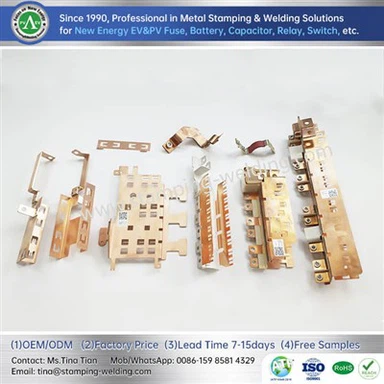
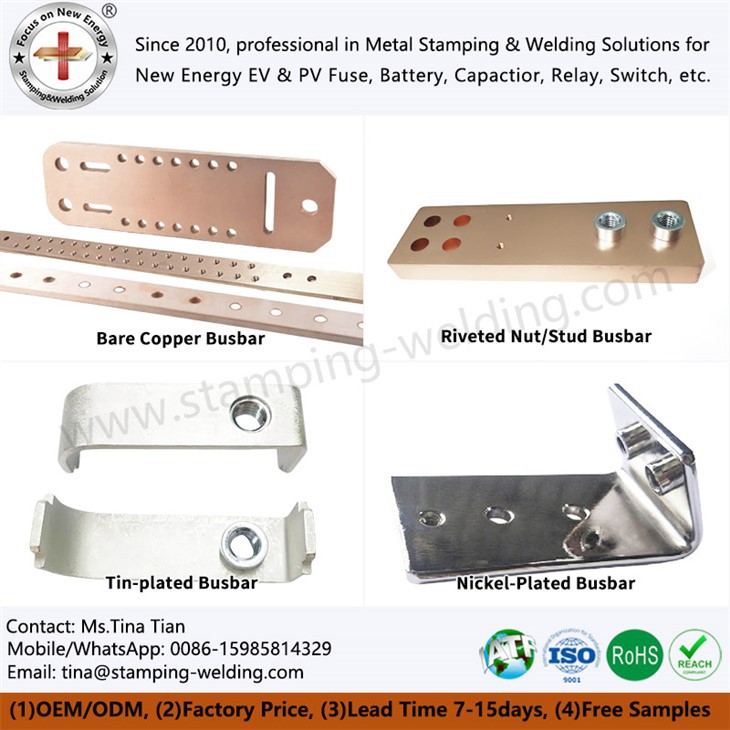
Xiamen Apollo specializes in the R&D and manufacturing of non-insulated copper busbars. Our core product lines include Bare Copper Busbars, Riveted Nut Copper Busbars, Tinned Copper Busbars, and Nickel-plated Copper Busbars. Our service network covers the fields of electric power, the new energy industry, rail transit systems, industrial equipment manufacturing, and data center infrastructure. Relying on the three core competitiveness of high conductivity, strong corrosion resistance, and customized service capabilities, we continue to provide safe, reliable, efficient, and energy-saving electrical connection system solutions to global customers.
- Fast Delievery
- Quality Assurance
- 24/7 Customer Service
Product Introduction
Overview of product series
Our company specializes in the research, development, and production of non-insulated copper busbars, encompassing four series: Bare Copper Busbars, Riveted Nut Copper Busbars, Tinned Copper Busbars, and Nickel-plated Copper Busbars, catering to the diverse needs of multiple fields, including power, new energy, and industrial equipment. The Copper BusBars take high conductivity, corrosion resistance, and customized services as their core advantages, providing customers with reliable electrical connection solutions.

Product classification and characteristics
1. Bare copper busbar

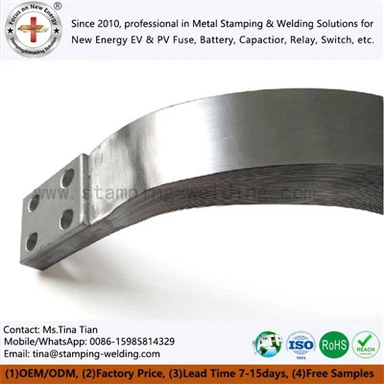
1.1 Material advantages:Pure copper material (T2/Y2), conductivity ≥97% IACS, excellent thermal conductivity.
| Purity | ≥99.99% Copper |
| Conductivity | 97% IACS |
| Hardness | 80~110HV |
| Tensile Strength | 245-345MPa |
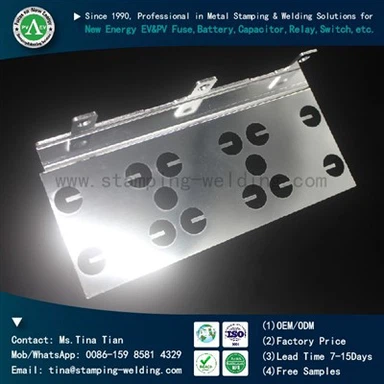
Non-plating design, cost-effective, suitable for dry, non-corrosive environments.
1.2 Surface treatment: The surface is brushed and brightly treated, the surface is smooth and non-oxidized, and the contact resistance is reduced. Surface passivation treatment prolongs the anti-oxidation time and service life of the Copper BusBar.
1.3 Production process:
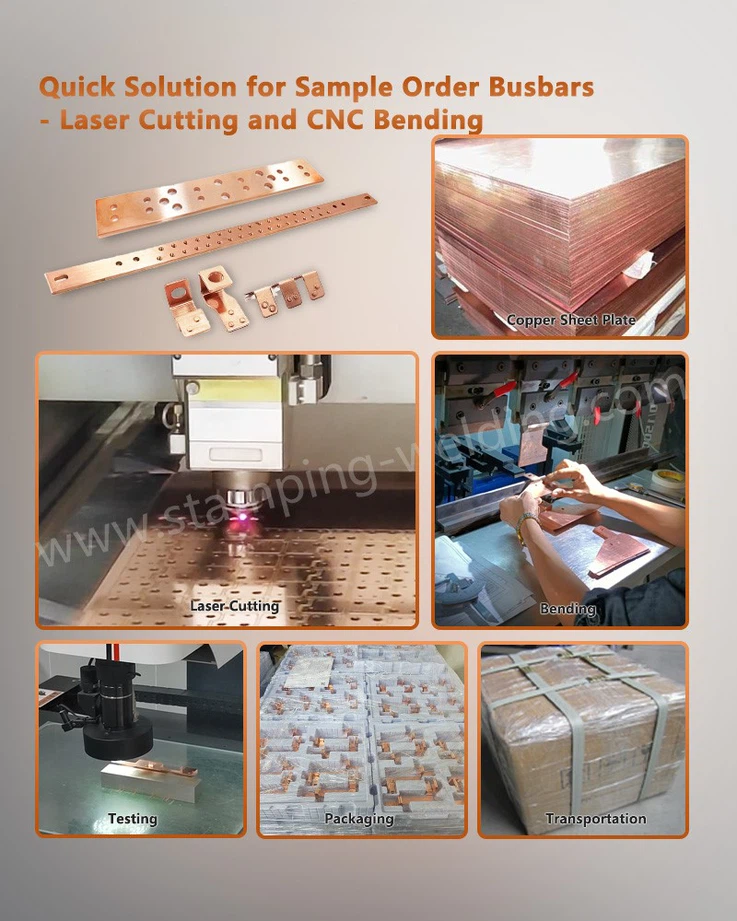
| Sample or small batch order | laser cutting → CNC punching/bending → surface stretching and polishing → surface passivation treatment → quality inspection → packaging |
| Large batch order | progressive die continuous stamping → surface passivation treatment → quality inspection → packaging |
2. Riveted Nut Copper Busbar

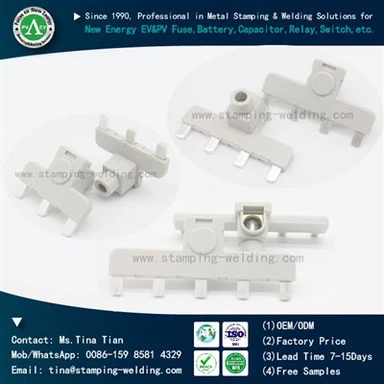
2.1 Material advantages: Electrical Copper busbar and stainless steel nuts/studs are integrated and riveted to ensure high mechanical strength.
American brand PEM stainless steel nuts/studs are preferred, and customized thread specifications (M4-M12) are supported. These are easy to install, shock-resistant, and loose-proof.
2.2 Mechanical connection reliability
| Vibration failure resistance | The plastic deformation connection formed by the riveting process (pressing depth 0.3-0.5mm) has a vibration resistance level of ISO 16750-3 (10-2000Hz, 20g), which is 3 times longer than the service life of welded nuts (prone to fatigue fracture) and threaded pre-installed nuts (high vibration loosening rate) (actual measurement of a wind power project: 5 years without loosening vs. 2 years of cracking of welded nuts). |
| Anti-loosening design | After riveting, the nut and the copper bar form a mechanical bite, and the torque retention force is >85% (M8 nut: 12N·m preload, still >10N·m after 1000 vibrations), which is suitable for high-frequency vibration scenarios such as rail transit and engineering machinery. |
| Shear strength | The shear force at the riveting point is >15kN (GB/T 17880.3 standard, 3mm thick copper bar), which is 1.5 times that of the welded nut (8-10kN), suitable for the dynamic load of high-current busbars. |
2.3 Installation efficiency and adaptability
| Welding-free/chip-free processing | Riveting time <3 Seconds/point (automated equipment), 4 times faster than welding (cooling required), and no thermal deformation affects the conductivity of the copper busbar (the resistance of the heat-affected zone of welding increases by 5-8μΩ). |
| Plug and play | The Copper Solid Bus Bar with pre-installed riveted nuts can be directly assembled with bolts without on-site tapping or welding, which is suitable for rapidly deploying modular power distribution cabinets and data centers. |
| Adapt to special-shaped copper busbars. | It can be riveted on complex Electrical Copper bus bars (such as L-shaped and stepped) after bending and punching. |
2.4 Application Scenario Adaptation
| Application scenario | Advantages of riveted nuts | Disadvantages of alternative solutions |
| Railway transportation | Anti-vibration (IEC 61373 Class 1B), maintenance-free | Welded nuts are prone to fatigue cracking, and threaded nuts need to be tightened regularly |
| Datacenter | Fast modular installation, supports blind insertion | Welding requires on-site hot work, and pre-installed threads are prone to misalignment |
| New energy equipment | Temperature resistance (-40℃~125℃), salt spray resistance (C4-M grade) | Welding plating is easy to fall off, and life in a corrosive environment is short |
| Industrial control cabinet | Supports high-frequency disassembly and assembly (>200 times), with no risk of thread stripping | Traditional nuts fail after 50disassembliesy and assemblies. |

3. Tin-Plated Copper Busbar

3.1 Material advantages: The tin-plated layer (thickness 3-5μm) improves oxidation resistance and is suitable for humid environments.
The tin layer reduces contact resistance and enhances welding compatibility.
3.2 Tin plating process
| Thickness control | 3-5μm (ASTM B577 standard), using acid sulfate electroplating process, plating uniformity ≤±10% |
| Surface treatment | Pre-nickel plating (5μm) + pure tin plating after electrolytic polishing, forming a "nickel barrier layer + tin protective layer" double structure, blocking the formation of copper-tin intermetallic compounds (suppressing IMC thickness <3μm/10 years) |
| Bonding strength | 100-grid test level 0 (ASTM D3359), hot and cold shock (-40℃~150℃, 500 cycles) without peeling |

3.3 Electrical performance
| Contact resistance | Tin-plated surface (roughness Ra≤0.8μm) with serrated gasket, contact resistance <50μΩ (1000A load) |
| Conductivity retention | Tin layer conductivity ≥11.5MS/m (98% of copper), oxide layer resistance suppression (25℃/RH95% environment, 1000 hours of oxidation weight gain <0.5mg/cm²) |
| Temperature rise control | contact temperature rise ≤45K under rated current (IEC 61439-1), temperature rise <80K within 30 minutes when overloaded 1. |
3.5 Production process: Copper busbar pretreatment → electroplating tin → salt spray test → packaging
3.6 Typical applications:
Ship the electrical system, communication base station
High-humidity environment power distribution equipment
4. Nickel-Plated Copper Busbar

4.1 Material advantages:
Nickel-plated copper busbar (thickness 8-12μm) is resistant to high temperature and corrosion and is suitable for extreme environments.
High surface hardness (HV200+) and excellent wear resistance.
4.3 Electrical performance difference:
Contact resistance: Nickel plating initially 80μΩ (tin plating 50μΩ), but tin plating increases 5 times after 1000h oxidation (nickel plating only increases 15%)
High-temperature stability: Nickel plating at 200℃ for 1000h without changing resistance (tin plating starts to oxidize at 150℃, resistance increases 3 times)
High-frequency loss: Nickel plating skin effect loss is 18% lower at 10 kHz (suitable for frequency converters/inverters)
Temperature rise control: Nickel plating temperature rises 55K (tin plating 45K) at 1000A load, but tin plating accelerates aging above 85℃

4.5 Scenario selection suggestions:
| Application scenario | Nickel-plated copper busbar (recommended) | Tin-plated copper busbar (preferred) |
| Ambient temperature | >85℃ (charging pile/photovoltaic) | ≤70℃ (conventional UPS/distribution cabinet) |
| Vibration level | >5g (rail transit/vehicle) | <3g (data center/office building) |
| Corrosion level | C5-M (coastal/chemical) | C3 (city/indoor) |
| Cost-sensitive | Insensitive (single node cost is 40% higher, but life is 5 years longer) | Sensitive (low initial cost, suitable for a 5-year replacement cycle) |
| Typical cases | Beijing-Shanghai high-speed railway traction converter (12 years of trouble-free) | Alibaba data center UPS (5-year replacement cycle) |
4.7 Surface treatment:
Chemical nickel plating or electroplating nickel process, strong coating bonding, and low porosity.
Can pass 48-hour neutral salt spray test (ASTM B117).
4.8 Production process: Copper busbar degreasing→activation→nickel plating→passivation→performance testing→packaging
Our production strength
1. Intelligent production workshop
It occupies an area of 20,000㎡and is equipped with fully automatic punching machines (tonnage 50-300T), CNC bending machines, CNC punching machines, nut/stud riveting machines, and precision electroplating lines.
Monthly production capacity reaches 500 tons, supporting non-standard customization (tolerance ±0.01mm).

2. Mold development capabilities
Self-built mold centers can quickly respond to special-shaped holes and multi-angle bending needs, and adapt to customer-specific designs.
3. Product customization capabilities and processes
Customized service
Process: Demand confirmation → 48-hour quotation → 15-20-day proofing → mass production → global delivery.
Delivery Guarantee: pre-acceptance video + logistics tracking, 24-hour response to quality issues.
4. Strict quality control
Full process testing: raw material spectral analysis → process size sampling → finished product conductivity/plating thickness test.
Passed ISO 9001, IATF 16949 certification, in line with GB/T 5585.1 standard.
5. Technical certification and patents
Owns 15 copper busbar processing patents (including 3 invention patents).
The plating process has obtained SGS environmental protection certification and meets the EU ROHS and REACH directives.
6. Cooperating with customers and reputation
Serving more than 500 companies around the world, including ABB, BYD, Tesla, Siemens, and other industry leaders.
Customer evaluation: "The supply is stable, and the salt spray resistance of nickel-plated copper busbars exceeds expectations!"

contact us

Hot Tags: copper busbar, copper bus bar, copper busbar manufacturer, custom copper busbar, copper busbar supplier, copper power busbar, copper electrical busbar, EV copper busbar, energy storage copper busbar, high current copper busbar
No Information