Busbar technology overview
May 15, 2026
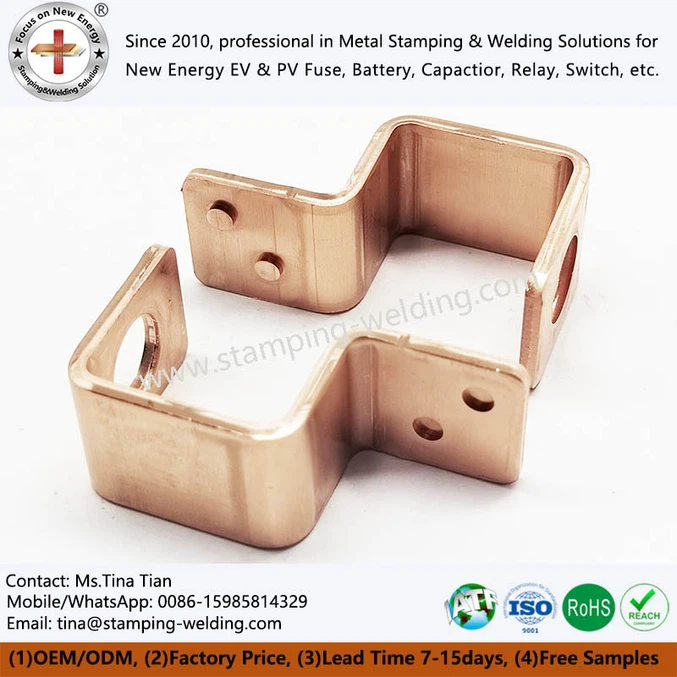
Busbar is a conductive metal conductor used to collect and distribute electric current. It plays the core function of efficiently conducting electric energy from the power source to various electric loads in the power distribution system. As a key connection node for electrical equipment such as circuit breakers, fuses, and switches, it is widely used in distribution panels, switchgear, and transformers. In the field of new energy vehicles, the busbar specifically refers to the multi-layer composite structure connection bar inside the battery pack used to connect single cells or modules, and is responsible for the collection, distribution and transmission of current. The main manufacturing materials of busbars are copper and aluminum. Copper busbars commonly use T1/T2 copper, with a purity of not less than 99.90% and high conductivity, which is suitable for high current density and high reliability scenarios. Aluminum busbars mostly use 1 series pure aluminum or 60 series aluminum alloy, with a density of 2.7g/cm³, which is low cost and contributes to lightweight design. BusBar Copper has become the preferred solution for high-reliability applications due to its excellent electrical conductivity and mechanical strength.
Structure and design
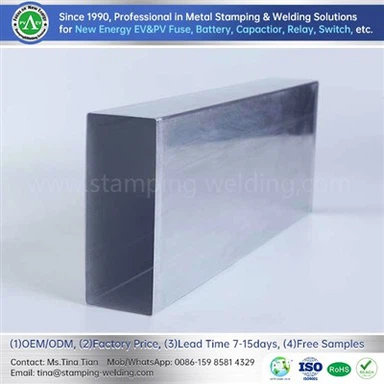
The structural forms of busbars include flat busbars, rectangular busbars, tubular bars, and laminated busbars. The circular cross-section design helps reduce the skin effect and improve current transmission efficiency. Connection methods mainly include welding and bolt tightening, among which laser welding can effectively reduce contact resistance. Thermal management is an important design element of all electrical systems and is directly related to the long-term reliability and life of the system. The design needs to comprehensively consider natural convection, forced air cooling and radiation heat dissipation mechanisms. Natural convection and radiation are the main heat dissipation methods. Forced air cooling can increase the current-carrying capacity by 2 to 3 times. High-performance insulation materials such as PET rated at 105°C or Thermal 130°C insulation, extend service life. In the application of electric vehicle battery packs, the integrated busbar (CCS) integrates signal acquisition components, plastic structural parts and conductive bars to realize high-voltage series and parallel connection of cells and information collection functions. Generally speaking, busbar design needs to take into account multi-dimensional factors such as current capacity, mechanical strength, heat dissipation performance and environmental adaptability. High Voltage BusBar requires special attention to insulation performance and temperature rise control in high-voltage electrical systems.

Industry application
As the core component of power transmission, busbars are widely used in power scenarios such as switchboards, switchgear, and transformers. In the automotive, data communications, telecommunications, test and measurement, medical and industrial fields, busbars are responsible for current conduction and equipment connection functions. As of 2025, tin-plated electrolytic copper bars in specifications such as 4×40, 4×60, and 6×80 have been widely used in the electrical and chemical industries. In new energy vehicle battery packs, the busbar serves as a key connection component responsible for current collection, distribution and transmission functions. Busbar products with fire-resistant properties can guarantee a power supply for 3 hours at a high temperature of 1000°C. Flame-retardant materials have begun to be used in high-voltage busbar components to reduce the risk of thermal runaway. Power Bar BusBar plays an irreplaceable role as the main power transmission channel in industrial power distribution equipment.

Development frontier
Busbar technology is continuing to develop in the direction of high voltage, integration and intelligence. In order to adapt to high voltage and high current requirements, 800 VDC busbars have been used in high-voltage scenarios such as data centers to provide high reliability and low-loss power distribution. The research and development of new materials focuses on performance improvement and cost reduction. Polypropylene compound flame-retardant materials are used in high-voltage busbars. They have the advantages of lower cost, strong expansion and carbonization ability, excellent flame retardant properties and good high temperature resistance. Integrated development is reflected in CCS integrated busbar technology, which integrates signal acquisition components, plastic structural parts and copper and aluminum busbars to realize high-voltage series and parallel connection of cells and sampling functions, and has become a key component of the battery management system. In thermal management and efficiency optimization research, the laminated busbar uses PET insulation material with a rated temperature of 105℃ or Thermal 130℃ insulation material. The radiation effect can reduce the temperature by 40%. The efficiency of low-voltage insulated tube busbars is affected by multiple factors. System performance can be continuously optimized through refined design and management. The 3 phase busbar system requires the impedance balance of each phase in the three-phase power distribution to ensure load balance and operational stability.
contact us
We focus on R&D and production of various high-quality Power BusBar. We strictly control every production process and are committed to providing customers around the world with Flexible Braided connection solutions with excellent performance, safety and reliability.