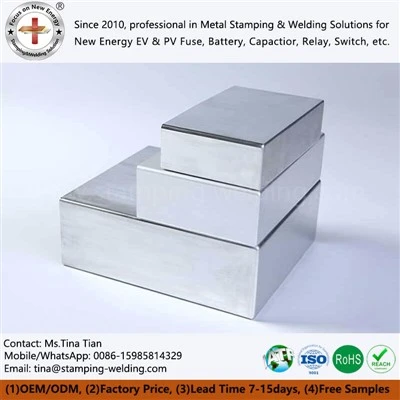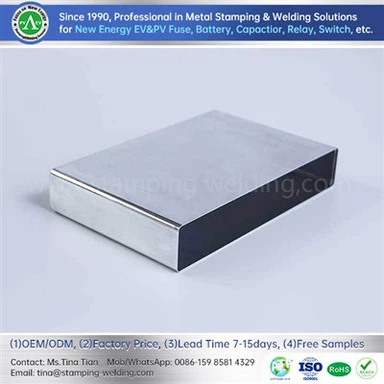
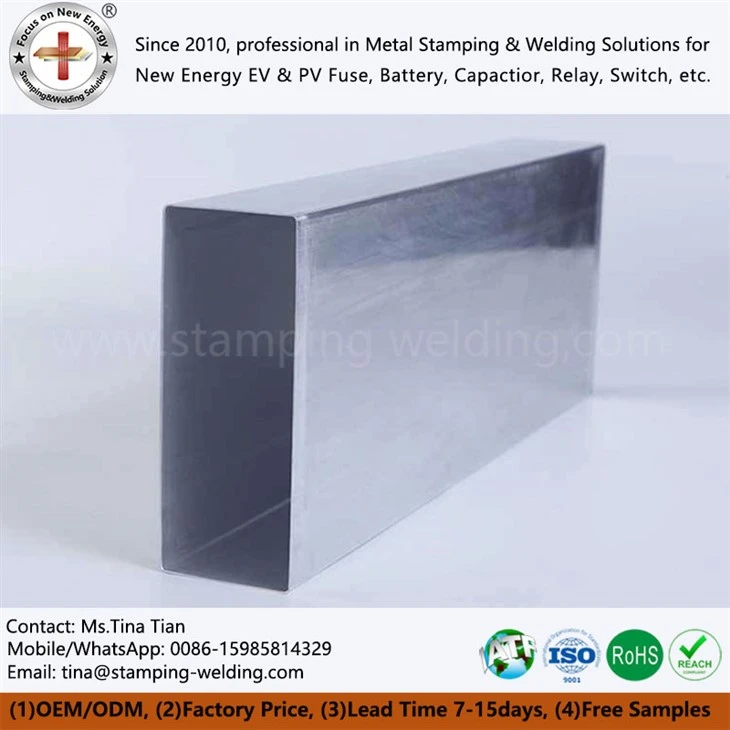

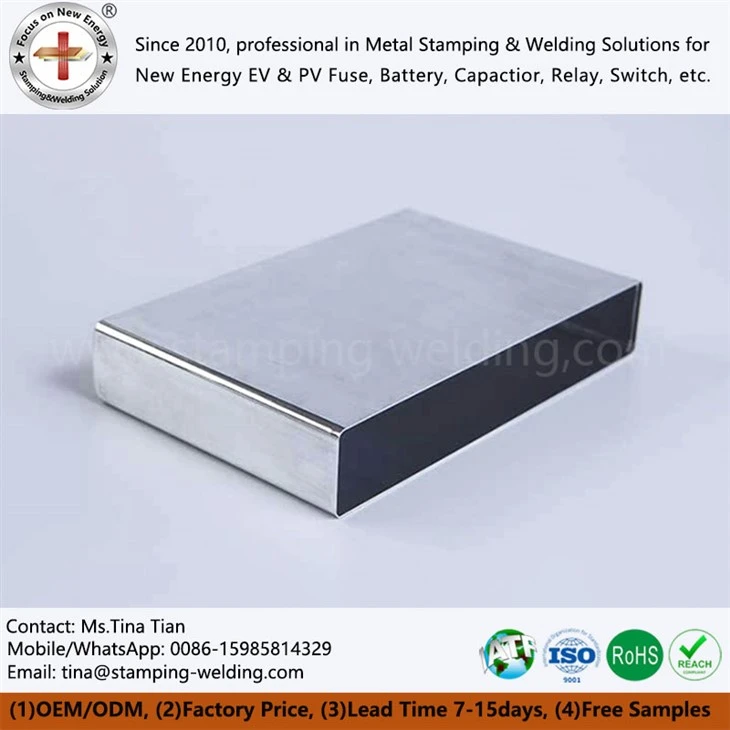

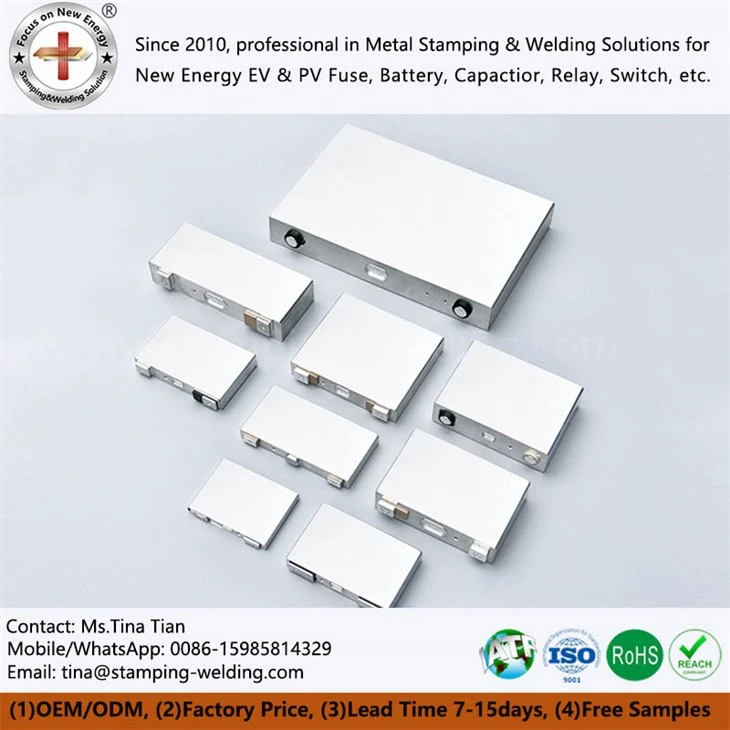
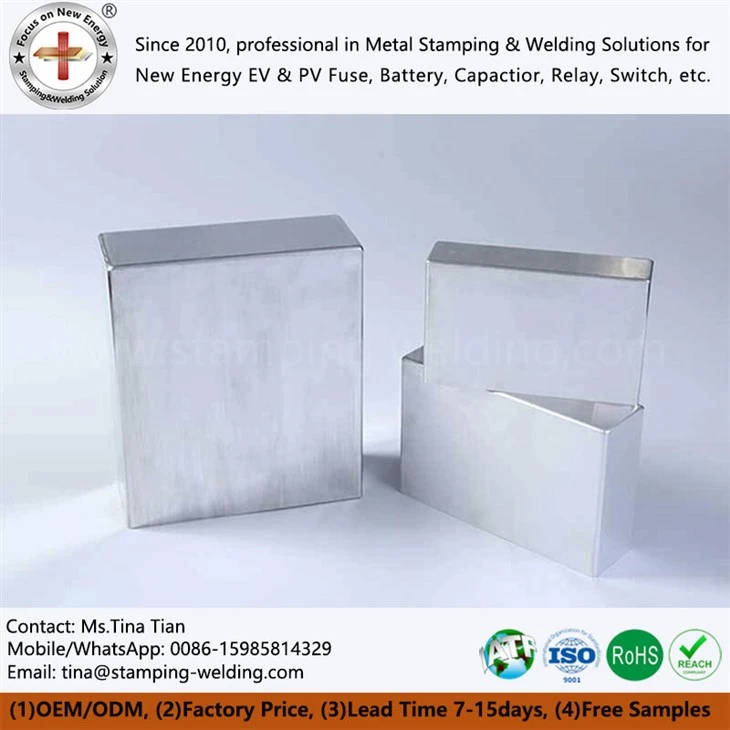
Power Battery Prismatic Aluminum Housing
Power Battery Prismatic Aluminum Housings are precision aluminum alloy components designed for prismatic lithium-ion cells—including those for electric vehicles (EVs) and energy storage systems (ESS). They form the external enclosure for the cell and provide a foundation for stable mechanical protection, structural support, and thermal management of the internal electrochemical system. Unlike standard metal casings, these prismatic aluminum housings must meet multiple engineering requirements simultaneously, including material formability, dimensional consistency, structural rigidity, weldability, sealing reliability, and compatibility with downstream cell assembly processes. Particularly for EV and ESS applications, the housing is far more than a simple "package"; its structural design directly impacts cell assembly precision, module space utilization, and long-term operational stability.
- Fast Delievery
- Quality Assurance
- 24/7 Customer Service
Product Introduction
From a fundamental manufacturing perspective, the creation of a rectangular aluminum casing involves subjecting an aluminum alloy sheet to intense plastic deformation under the strict constraints of a die: the sheet is stretched to several times its original length, the material undergoes significant thinning at the base and corner transitions, and the edge material is subjected to differing stresses in both circumferential and radial directions. This implies that half of the casing's ultimate quality is determined the moment the sheet is blanked.
We therefore define the casing as a product where "design sets the upper limit, the manufacturing process sets the lower limit, and the system ensures stability":
Design Upper Limit: The soundness of the structural shape, corner radii, and wall thickness distribution determines the casing's optimal potential;
Manufacturing Lower Limit: Stamping parameters, die precision, and lubrication management determine the baseline for the actual delivered product;
System Stability: Only by integrating these three elements into a unified, controlled process can one eliminate the gap between the first unit produced and the millionth.
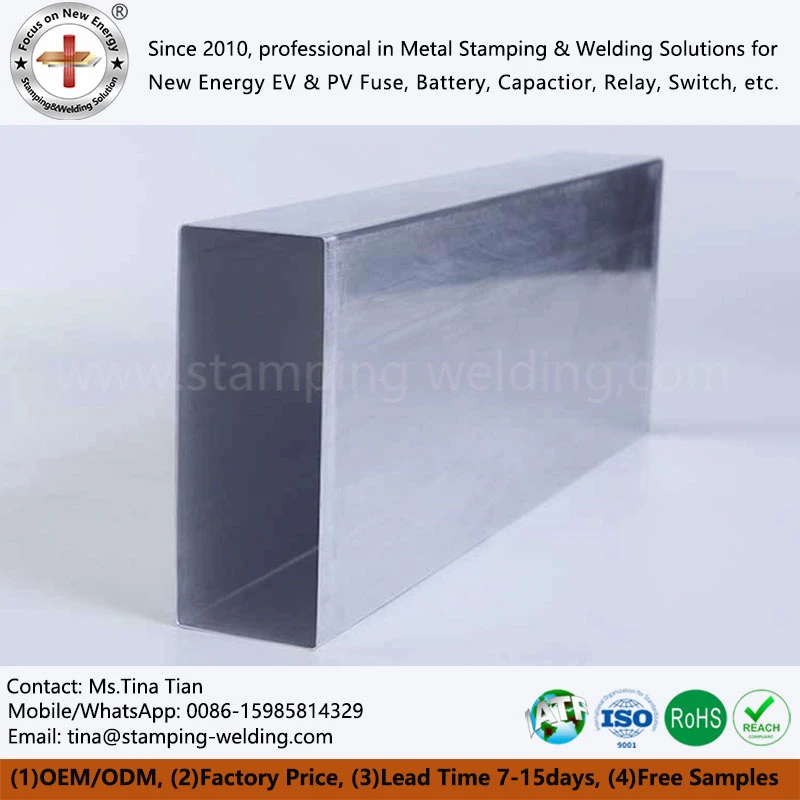
Battery Aluminum Housing Material Advantages: Supporting Downstream Manufacturing Processes
The choice of material for aluminum alloy battery casings directly impacts deep drawing depth, corner forming, springback control, and the quality of subsequent welding operations.
Take the commonly used 3003-H14 aluminum alloy, for instance; it offers excellent plasticity and formability, making it suitable for the stamping and deep drawing of complex cavity shapes. At the same time, factors such as material temper, sheet thickness, and rolling direction influence the dimensional stability of the final product.
Consequently, for mass production projects, we focus not only on the material grade but also on batch-to-batch consistency and the compatibility between the material and the forming process.
For projects requiring higher mechanical strength, corrosion resistance in specific environments, or particular thermal conductivity, alternative aluminum alloys may be selected based on actual operating conditions.

Key Functions for Aluminum shell for prismatic lithium ion battery
Mechanical Protection
Provides external mechanical protection for the internal electrode sheets, electrolyte, and other internal components of the cell, while maintaining a stable cell shape.
01
Structural Support
Serves as a primary external structural component of the prismatic cell, providing a foundation for the subsequent assembly of the cover plate, module, and battery pack system.
02
Foundation for Thermal Management
Aluminum alloy offers good thermal conductivity, acting as a medium for heat transfer between the cell and external thermal management structures. Actual thermal management performance depends on the integrated design of the cell, thermal interface materials, cooling structures, and the overall battery pack system.
03
Spatial Integration
The prismatic casing facilitates the orderly arrangement of cells, helping to improve space utilization within the battery system and accommodating various module configurations.
04
Foundation for Sealing
The opening of the casing interfaces with the cover plate, creating a stable connection point for subsequent sealing and welding processes.
05

Frequently Asked Questions for Aluminum Alloy Prismatic Battery Case
Q1: Our housing has a unique shape; how do we assess its suitability for deep drawing?
-
Upon receiving your drawings, we conduct a preliminary forming process review. We provide a feasibility assessment and structural optimization recommendations-covering corner radii, draw ratios, and wall thickness requirements-free of charge and without any obligation to proceed with production.
Q2: Will the quality remain consistent between small-batch prototyping and future mass production?
-
Our quick-change tooling system allows small-batch runs and mass production to utilize the same tooling paths and process parameters. Prototyping results translate directly to mass production, eliminating the risks associated with switching manufacturers or processes.
Q3: How do you control the impact of rim precision on welding yields?
-
We prioritize the control of rim earing/trimming and overall flatness. Standards can be jointly defined based on your laser welding specifications, and inspection data for these critical features is provided with every shipment.

contact us
If you are developing a new EV or ESS prismatic cell project, you can directly submit your 2D/3D drawings, material specifications, and annual volume requirements. Our engineering team will evaluate manufacturing solutions-considering materials, forming processes, tooling, and mass-production consistency-to support your lithium cell battery Aluminum shell through engineering expertise and stable, high-volume production capabilities, rather than relying on price competition.

We have leading-edge continuous stamping technology. Since continuous stamping has the advantages of efficient production, high precision, reduced labor costs, wide applicability, high automation, saving raw materials and reducing secondary processing, more and more people are choosing to adopt continuous stamping technology. To process aluminum battery casings to ensure the consistency and precision of aluminum battery casings.
Hot Tags: Power Battery Prismatic Aluminum Housing, Prismatic Lithium Battery Aluminum Housing, Prismatic Battery Aluminum Case, EV Battery Aluminum Case