Causes of Automotive Battery Terminal Patina and Factors Affecting Battery Life
Oct 09, 2025
In modern automotive electrical systems, the automotive battery terminal bus bar, and battery bus bar are key conductive components. They not only transmit electrical energy but also directly impact the vehicle's starting performance, energy recovery efficiency, and battery life. With the continuous advancement of automotive bus bar and busbar connector technology, the stability of vehicle electrical connections has become a key research area in the industry.

Mechanism of Terminal Patina Formation
In actual use, the appearance of "patina" (Cu₂(OH)₂CO₃) on the surface of automotive battery terminals or automotive bus bars is a common chemical phenomenon. This green oxide layer is primarily caused by two factors:
1. Electrolyte Leakage Reaction
When acidic electrolyte seeps through the gaps between the battery terminals, it chemically reacts with the copper in the bus bar connector, forming basic copper carbonate. This reaction typically occurs as the battery ages and its seals deteriorate.
2. Oxidation in Humid Environments
In environments with high humidity, copper reacts with oxygen, water, and carbon dioxide, naturally forming a patina. This oxide film gradually thickens, reducing the electrical conductivity of the automotive power busbar.
While patina won't immediately damage the battery, if not cleaned promptly, it can significantly increase contact resistance and affect the overall current conduction efficiency of the busbar system.
Patina Treatment and Protection Measures
Oxidation can be treated and prevented through the following methods:
Hot Water Cleaning and Mechanical Removal: After softening the oxide layer with hot water, gently clean it with non-metallic tools to avoid scratching the busbar surface coating.
Anti-Oxidation Coating: After cleaning, apply protective grease or insulating grease to the terminal or the Automotive Busbar Connector to form an isolation layer and reduce exposure to air.
Enhanced Environmental Protection: Busbar insulation can be added during the design phase to prevent moisture corrosion and electrolyte leakage.
High-level protection measures are particularly important for the long-term stable operation of the Power Busbar, especially in the high-voltage systems of new energy vehicles, where insulation performance and corrosion resistance directly impact vehicle safety.
Key Factors Affecting Battery Life
The typical service life of an automotive battery is three to six years, but this lifespan can vary significantly due to differences in usage environment, driving habits, and electrical system load. Key factors affecting battery life include:
1. Long-term low-charge state
When a battery is operated at low charge for extended periods, sulfation of active materials accelerates, leading to rapid capacity loss. Even a structurally optimized Automotive Busbar system cannot compensate for the chemical degradation caused by long-term undercharging.
2. Vehicle usage frequency and mileage
Frequent starting and stopping and short-distance driving prevent the alternator from fully replenishing its charge, resulting in continuous low battery life and shortening battery life. Maintaining a driving distance of at least 5 kilometers per trip helps extend the battery lifecycle.
3. Vehicle static discharge and attached electrical devices
Electronic devices such as anti-theft systems and dashcams continuously consume power when the vehicle is parked, causing battery self-discharge. If the Busbar Connector is left in a charged, slightly discharged state for extended periods, it can also lead to contact corrosion and increased contact resistance.
4. Power Usage with the Engine Off
Prolonged use of the radio or vehicle charging port with the engine off can cause deep battery discharge, stressing the electrical conductivity and stability of the Automotive Bus Bar system and the battery bus bar connection, increasing contact heating and energy consumption.
The Critical Role of the Bus Bar System in Automotive Electrical Systems
In both traditional fuel-powered and new energy vehicles, the Automotive Bus Bar or Bus Bars perform a core function in energy distribution. Their electrical conductivity, oxidation resistance, and mechanical stability determine the safety and efficiency of the entire electrical system.
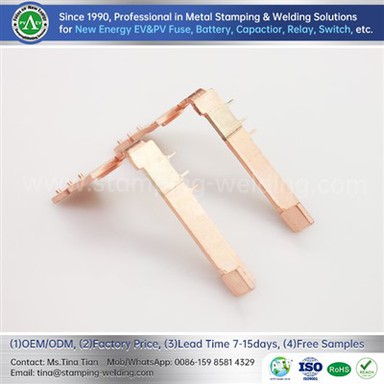
High-Conductivity Copper Material and Plating Technology: The use of high-purity copper or copper alloys in the manufacture of the Automotive Battery Terminal Bus Bar effectively reduces energy consumption and voltage loss.
Modular Bus Bar Systems: Modern vehicles often utilize an integrated Bus Bar Connector design that combines welding, crimping, and bolting processes to ensure long-term electrical connection stability. Insulation and Protective Structure: Adding busbar insulation improves high-voltage resistance and prevents short circuits and corrosion.
These design details directly impact the overall vehicle's electrical stability. Especially in new energy vehicles, the insulation level, heat resistance, and compactness of the power busbar system are key indicators.

Summary and Development Trends
With the increasing electrification of vehicles, the technological level of the automotive busbar, battery busbar, and busbar systems will directly determine the overall vehicle's electrical performance. To address the issue of patina, the industry is continuously improving conductive stability and corrosion resistance through improvements in materials, protective coatings, and connection processes.
In the future, technologies such as intelligent busbar monitoring, real-time current detection, and nano-anti-oxidation coatings will further extend the service life of the automotive power busbar, enhancing the safety and reliability of both new energy and conventional vehicles.
contact us