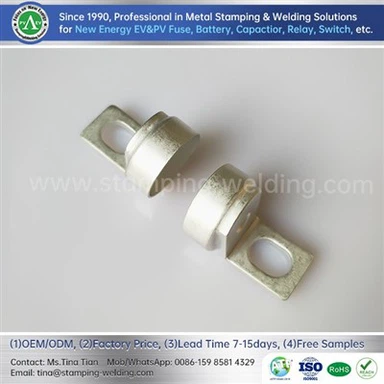


Lithium Polymer Cell Aluminum Shell
With the advancement of new energy vehicles, energy storage systems, and smart power equipment, requirements for the structural safety, space utilization, and long-term reliability of lithium batteries are constantly rising. As a critical structural component, the Lithium Polymer Cell Aluminum Shell not only protects the battery cell but also influences the battery's overall structural integrity, heat dissipation efficiency, sealing performance, and the stability of subsequent module integration. Xiamen Apollo specializes in the manufacturing of precision metal structural components for the new energy sector, providing highly consistent aluminum alloy casing solutions to lithium battery manufacturers, energy storage system integrators, and clients across the new energy vehicle supply chain. These products are crafted from high-performance aluminum alloys through a manufacturing process that includes precision stamping, deep drawing, sizing, cleaning, and quality inspection.
- Fast Delievery
- Quality Assurance
- 24/7 Customer Service
Product Introduction
High-Strength, Lightweight Aluminum Alloy Structure
Aluminum casings for prismatic lithium batteries are typically manufactured from aluminum and aluminum alloys, reducing overall weight while ensuring structural integrity.
Compared to traditional steel battery casings, aluminum alloy housings offer:
Lower material density, helping to reduce the weight of the battery system;
Good corrosion resistance, enhancing long-term operational stability;
Excellent thermal conductivity, facilitating heat transfer during cell operation;
Good processability, making them suitable for forming complex structures.
Aluminum alloy materials provide stable support within limited space, enabling higher space utilization for the battery pack, making them a key choice in the structural design of prismatic lithium batteries.

Application Advantages for Aluminum shell for lithium ion prismatic cell
Consumer Electronics
Our manufacturing expertise aligns perfectly with the requirements for thin, lightweight, and aesthetically pleasing casings for devices such as smartphones, tablets, TWS earbuds, and smartwatches.
Drones and Model Aircraft
Combining high-energy-density cells with lightweight casings directly reduces the overall weight of the unit, thereby extending flight time.
Portable Energy Storage and Digital Accessories
Our capacity for mass-producing small-to-medium capacity cells-combined with consistent product aesthetics-meets the stable, high-volume production needs of brand-name clients.
Medical and Wearable Devices
Our precision manufacturing capabilities for miniature casings satisfy stringent medical-grade quality control standards.

Manufacturing Process of Prismatic LFP cells Aluminum Shell: Route Selection Represents Engineering Value
Deep Drawing Route
Suitable for thin-walled housings with relatively regular cross-sections produced in high volumes. While requiring higher initial investment in tooling, it offers low per-unit costs and excellent consistency, making it the preferred choice for power-related products.
Extrusion + Machining Route
Suitable for elongated module housings, those with ribbing, or designs requiring integrated forming. It offers design flexibility and short tooling lead times, providing better cost-efficiency for small-to-medium production batches.
CNC / Sheet Metal Processing Route
Suitable for prototypes, irregularly shaped parts, and small-batch validation phases. It facilitates rapid design iteration but entails higher per-unit costs and greater material waste.

Frequently Asked Questions for lithium dry cell battery Aluminum shell
Q1: Must polymer cells use aluminum-laminated film? When should I switch to a hard-shell design?
-
A: Not necessarily. Hard-shell designs are often the superior choice when the application requires rigid protection, puncture resistance, precise dimensional control, automated assembly, or module-level integration. Conversely, soft-pack designs retain advantages if the priority is extreme thinness/lightness and flexibility in shape. We can objectively evaluate the pros and cons of both approaches based on your structural constraints and pack configuration, rather than simply pushing a single product type.
Q2: Should I choose deep drawing, extrusion, or CNC machining?
-
A: It depends on production volume, cross-sectional complexity, and project timelines. Generally, deep drawing suits high-volume production with regular cross-sections; extrusion is ideal for long profiles with ribs or for small-to-medium batches; and CNC machining is best for prototypes and validating irregular shapes. Upon receiving your drawings, we will provide a cost and lead-time comparison for feasible options to help you make an informed decision.
Q3: Will the casing affect cell expansion and lifespan?
-
A: Yes, and this is a core consideration in hard-shell design. Proper internal clearance, guiding structures, and constraint stiffness allow the cell to expand freely without abnormal compression; conversely, improper design can accelerate capacity degradation or even cause casing deformation. We confirm expansion data with you during the design review stage and translate it into specific structural dimensions.
Q4: Can you produce prototypes only? What is the minimum order quantity (MOQ)?
-
A: We support prototyping and small-batch validation. Prototyping requirements vary by process route, with CNC and extrusion typically offering faster turnaround times. Specific quantities and lead times are confirmed via quotation; we will not let MOQ requirements hinder your validation progress.
Q5: How do you differ from trading-oriented suppliers?
-
A: We possess in-house forming and machining capabilities, with engineers directly involved in DFM (Design for Manufacturability) reviews and anomaly analysis. When issues such as poor sealing, assembly interference, insulation layer detachment, or dimensional fluctuations arise, we can trace root causes across materials, tooling, and processes-and provide redesign solutions-rather than simply acting as a conduit for samples and quotes.

contact us
If you are seeking a supplier of aluminum casings for prismatic lithium batteries with robust manufacturing capabilities and engineering development expertise, Apollo can provide reliable precision manufacturing support based on your drawings, samples, and application requirements, helping to optimize product performance and reduce development risks.

Hot Tags: Lithium Polymer Cell Aluminum Shell, Square Lithium Battery Aluminum Case, Prismatic Battery Aluminum Housing, Aluminum Battery Shell Manufacturer, EV Battery Aluminum Case