Detailed explanation of copper clad aluminum row technology
May 22, 2026
Copper-clad aluminum row is a new generation of energy-saving bimetallic composite conductor material in the power and electrical industry. It is also the mainstream third-generation conductive base material after pure copper and pure aluminum conductors. It has a mature application system and complete industry standards in the global electrical equipment manufacturing field. This material adopts a composite structure in which an aluminum core is coated with a pure copper layer. The two metals, copper and aluminum, form a stable atomic bonding structure through a professional metallurgical composite process. At the same time, it combines the excellent electrical conductivity stability of copper with the core advantages of lightweight and low cost of aluminum. It completely balances electrical performance and production cost. It is currently a high-quality energy-saving material that replaces traditional pure copper busbars in high and low voltage electrical, automation equipment, and power distribution systems. It is often used as an aluminum flat busbar and is widely used in the construction of various power distribution equipment.
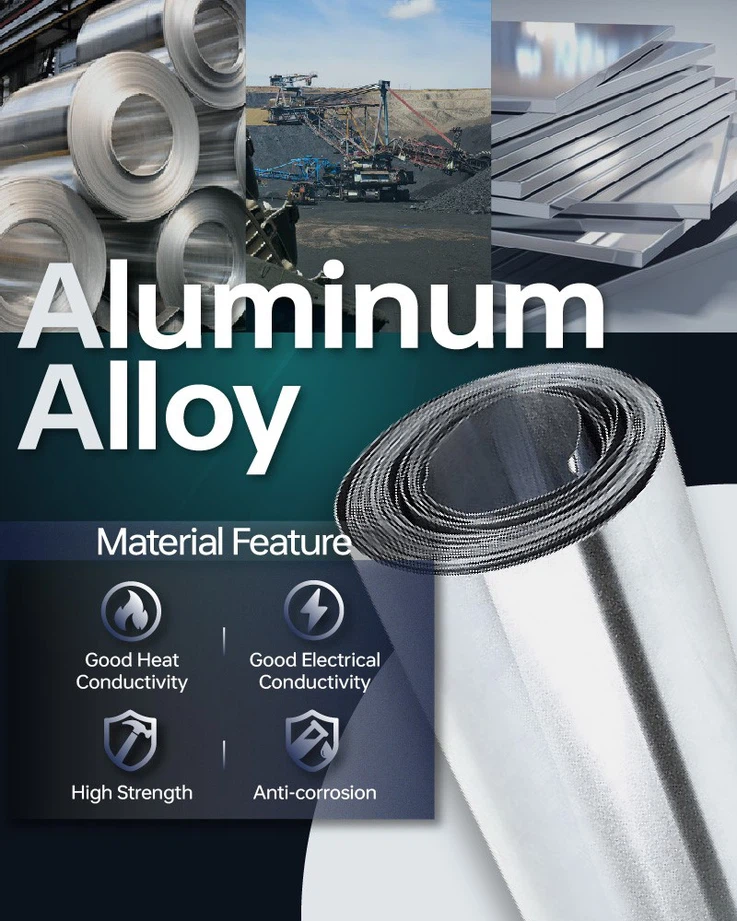
Material advantages
Copper-clad aluminum rows have a scientific and stable material ratio structure. The common ratio in the industry is that the copper layer accounts for 15% to 20% by volume, the weight accounts for about 40%, and the aluminum core accounts for 60% by weight. This golden ratio allows the material performance and cost to reach an optimal balance. Under the same specifications and dimensions, the AC current carrying capacity of copper-clad aluminum busbars can reach about 85% of that of pure copper busbars. In engineering applications, the cross-sectional area only needs to be appropriately enlarged by 10% to fully match the current carrying capacity and electrical stability of pure copper busbars. At the same time, the density of this material is much lower than that of pure copper, only 37% to 40% of that of pure copper bar. The length can be 2 to 2.5 times that of pure copper bar under the same weight. It can significantly reduce the weight of the equipment and the cost of raw materials without affecting the electrical performance of the equipment. It is a cost-effective alternative material for Aluminum Power Distribution Bar.
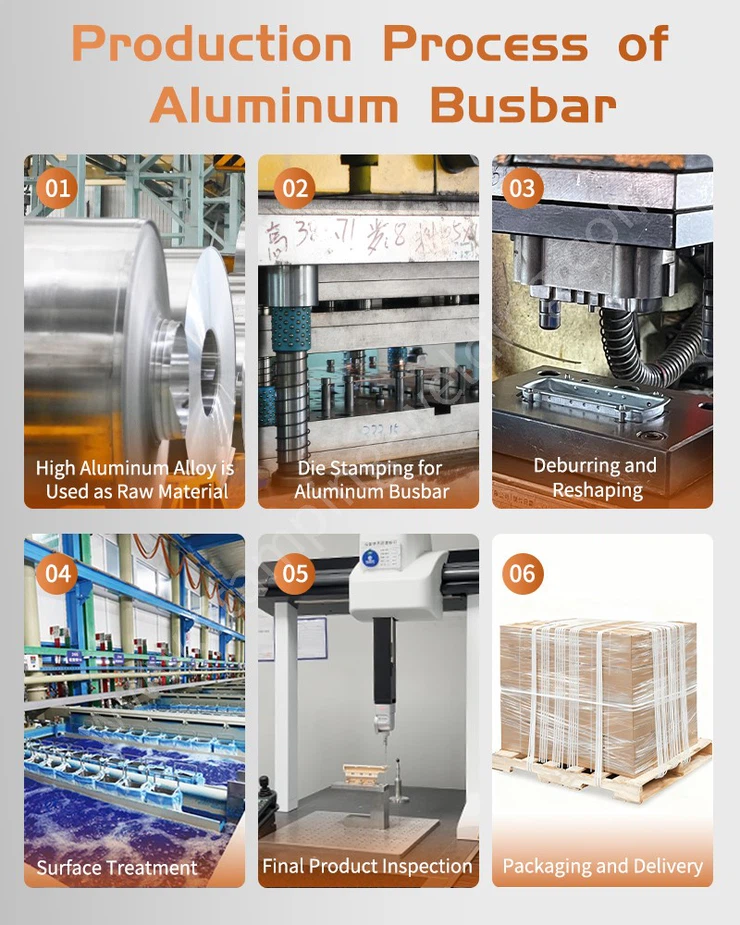
Technical principles
The core technology of copper-clad aluminum row manufacturing is to achieve permanent inter-atomic metallurgical bonding at the copper-aluminum interface, rather than simple mechanical coating or adhesive composite. Common production processes include cladding, welding rolling method, continuous casting, composite method and hot rolling composite process. In the cladding welding rolling process, the surface-treated aluminum core billet is tightly wrapped with a copper strip, heated to a certain temperature in a protective atmosphere and then rolled through a large reduction, so that the contact surface of the two metals undergoes atomic diffusion and intergranular fusion under the action of high temperature and high pressure, ultimately forming a dense bonding layer without air gaps and oxidation inclusions. The shear strength of the bonding layer is a key indicator for evaluating composite quality - poorly bonded copper-clad aluminum layers are prone to copper layer peeling or interface cracking during subsequent punching, bending, and shearing processes.
From the analysis of electrical characteristics, the current carrying capacity of the copper-clad aluminum row is not a simple weighted average of the conductivity of the copper layer and the aluminum core. During the transmission of AC current, the skin effect of the current causes the high-frequency component to tend to flow along the surface of the conductor, and the copper layer happens to be in the area with the highest current density. Therefore, the current-carrying efficiency of the copper-clad aluminum row in AC applications is higher than the theoretical value predicted by its DC conductivity. This is also the physical basis for the copper-clad aluminum busbar to be able to exchange for significant weight reduction with smaller cross-sectional area loss in power frequency (50/60 Hz) electrical equipment. For mobile electrical equipment that requires a balance between high current and lightweight, the advantages of the aluminum flat busbar's composite structure are particularly prominent.
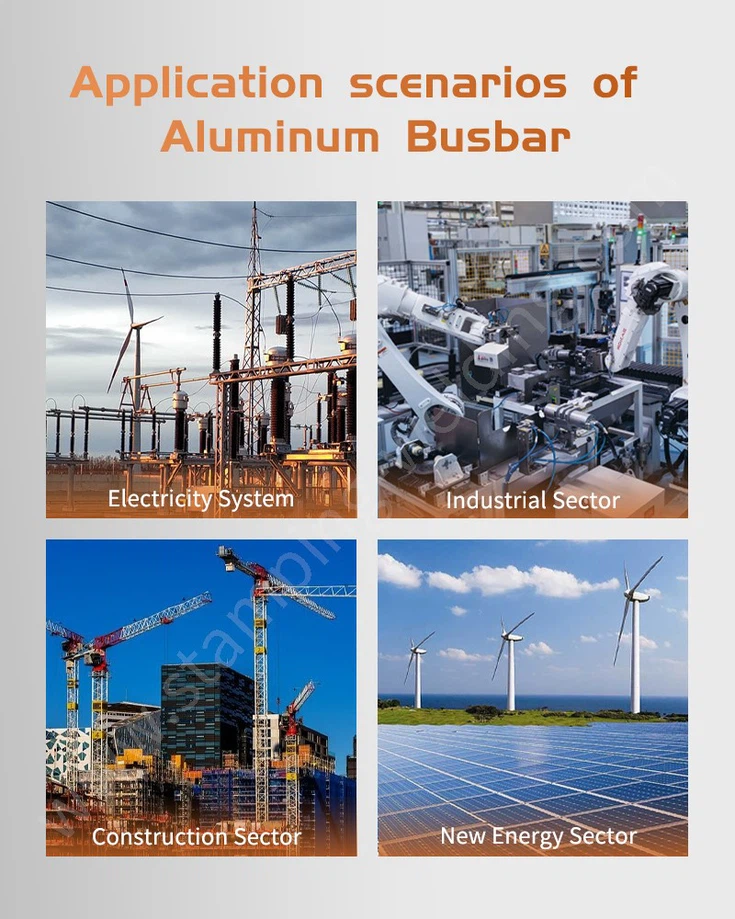
Application scenarios
The application fields of copper-clad aluminum rows are highly matched with their technical characteristics and are mainly distributed in the following scenarios: High and low voltage complete sets of switchgear: The main busbar and branch busbar in the switch cabinet are the most typical application parts of copper-clad aluminum busbars. In this type of equipment, the lightweight characteristics of copper-clad aluminum bars facilitate on-site installation and later maintenance, and its 85% current carrying efficiency can meet the design specification requirements after increasing the cross-sectional area by 10%. Bus duct system: The conductive core of dense bus duct and air bus duct can be made of copper-clad aluminum rows. Since bus ducts are usually laid over long distances along building shafts or bridges, the weight factor has a significant impact on the requirements of the supporting structure. The use of copper-clad aluminum rows can reduce the weight per meter by approximately 60%, thereby simplifying the lifting brackets and reducing civil load requirements.
Transformers and reactors: Copper-clad aluminum rows can be used for the low-voltage outlet busbars of dry-type transformers and winding lead terminals of reactors. It should be noted that the overlapping surface of the copper-clad aluminum bar and the pure copper terminal should be appropriately protected - for example, a local thickening of the copper layer or tin plating at the end of the copper-clad aluminum bar to prevent direct contact between copper and aluminum to cause electrochemical corrosion in a humid environment. New energy and energy storage systems: Application scenarios such as AC output busbars of photovoltaic inverters and busbars of energy storage battery clusters are sensitive to cost and weight. The application of copper-clad aluminum busbars in such products is gradually expanding. In the energy storage system, there are a large number of interlayer connection busbars inside the battery rack. The use of copper-clad aluminum busbars can significantly reduce the weight of the entire rack.
Rail transit and traction power supply: The auxiliary power supply cabinets of subways and light rail vehicles, the DC bus of traction converters and other parts have strict weight restrictions. The application of copper-clad aluminum busbars can help reduce the unsprung mass of vehicles and the quality of upper equipment. When selecting Aluminum Electrical Busbar, special attention should be paid to the corrosion level of the application environment - the cut end face of the copper-clad aluminum busbar will expose the aluminum core. If it is in a high-humidity or salt-spray environment, end-face sealing measures should be taken (such as coating with protective paint or installing end sheathing).
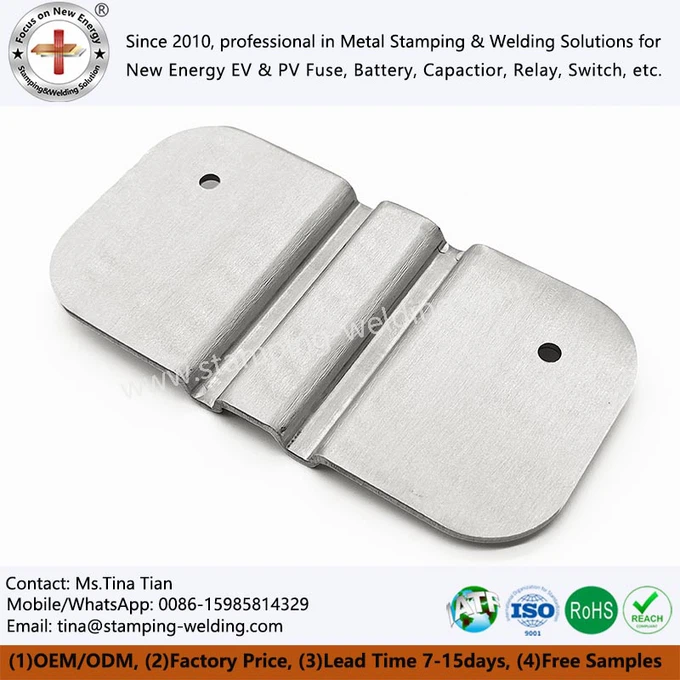
contact us
If you need to evaluate Aluminium Bus Bars for Cell Connection alternatives for your complete equipment or obtain sample testing, please fill out the inquiry form below to inform the current specifications, installation space and environmental conditions. The engineering team will provide current carrying capacity conversion suggestions and customized solutions within one working day.