Detailed explanation of stainless steel stamping technology
May 22, 2026
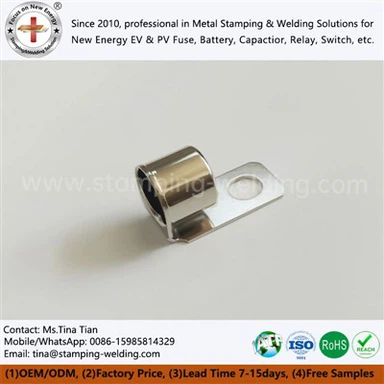
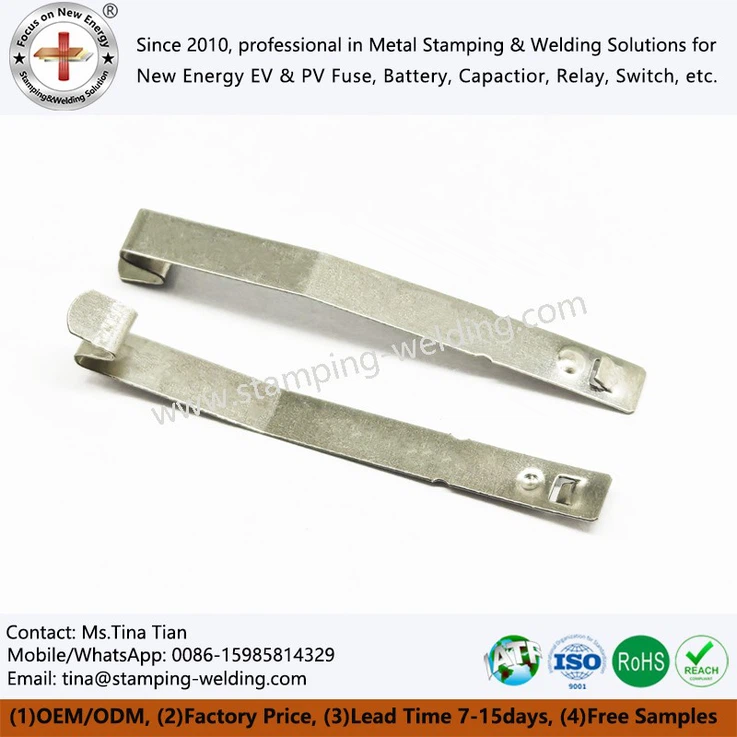
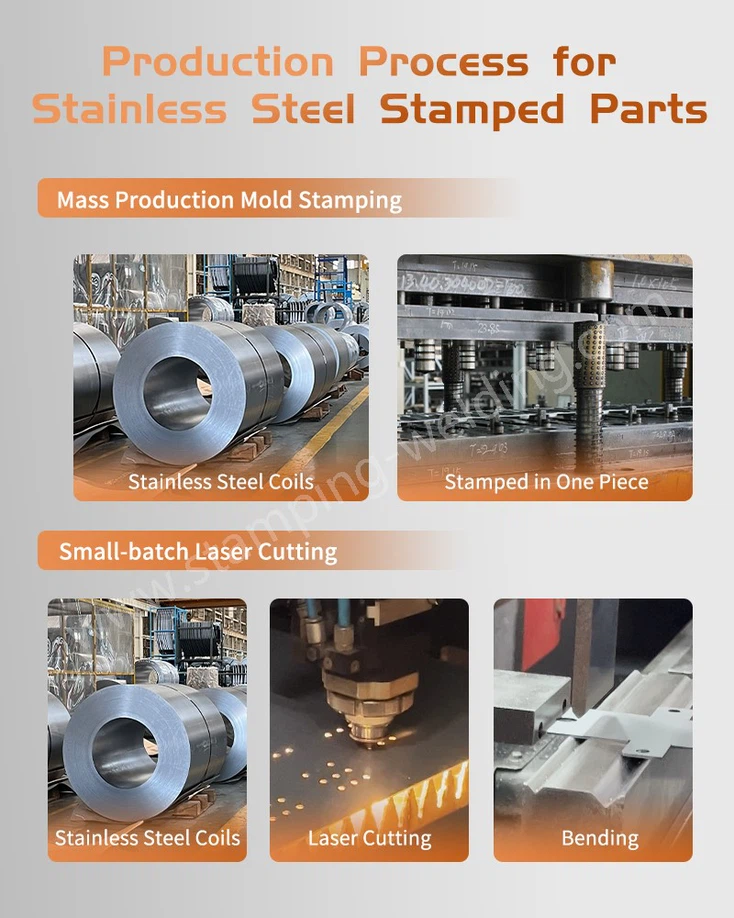
Stainless steel stamping is the core process in the field of modern precision metal processing. It mainly relies on precision molds and pressure equipment to apply stable and controllable mechanical external force to stainless steel plates, causing plastic deformation or physical separation of the raw materials, thereby processing industrial precision parts with various specifications and complex structures. Different from ordinary carbon steel stamping, stainless steel has higher hardness and more special forming characteristics, and has more stringent requirements for mold matching, process parameters, and equipment accuracy. The thickness range of conventionally processed sheets in the industry is stable between 0.1 mm and 6 mm. Relying on mature CNC stamping technology, the dimensional accuracy of finished products can reach ±0.05mm, and the overall surface finish is excellent. Most finished products do not require secondary polishing after molding. It can efficiently mass-produce various types of complex geometric structural components and is the mainstream process for producing high-quality Stainless Steel Stamped Parts.
Material advantages
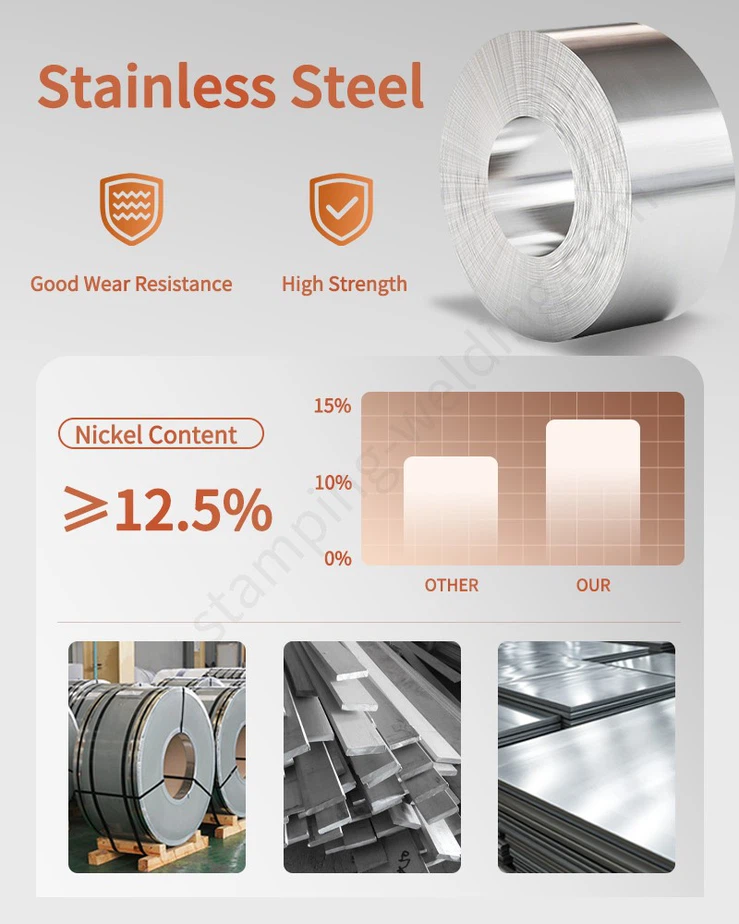
Stainless steel is a type of iron-based alloy with a chromium content of not less than 10.5%. Its core characteristics stem from the spontaneous formation of a dense, transparent and self-healing chromium-rich oxide film on the surface. This passivation film, which is only a few nanometers thick, physically isolates the base metal from external corrosive media, allowing stainless steel to remain stainless for a long time in the atmosphere, fresh water and various weakly corrosive environments. Unlike ordinary carbon steel, which generates loose and porous iron oxide (i.e. rust) under humid conditions, the oxide film of stainless steel can be reformed with the help of oxygen after being damaged, which is the essential source of its corrosion resistance. From the perspective of metallographic structure, stainless steel used in the field of industrial stamping is mainly divided into three major types. The differences in their crystal structures determine their different stamping behaviors and application boundaries.
Austenitic stainless steel: represented by 304 and 316 series, its crystal structure is face-centered cubic and presents a single austenite phase at room temperature. This type of stainless steel is non-magnetic and has the best formability among all stainless steel types. It is especially suitable for deep drawing, bulging and complex curved surface stamping. Austenitic stainless steel cannot be hardened by heat treatment, and its strength can only be improved by cold working - that is, the work hardening effect during the stamping process. Typical austenitic grade 304 stainless steel has a tensile strength of about 520 to 620 MPa in the annealed condition and an elongation of 40% to 60%. Kitchen sinks, medical vessels and various deep-stretched containers are typical application carriers of this type of material. For conventional electrical and mechanical structural parts, 304 Stainless Steel Punching is the most common process combination, taking into account good corrosion resistance and formability.
Ferritic stainless steel: represented by 409, 430 and 439, its crystal structure is body-centered cubic, magnetic and contains no nickel or only a trace amount of nickel. The formability of ferritic stainless steel is lower than that of austenitic grade, but it is widely used in scenarios that require both corrosion resistance and high temperature resistance, such as automobile exhaust systems, washing machine inner barrels and oven components. They generally cost less than austenitic stainless steels and are less susceptible to chloride stress corrosion cracking. Ferritic stainless steels are also not hardenable by heat treatment and have a slower cold work hardening rate.
Martensitic stainless steel: represented by 410 and 420, its carbon content is significantly higher than the previous two categories-usually between 0.15% and 0.40%. The high carbon content gives this type of steel the potential for heat treatment through quenching and tempering. The hardness of heat-treated martensitic stainless steel can reach above 50 HRC, which is suitable for parts such as knives, surgical instruments, razor blades and bearing balls that have strict requirements on edge retention or wear resistance. However, it should be noted that the stamping performance of martensitic stainless steel is limited; moderate bending and shallow drawing can still be performed in the annealed state, but deep drawing and complex forming should be completed before heat treatment. Material selection decisions for Stainless Steel Stamped Parts require a trade-off between corrosion resistance, forming complexity, strength requirements and cost: austenite offers the best formability, ferrite offers the best economics, and martensite offers.
Process characteristics
The significant difference in stamping behavior between stainless steel and ordinary carbon steel results from its higher strength, more pronounced tendency to work harden, and unique springback characteristics. Higher deformation resistance: The yield strength of 304 stainless steel is about 200 to 300 MPa, and the tensile strength exceeds 520 MPa, both of which are higher than ordinary low carbon steel. This means that the stamping force required to stamp stainless steel parts with the same shape is significantly higher, which places higher requirements on the tonnage and rigidity of the press. The contact stress endured by the mold also increases, and the wear rate of the working part accelerates. Therefore, stainless steel stamping molds are usually made of powdered high-speed steel or cemented carbide and are coated with titanium nitride or diamond-like carbon coating.
Significant work hardening effect: During the plastic deformation process of austenitic stainless steel, a large number of dislocation entanglements and deformation twins are generated in the face-centered cubic lattice, resulting in a sharp increase in material strength and a decrease in plasticity. This characteristic has two sides: In the deep drawing process, work hardening can help the side wall resist thinning and cracking and achieve a more uniform wall thickness distribution, but in multi-pass forming or scenarios that require local secondary deformation, work hardening may cause the material to crack prematurely. In engineering, this problem is often alleviated by controlling the amount of single deformation, adding annealing treatment between processes, or selecting easy-to-form grades containing copper and other alloying elements (such as 304Cu).
Significant springback behavior: The elastic modulus of stainless steel is about 193 to 200 GPa, which is similar to carbon steel, but because of its higher yield strength, the elastic recovery stress per unit deformation is greater. After bending and forming, the springback angle of stainless steel parts is usually 20% to 50% larger than that of carbon steel parts of the same specification. The springback rate can vary by up to 15% between different types - the springback of austenitic stainless steel is usually greater than that of ferrite, and the springback of the work-hardened state is greater than that of the annealed state. Common methods to compensate for springback include presetting the bending angle in the mold, setting pressure ribs at the bend root to introduce compressive plastic strain, or setting up a shaping station for angle correction after bending.
Mold adhesion and scratch tendency: Cold welding is prone to occur between stainless steel and mold steel under high-pressure friction conditions, that is, tiny stainless steel particles transfer and adhere to the surface of the mold, forming a built-up edge. These adherents will scratch the surface of the part during subsequent stamping and form drawing marks, which is an unacceptable defect for kitchen, bathroom and decorative parts that require a mirror appearance. Solutions include: improving the polishing level of the working part of the mold to a mirror surface (Ra ≤ 0.1 micron), selecting powdered high-speed steel mold materials containing vanadium, applying DLC or CrN coatings, and using special stamping oil containing extreme pressure additives. In the production of OEM stainless steel stamping parts, the superimposed effect of the above technical challenges requires sufficient mold trial verification and parameter optimization during the process development stage, rather than simply applying the process experience of carbon steel stamping.
Application areas
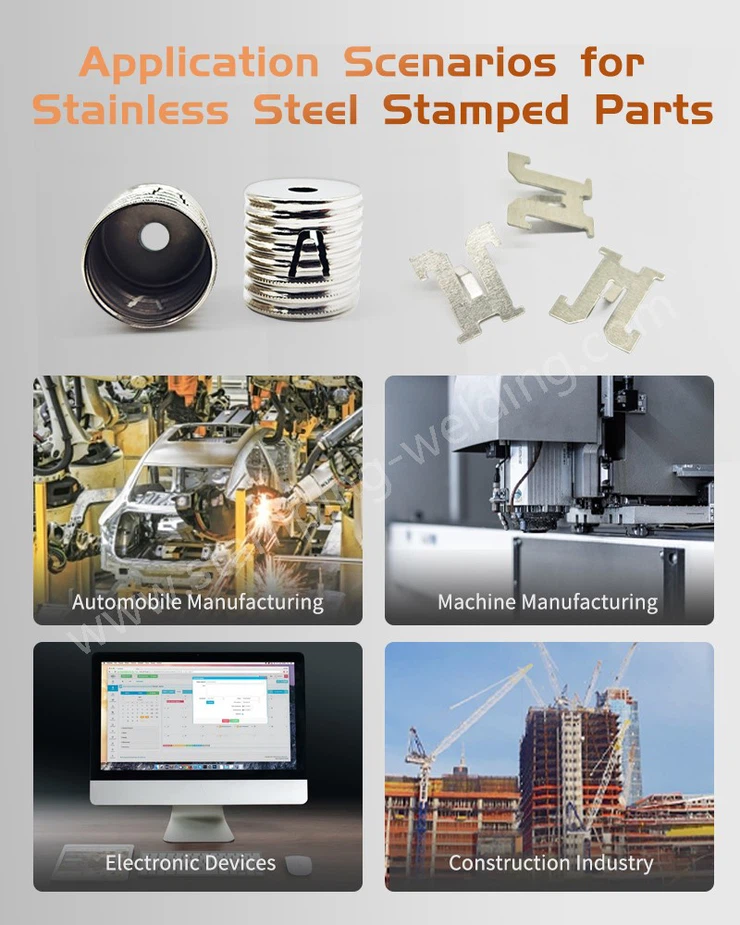
Kitchen, bathroom and household appliances: stainless steel sinks, stove panels, range hood smoke collection chambers, dishwasher liner, microwave door frames, refrigerator hinges and door handles - most of the metal parts in these daily household appliances are manufactured through stamping processes. Kitchen and bathroom applications place extremely high demands on the surface quality of stainless steel stampings. Any scratches, drawings, indentations or orange peel defects will affect the appearance rating. Therefore, the maintenance frequency of molds is higher than that of industrial structural parts, and coated stainless steel raw materials are often used to protect the surface.
Medical and pharmaceutical devices: surgical instrument trays, sterilization boxes, sterile workbench components, medical cart accessories and housings and stands for diagnostic equipment. The medical field has strict requirements on the hygienic properties of stainless steel stamping parts - the material should have a non-porous structure to avoid harboring bacteria and low surface roughness to facilitate cleaning and disinfection. Austenitic 304 and 316 are mainstream materials in the medical field. They are usually electrochemically polished after stamping to obtain a bright and clean surface and to eliminate impurities in the passivation film. Automotive industry: heat shields and brackets for exhaust systems, engine sealing gaskets, fuel tank straps, wiper connecting rods, small stamping parts in seat adjustment mechanisms, airbag casings and battery clamps. Automotive applications have high requirements on the heat resistance and vibration fatigue resistance of stainless steel stamping parts. Ferrite series (409, 439) dominate exhaust systems, while austenitic series are more commonly used in chassis and fasteners that require higher corrosion resistance.
Electronic and communication equipment: mobile phone middle frames, tablet computer shell structural parts, battery cases, SIM card holders, antenna shrapnel and shielding covers. Electronic products have strict requirements on the dimensional accuracy and flatness of stainless steel stamping parts. The tolerance is often controlled within ±0.03 mm, and the batches are large and updated quickly. Stamping molds are required to have long life and quick changeover capabilities. Industrial equipment and construction: door panels and frames of control cabinets, conveyor chain accessories, building curtain wall connectors, photovoltaic module frames and connection nodes in earthquake-resistant brackets. Such applications prioritize the strength and weather resistance of stainless steel stampings over surface aesthetics. The competitiveness of China Factory Price Stainless Steel Stamping Parts in the above fields depends not only on the cost of a single part, but also on the comprehensive control of mold life and scrap rate.
contact us
If you need to evaluate sheet metal stamping parts solutions or request samples for your project, please fill out the inquiry form below to inform us of the drawings, material grade and annual demand. The engineering team will provide a process feasibility analysis and cost estimate within working days.