Detailed explanation of the core knowledge of charging cabinets
May 20, 2026
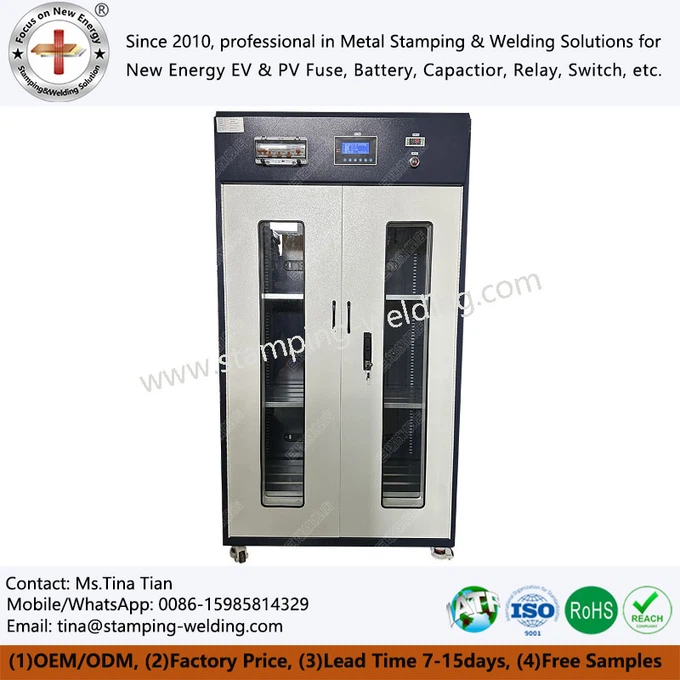
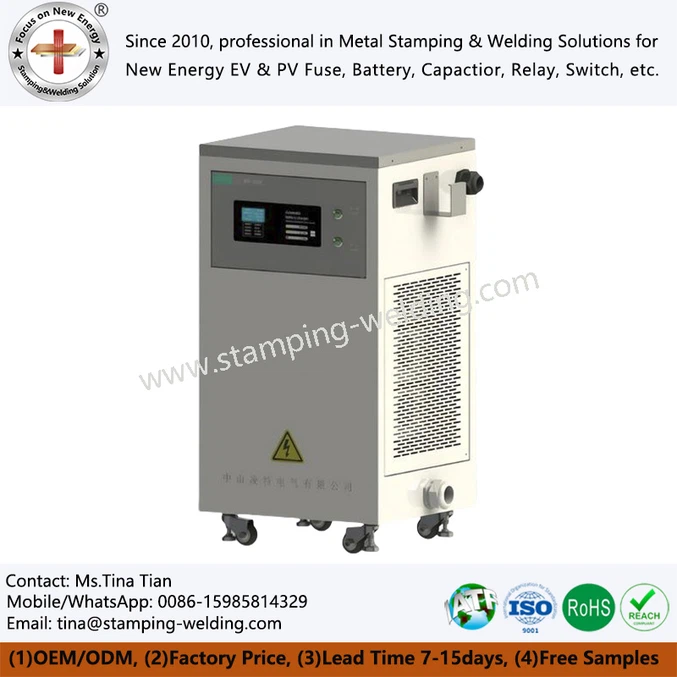
The charging cabinet is a centralized charging device designed for lithium battery packs mounted on electric bicycles, drones and other equipment. It uses an independent compartment structure to achieve simultaneous charging of multiple batteries. This type of equipment is widely used in public places such as shopping malls, communities, schools, takeout delivery outlets, logistics outlets, urban villages, etc. It is an important part of modern urban energy supply infrastructure. As of 2025, mainstream charging cabinet products have integrated various circuit protection and safety designs such as overload protection, leakage protection, real-time monitoring, abnormality warning, temperature alarm, water immersion detection, etc. Some models comply with international safety standards such as OSHA 29 CFR 1910.106, NFPA CODE 30, and the national standard GB/T 42236.1-2022. Modern charging cabinets further integrate the Internet of Things and AI prediction systems. Some products support V2G (vehicle-to-grid) technology, and new forms such as "mobile cabinets" fixed at the rear of electric vehicles have emerged. Under the structure of the Battery charging station, the charging cabinet is transforming from a single charging device to a comprehensive energy management node.
Product design and classification
The product design of charging cabinets must comply with relevant fire safety standards, with clear provisions on basic requirements, fire protection facility requirements and management requirements. According to the charging mode, charging cabinets can be divided into type A (only providing charging sockets, users need to bring their own chargers) and type B (charging and swapping cabinets with built-in charging devices); according to the working environment conditions, they can be divided into type I (temperature -40°C ~ +50°C) and type II (temperature -5°C ~ +70°C).
In terms of physical structure design, the charging warehouse consists of a warehouse body and a door. The size of a single warehouse body requires a width of no more than 450mm, a height of no more than 400mm, and a depth of no more than 500mm. The same charging cabinet can be mixed and matched with warehouses of different sizes according to the objects of use. Large-sized warehouses should be located below the charging cabinet to reduce the overall center of gravity and improve structural stability. For users who need to adapt to different installation scenarios, Wall-mounted charger and Floor-standing charger provide flexible wall-mounting installation and stable ground deployment options respectively.
Typical application scenarios
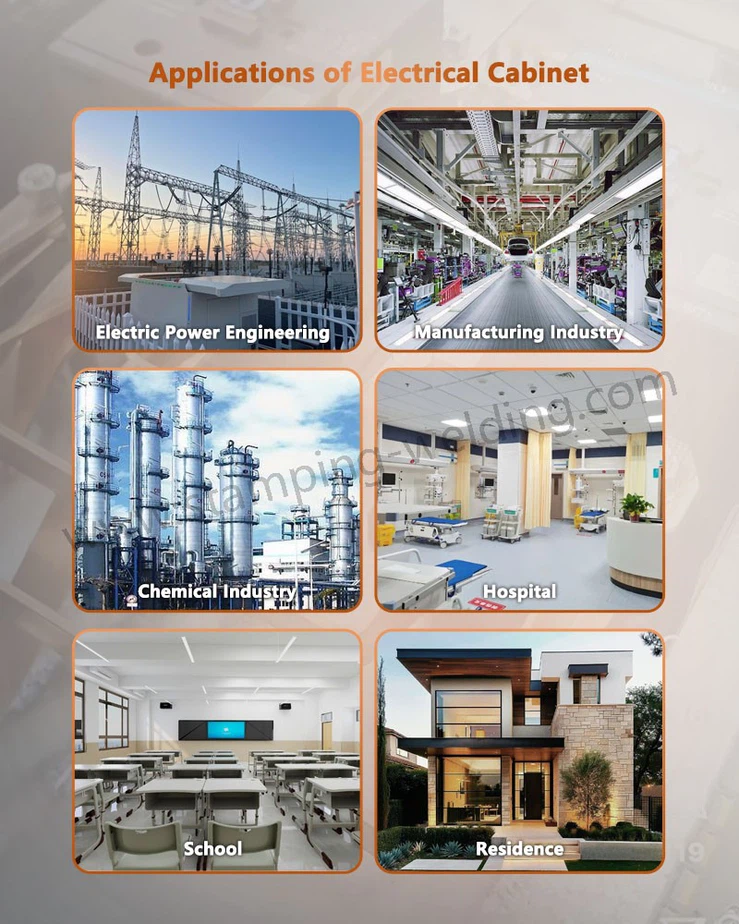
Charging cabinets are mainly used in public places such as takeout distribution outlets, logistics outlets, urban villages, temporary parking lots for electric vehicles, shopping malls, and transportation stations. Its operational features include providing 24-hour service, requiring no manual attendance, supporting multiple scene delivery, and having fault monitoring functions. In the emerging "mobile cabinet" operating model, the operator fixes the charging cabinet at the rear of the electric vehicle to form a mobile charging station. Some cabinet types support the "reverse charging" function of the power bank in the cabinet to maintain its own operation.
The industry is promoting the unified use of national standards, such as GB/T 42236.1-2022 "Electric Bicycle Centralized Charging Facilities Part 1: Technical Specifications," to solve problems such as different technical indicators of charging cabinets, inconsistent test methods, and uncoordinated fault and fire monitoring. At the deployment level, the Battery management system serves as an upper-layer management platform and works in conjunction with the front-end charging cabinet to achieve status tracking and health assessment of the battery's entire life cycle.
future trends
In terms of the standardization process, relevant industry organizations are formulating mandatory specifications to put forward clear requirements for charging power limits, temperature control errors, data storage cycles and other indicators. The anti-theft design needs to integrate fingerprint or face recognition smart locks to ensure the safety of high-value battery assets. In terms of technological frontier exploration, the solar charging integrated solution uses photovoltaic modules to power field work cabinets to solve the power supply needs in areas without power grids. Automatic battery swapping robot technology is under research and is expected to be combined with charging cabinets to form a continuous task-closed loop. With the deep integration of 5G and IoT technology, charging cabinets will become an indispensable energy hub in smart cities, emergency response, industrial automation and other fields. In this context, a custom charging cabinet can be customized and developed at the structure, power and communication protocol levels according to the special needs of different industries and scenarios to meet diverse user-side energy management needs.
contact us
We can provide Modular Battery Charging Cabinet solutions according to customer needs to ensure that the equipment operates stably in various environments. If you need to know more product details or obtain customized solutions, please feel free to contact us at any time. We will provide you with professional technical support and a high-quality service guarantee.