


Detailed explanation of the core knowledge and differences of fuses, circuit breakers and isolation switches in photovoltaic systems
May 20, 2026
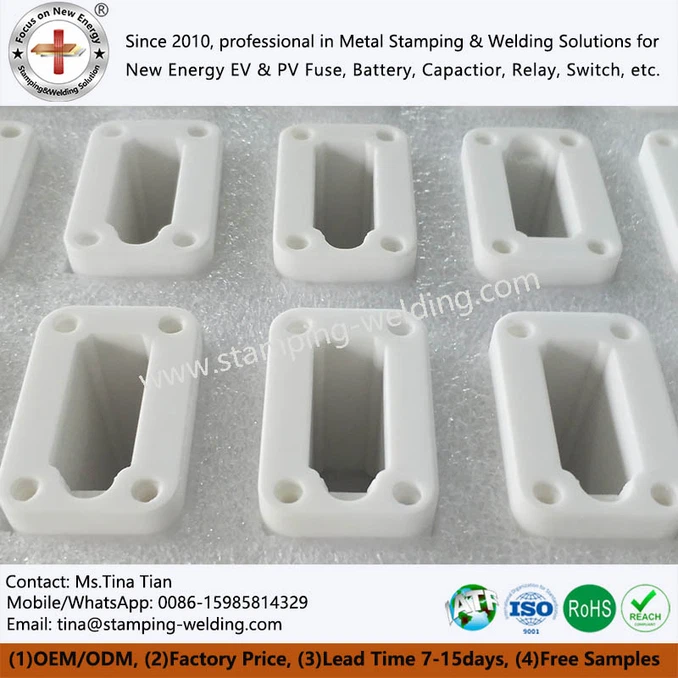
Driven by the "double carbon" goal, the photovoltaic industry has ushered in rapid development. The widespread application of high-power components, the increasing complexity of system design, and the continuous diversification of application scenarios have made the safe operation of photovoltaic power plants more and more prominent. Among them, DC side power distribution protection has always been a recognized pain point in the industry. The core is that some practitioners in the industry have misunderstandings about the three power distribution protection devices commonly used in photovoltaic systems: fuses, circuit breakers, and isolating switches, and they often use them mixedly. In fact, these three devices are of different types, with significant differences in their working principles, core functions, compliance with standards, application scenarios and protection effects. The design and deployment of photovoltaic power distribution protection systems need to fully integrate the system application scenarios and protection needs, and reasonably configure them according to the characteristics of various devices. Only by allowing each device to perform its exclusive function can the long-term safe, stable and efficient operation of the photovoltaic power station be ensured. Ceramic Tube for High Voltage Fuse As a core supporting component in high-voltage protection scenarios, it provides key support for the reliable operation of photovoltaic fuses.
Manufacturing process
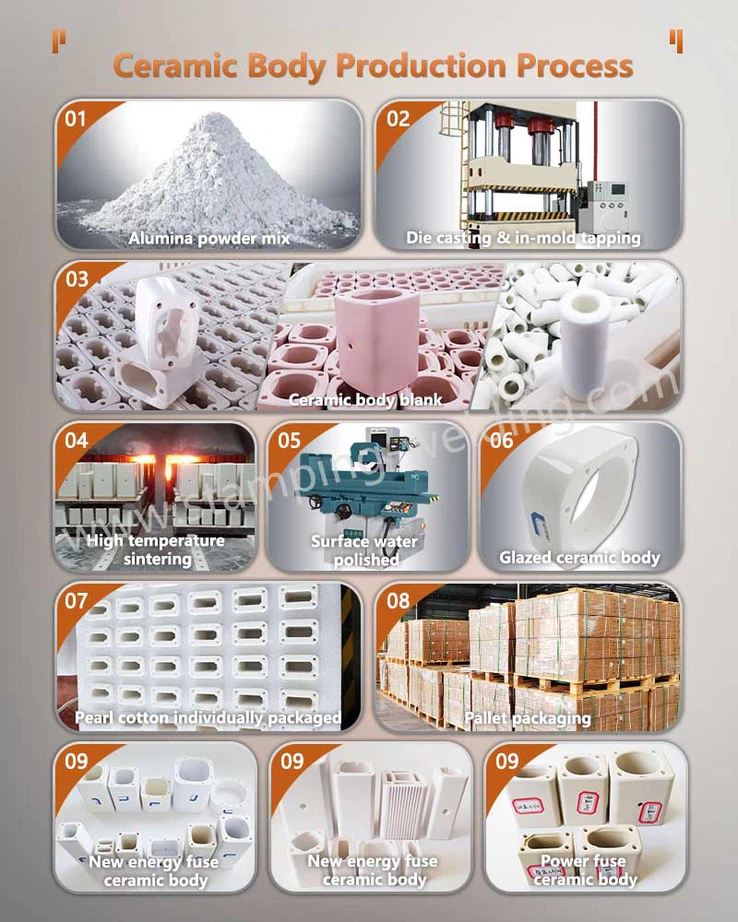
In terms of materials and processes, the core materials of photovoltaic fuses include fuse tubes made of high-strength ceramic materials and melts made of high-purity silver alloys. The melt is shaped by precision laser cutting to ensure the stability and consistency of the melting characteristics. The melting tube is filled with chemically treated high-purity quartz sand as the arc extinguishing medium to quickly extinguish the arc and improve the breaking efficiency. Both ends of the melt adopt spot welding technology to achieve a solid electrical connection with the contacts. The core performance characteristics of photovoltaic fuses are designed to meet the challenges of rapid protection of photovoltaic systems under high voltage and high current. The series of products usually has the characteristics of high withstand voltage, high breaking and wide temperature adaptability.
These technological innovations allow the product to maintain stable time-current characteristics in a wide temperature range from -40°C to 85°C or even wider. For example, at 100% rated current, the fuse should not blow within 4 hours; at 105% rated current, the minimum blowing time can reach 1 hour; at 200% rated current, the maximum blowing time should not exceed 120 seconds, thus accurately balancing the contradiction between "malfunction" and "protection speed". For application scenarios that need to meet the BS series standard requirements, Ceramic Tube for EV BS Series has strict control requirements in terms of tube size, wall thickness tolerance and voltage resistance performance to ensure compatibility with standard fuse bases.
Application scenarios
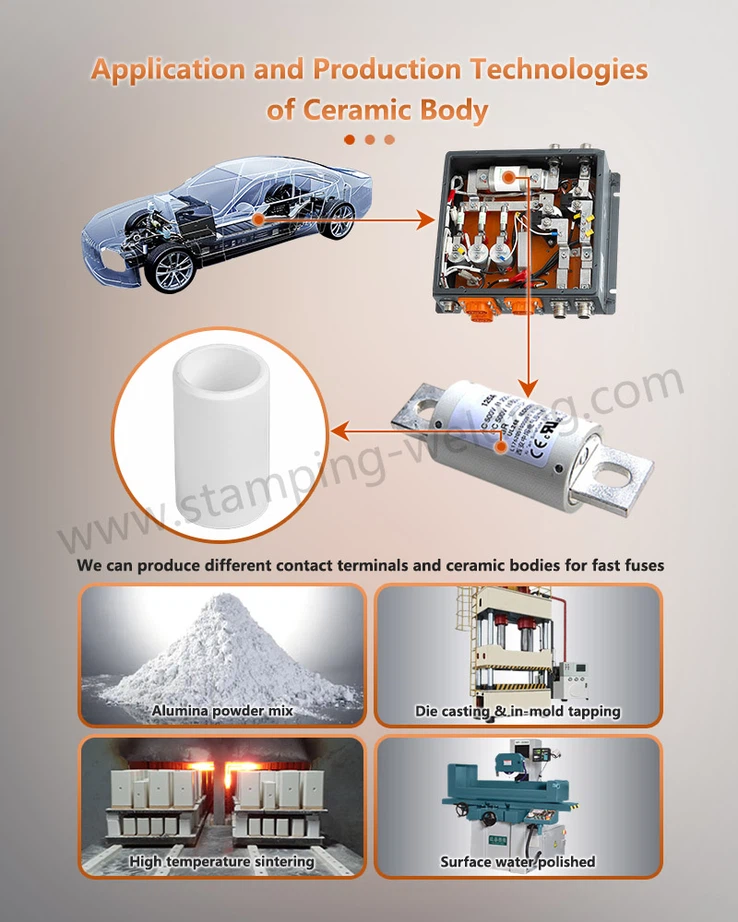
Photovoltaic fuses are mainly installed in photovoltaic combiner boxes, front-ends of centralized or string inverters, and DC cabinets to protect photovoltaic strings, prevent backfeed current, and identify circuit faults. When selecting, you need to confirm the short-circuit current of the photovoltaic panel, the maximum voltage of the system, the altitude, the maximum operating temperature of the microenvironment around the installation location, etc., and calculate the rating of the fuse according to IEC or UL standards. In terms of adaptation to specific application scenarios, distributed photovoltaic power stations commonly use small current models such as 1A to 30A, which are suitable for string inverters; large ground power stations can choose high current models such as 200A to 500A, which are suitable for centralized systems. When used in high-altitude or high-temperature environments (such as over 40°C), the rated current of the fuse needs to be derated according to the environmental carrying capacity curve.
Electric isolating switches and circuit breakers have different principles, functions and compliance standards and cannot replace each other. The isolating switch can be used as a redundant device in combination with protection devices such as circuit breakers to improve system protection capabilities, but it cannot replace fuses or circuit breakers and be used alone as a protection device. The selection and deployment of safety protection devices need to be treated with caution. For photovoltaic fuses with bolted installation structures, the Ceramic Body for Fuse Bolted Series provides a standardized ceramic housing solution whose dimensional accuracy and mechanical strength need to meet the torque requirements during bolt connection and reliability in long-term vibration environments.
Development trend
As photovoltaic systems develop towards high efficiency and large-scale, photovoltaic fuses are being upgraded towards higher voltages (such as 1500VDC, 2000VDC) and larger currents (such as 400A, 630A) to meet the application needs of centralized inverters and large ground power stations. In the future, fuses may be integrated with real-time status monitoring functions to realize fault warning and remote reporting, thereby improving the operation and maintenance efficiency and safety of photovoltaic systems. The industry continues to pursue lower power loss, higher breaking capacity, more precise time-current characteristics and wider environmental adaptability to adapt to new high-efficiency photovoltaic modules and complex system architectures. The development of photovoltaic fuse technology is closely linked to the expansion of the photovoltaic industry. The rapid development of the photovoltaic industry has put forward higher requirements for circuit protection components. Through the closed-loop model of "technology pre-research-product iteration-scenario adaptation", the industry continues to promote the upgrade of photovoltaic fuses to higher voltage, larger current, and more intelligence.
contact us
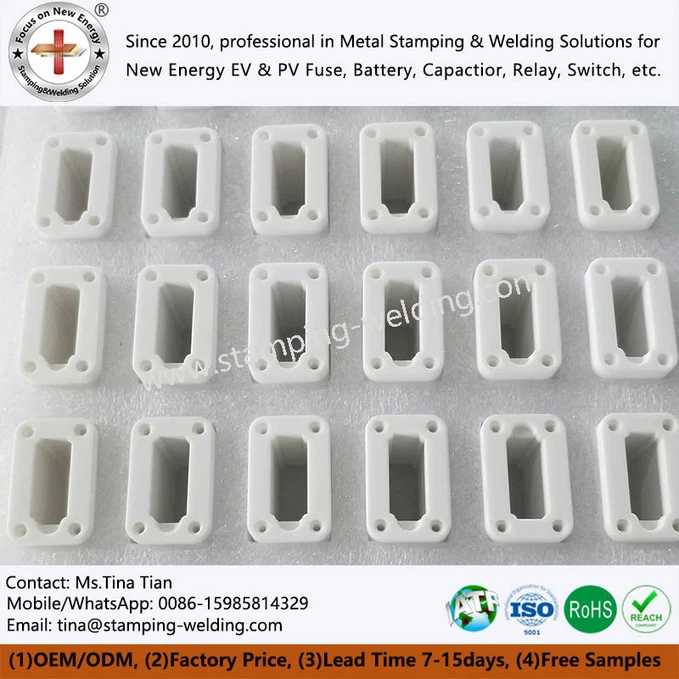
We can provide customized PV Fuse Ceramic Body solutions according to the actual working conditions of customers. If you need to know more product details or obtain technical support, please feel free to contact us at any time. We will provide you with professional services and high-quality product guarantees.


