Detailed explanation of core knowledge of ceramic fuses
May 24, 2026
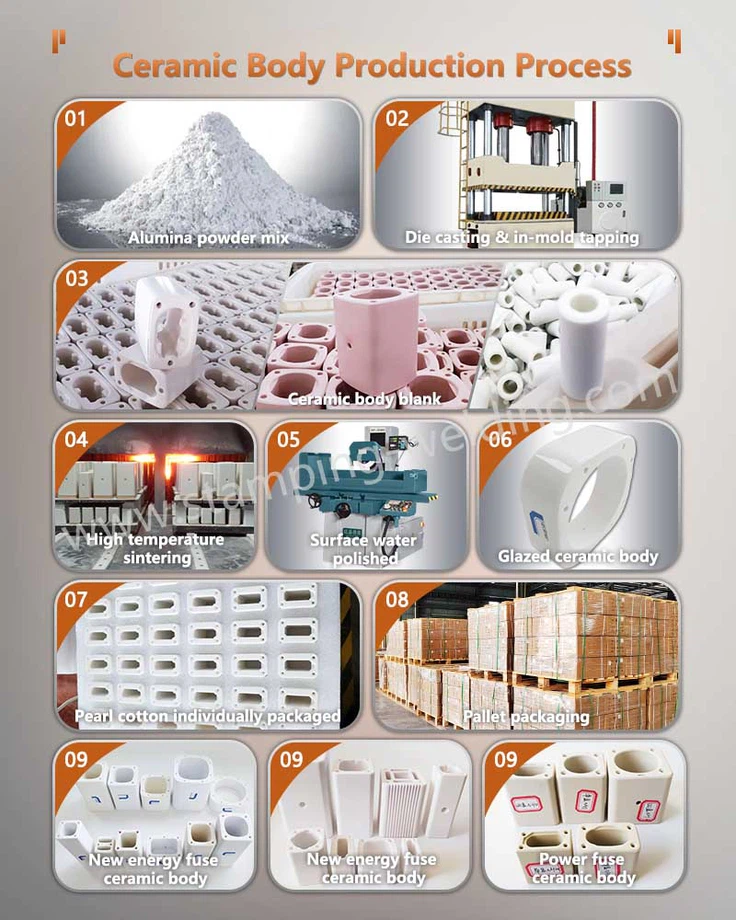
As the core carrier of overcurrent protection devices, the essence of ceramic fuses is to provide reliable physical isolation and thermal protection for the internal melt through special ceramic materials. Electrotechnical Ceramics undertakes the dual mission of insulation and heat resistance in the high-voltage electrical field. Ceramic substrates represented by high-purity alumina can withstand extreme high temperatures of more than 1,700 degrees and build a solid fire barrier for circuits. Protective Ceramic Casings for Power Fuse usually adopt a bellows or shed shape design, which effectively suppresses the surface flashover phenomenon under high voltage by increasing the creepage distance, while the honeycomb inner wall structure significantly increases the heat dissipation area, allowing the heat generated during the fusing process to be quickly dispersed. The matte glaze treatment process prevents long-term adhesion of metal vapor and ensures that the insulation performance remains stable after multiple fusing cycles. Customized Ceramic Tube can flexibly adjust the size, wall thickness and number of sheds according to different voltage levels, installation environments and customer drawing requirements to meet diverse engineering needs from low-voltage power distribution to high-voltage power transmission and transformation.
Structural details
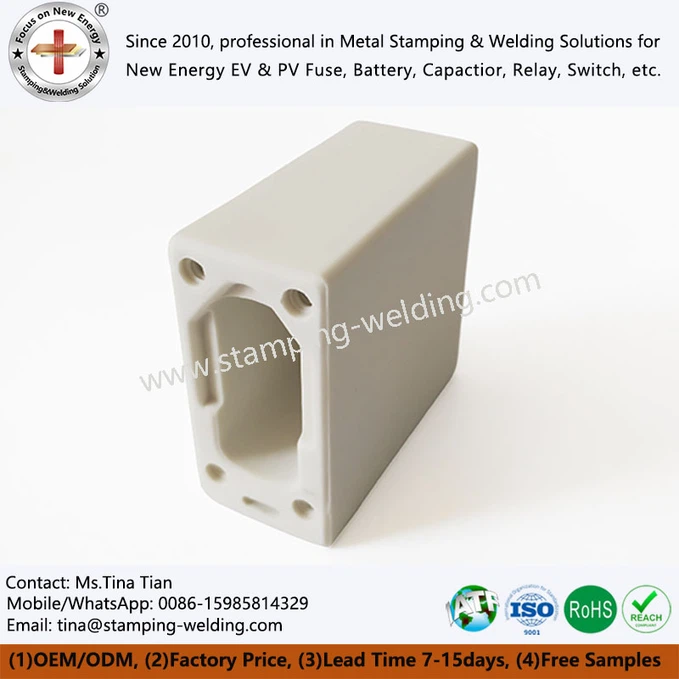
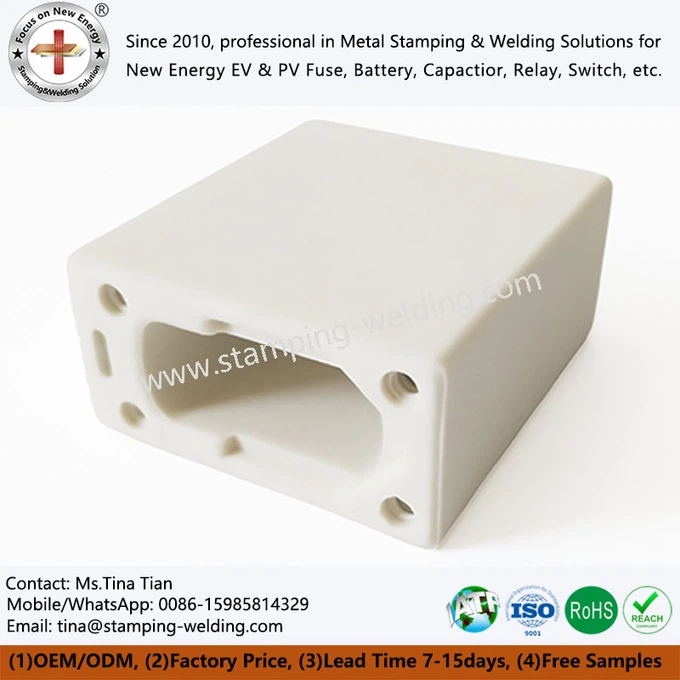
From a structural engineering perspective, the design of Fuse Casings Ceramic must take into account mechanical strength, thermal shock stability and electrical insulation. Alumina Ceramic Insulator for NH/Blade Type Fuses is particularly outstanding in blade-type fuse systems. Its high-density alumina matrix provides excellent dielectric strength and arc erosion resistance and can maintain structural integrity under the huge energy impact generated by short-circuit faults. The interior of the ceramic shell is usually filled with high-purity quartz sand, and the particle size is precisely controlled between 0.3 and 0.5 mm, forming a labyrinth arc extinguishing channel. When the melt melts and generates an arc, the high-temperature metal vapor and free gas are strongly cooled in the quartz sand gap and condense rapidly, causing the arc to be extinguished before the current naturally crosses zero. The airtight welded metal end caps at both ends of the shell not only ensure no high-temperature splashing at the moment of fusing but also provide a stable electrical connection and reliable mechanical support for the melt to prevent contact loosening due to vibration or thermal cycles.
Selection principles and methods
The rated current of the fuse and the rated current of the melt are different concepts. A fuse with a certain rated current level can be installed into several melts with different rated current levels. Therefore, when selecting fuses to protect lines and equipment, you must first clearly select the specifications of the melt, and then select the fuse according to the melt. The selection principles include: the protection characteristics of the fuse must be well matched with the overload characteristics of the protected object; the limit breaking current of the fuse should be greater than or equal to the effective value of the short-circuit impulse current that may occur in the protected line; fuses at all levels in the distribution system must cooperate with each other to achieve selection. Selectivity generally requires the rated current of the previous stage melt to be 2 to 3 times greater than the rated current of the subsequent stage melt to avoid overstepping the scope of the power outage; only motors with low requirements use fuses for overload and short-circuit protection.
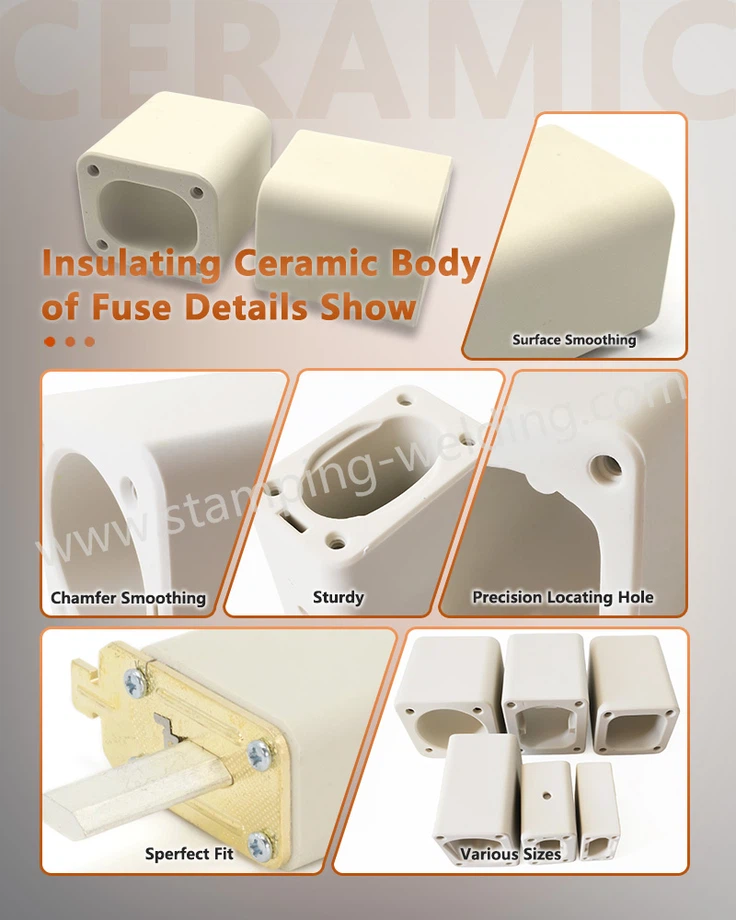
Generally, thermal relays are suitable for motor overload protection, and fuses are only used for short-circuit protection. In terms of selection method, it is necessary to select fuses with corresponding voltage levels according to the grid voltage, select fuses with corresponding breaking capabilities according to the network short-circuit current, and calculate the melt rated current according to the different characteristics of the motor circuit or lighting load. When using fuses of all levels, the melt-rated current of the next level should be smaller than the previous level. In the above selection process, Ceramic Body for Siba is a standardized fuse ceramic shell specification, and its size and electrical parameters need to match the rated current and breaking capacity of the selected melt.
Manufacturing principle
The high-voltage fuse is the weakest heating element artificially installed in the power grid. When overload or short-circuit current flows through the melt, the heat generated by the melt itself is used to cause it to fuse itself, thus disconnecting the circuit and achieving the purpose of protecting the power grid and electrical equipment. High-voltage fuses are divided into two types: current-limiting type and drop-out type. They are generally composed of a fuse tube, melt, arc extinguishing filler, moving contact, static contact, insulating support and indicator. The fuse tube of the current-limiting fuse is equipped with quartz sand filling, which is conducive to rapid arc extinguishing and increases the current interruption capacity. After the arc is generated by melting, the arc is quickly extinguished before the current crosses zero due to the strong cooling and deionization effect of the quartz sand on the arc.
The outer layer of the fuse tube of the drop-out fuse is a phenolic paper tube or an epoxy glass cloth tube, and the inner layer is made of gas-generating materials. After the fuse is blown, the movable joint is released, and the fuse tube automatically flips and falls. At the same time, the inner wall of the fuse tube generates a large amount of gas under the action of the arc and blows the arc longitudinally, extinguishing the arc. In high-voltage fuses, the ceramic components of the fuse tube need to withstand extremely high thermal shock and arc erosion. Alumina Ceramic Insulators for NH/Blade Type Fuses have become an ideal choice for such applications due to the high hardness and high heat resistance of alumina ceramics.
contact us
If you are looking for a Square Ceramic Body partner that combines high reliability, precision dimensions and long-term technical support, please feel free to contact our engineering team to discuss the optimal solution for your project.