EV BusBar Design Reaches New Heights: Multi-Dimensional Innovation Drives Upgrades of Core Electrification Components
May 02, 2026
With the rapid development of the new energy vehicle industry, the EV BusBar, as a key component for power transmission, directly impacts the safety, energy efficiency, and reliability of the entire vehicle. To meet the stringent requirements of high-voltage, high-power systems, the next-generation busbar design needs to deeply integrate multiple factors such as electrical performance, safety standards, lightweighting, heat dissipation efficiency, and manufacturing processes, driving the technology towards integration and intelligence. The following is an analysis of the core design elements.

Electrical Performance and Safety: Laying a Solid Foundation for High-Voltage Transmission
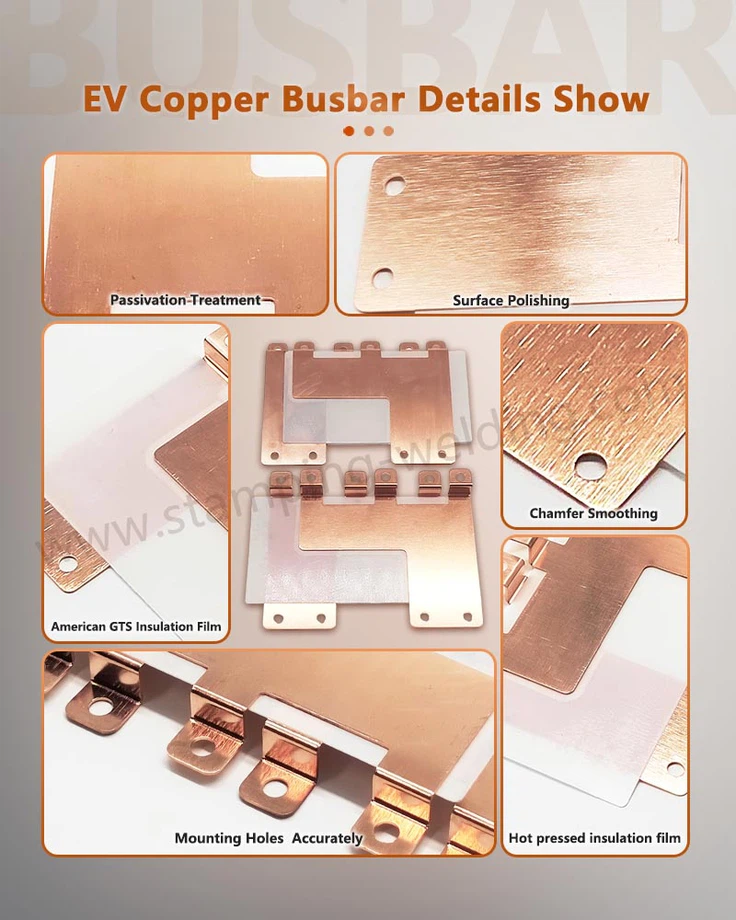
To meet the high current demands of new energy vehicles, busbar design must balance current carrying capacity and insulation safety. This is achieved by optimizing conductor cross-sectional area and using low-resistance materials (such as highly conductive copper or lightweight aluminum) to reduce heat generation and power consumption. Insulation design employs PET insulation layers, heat-shrink tubing, or nano-coating technology (Automotive BusBar PET Insulation), coupled with strict creepage distance and clearance control to ensure compliance with IEC and QC/T high-voltage standards and eliminate short-circuit risks. For example, Automotive's Tin-plate Bar uses a tin plating layer to improve corrosion resistance and contact stability, ensuring long-term reliable operation.
Space and Integration: Solving the Challenges of In-Vehicle Layout
New energy vehicles have extremely high requirements for space utilization, leading to a trend towards flatter and more modular busbar designs. Compact structural designs reduce volume and adapt to the layout of battery packs and electric drive systems. Integrated solutions (such as CCS integrated bars) combine bars with signal acquisition systems, simplifying installation processes and improving automated production efficiency. The flexible connection design of Auto Bus Bars further adapts to complex assembly environments, reducing the impact of mechanical stress.
Heat dissipation and reliability: meeting the challenges of extreme operating conditions
High temperature is one of the main causes of EV BusBar failure. The design needs to construct an efficient heat dissipation path, accelerating heat conduction by adding heat dissipation fins, optimizing conductor stacking structures, or using phase change materials. Simultaneously, material selection must balance conductivity and thermal stability; key components such as the DC Capacitor Bar need to undergo simulation verification to assess temperature rise under extreme conditions. Regarding mechanical reliability, the bar needs to pass vibration tests and impact simulations to ensure structural stability in complex road conditions and prevent the risk of arcing or breakage.
Manufacturing and Cost: Balancing Process and Commercialization Needs
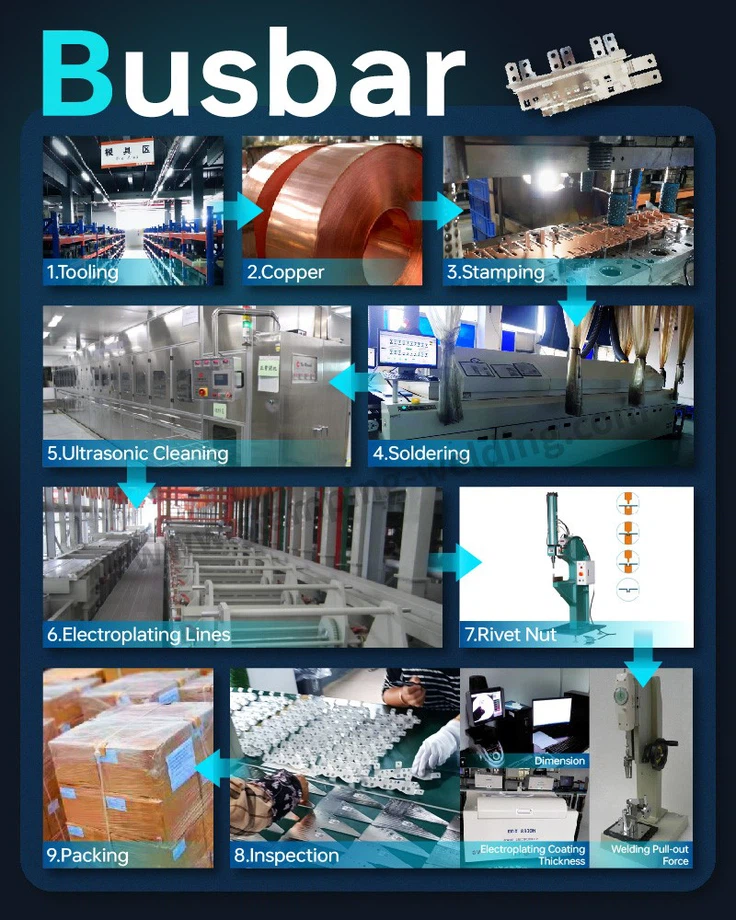
The feasibility of the manufacturing process directly impacts mass production costs and consistency. Modern busbar manufacturing employs precision stamping, laser welding, and automated assembly technologies to ensure bending accuracy and connection reliability. For example, Capacitor laminating bus bars improve production efficiency and reduce material waste through lamination processes. In terms of cost, replacing some copper materials with aluminum (such as in EV aluminum bars) is becoming a trend, achieving cost reduction while meeting performance requirements and driving large-scale industrial applications.
Future Trends: Intelligentization and Materials Innovation Lead the Way
For next-generation new energy vehicles, EV BusBar technology is rapidly integrating intelligent sensing elements to achieve real-time temperature and current monitoring and fault warnings. Meanwhile, the development of new insulating materials (such as high-temperature resistant polymers) and lightweight alloys will further improve system energy efficiency. The integration level of busbar car designs is expected to break through existing architectures, deeply collaborating with battery management systems (BMS) to build a safer and more efficient energy transmission network.
Contact Us
For integrated busbar solutions or technical consultations for new energy vehicles, please feel free to contact us to work together to create a safer, more efficient, and smarter electrified future.