How Laminated BusBars reduce electromagnetic interference through their laminated structure: the synergistic effect of magnetic field cancellation and low stray inductance
May 02, 2026
In modern power electronic systems, electromagnetic interference (EMI) has always been a significant challenge for designers. Laminated BusBars, with their unique laminated structure, can effectively suppress the generation and propagation of EMI at the physical level. Industry technical analysis indicates that their noise reduction principle mainly relies on the mutual cancellation of magnetic fields, minimization of stray inductance, and a significant reduction in the current loop area.
Magnetic fields cancel each other out: the tight coupling of the positive and negative conductor layers produces a canceling effect
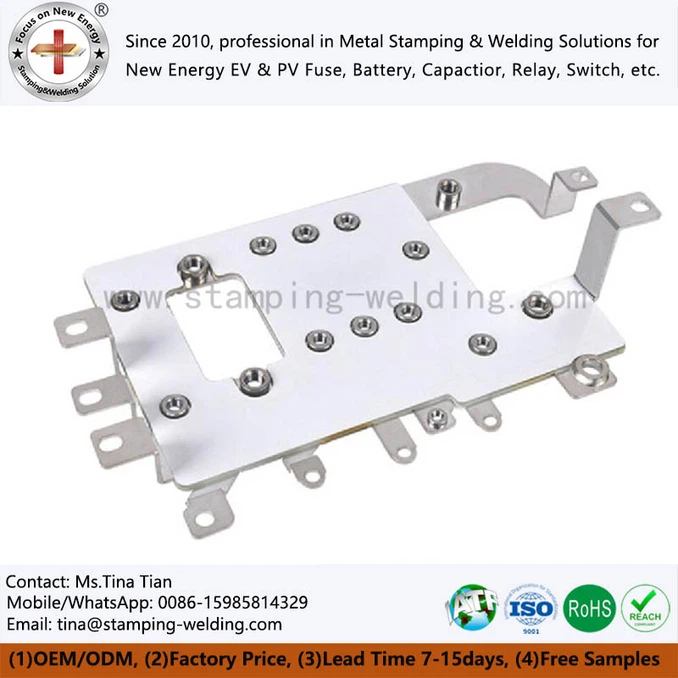
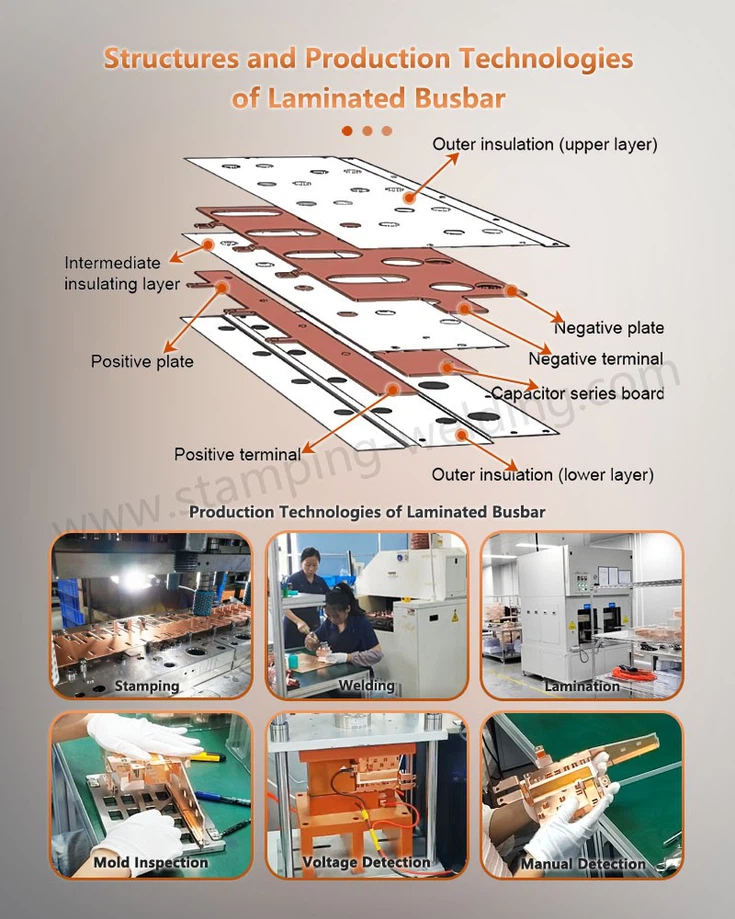
The core structure of the laminated busbar consists of alternating layers of positive and negative conductors separated only by an extremely thin insulating material. When the positive and negative layers with opposite current directions are closely adjacent, according to Ampere's law, the magnetic fields they generate are in opposite directions, thus canceling out the magnetic fields in the external space and significantly reducing the overall magnetic field strength. For laminated bars, radiated electromagnetic interference is significantly suppressed as the external magnetic field decreases.
Stray inductance minimization: Reducing voltage spikes at the source
The inductance directly determines the amplitude of voltage spikes in a switching circuit (V = L·di/dt). High stray inductance amplifies magnetic flux, thereby enhancing electromagnetic interference. Bars eliminate magnetic flux paths between conductors by tightly bonding the positive and negative conductors, resulting in extremely low parasitic inductance. Lower voltage spikes mean less electromagnetic noise, thus improving system stability. This characteristic is particularly crucial in Laminated Copper Busbars and Laminated Bars for IGBT-based Motor Drives used in IGBTs and capacitor banks.
High-density layout minimizes the current loop area
Traditional cable wiring often creates large current loop areas, which are themselves effective radiating antennas. Layered structures concentrate the round-trip paths of large currents into an approximately "sheet-like" rather than "loop-like" pattern, minimizing the current loop area and thus reducing electromagnetic noise sources at their source. Furthermore, multi-layer parallel designs ensure a more uniform current distribution across the entire cross-section, avoiding high-intensity magnetic fields caused by localized large current fluctuations, further improving overall electromagnetic compatibility for busbar.
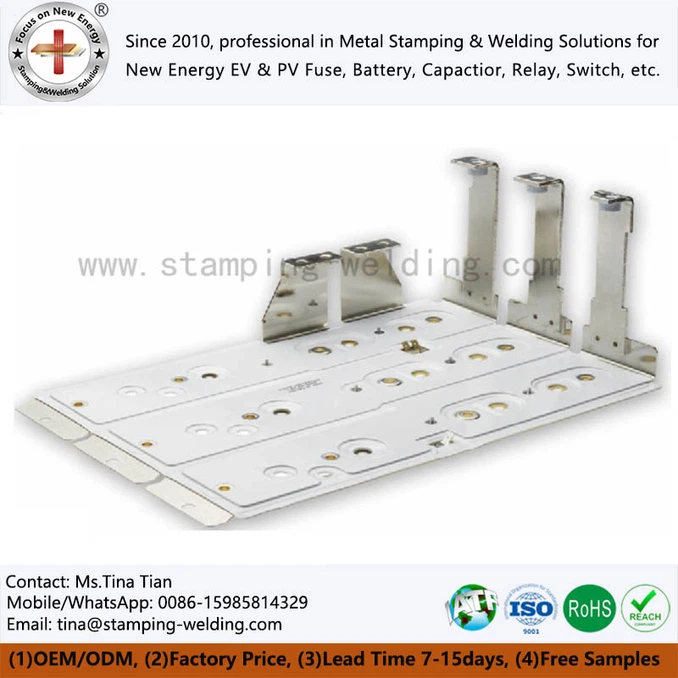
Wide range of applications confirms the advantages of noise reduction
From photovoltaic inverters and DC support capacitors to the interconnection between IGBTs and capacitor banks, products such as Laminated Busbars for PV Inverters and Polypropylene Film Dielectric DC Support Capacitor Laminated Bus Bars benefit from the principle of low stray inductance and magnetic field cancellation. In applications such as power electronics, rail transportation, aerospace power supplies, and high-frequency welding power supplies, bars have become a mainstream solution for reducing electromagnetic interference.

summary
In summary, the Laminated BusBars, relying on its tightly coupled positive and negative conductor layer design, achieves three core advantages: low stray inductance, small loop area, and magnetic field cancellation. This fundamentally reduces electromagnetic interference in power electronic systems and provides a reliable busbar solution for electrical designs with high power density and high switching frequency.
Contact Us
If you are looking for a professional Laminated BusBars solution to address electromagnetic interference issues in your power electronic systems, please feel free to contact us for further discussion.