Technical approaches to improve the conductivity of Insulated Flexible Busbar With PVC Insulation: optimizing conductors, heat dissipation, and connection processes
May 02, 2026
With the increasing demands on the performance of current-carrying connectors from electric vehicles and energy storage systems, effectively improving the conductivity of Insulated Flexible Busbar With PVC Insulation has become a hot topic in the industry. Industry experts point out that the essence of conductivity lies in reducing the working resistance of the busbar and improving heat dissipation, thereby enhancing its current-carrying capacity. Although PVC, as an insulating material, does not participate in conductivity, its overall conductivity can still be significantly improved by optimizing the internal conductor structure, heat dissipation design, and connection process.
Optimize the central conductor material and laminated structure
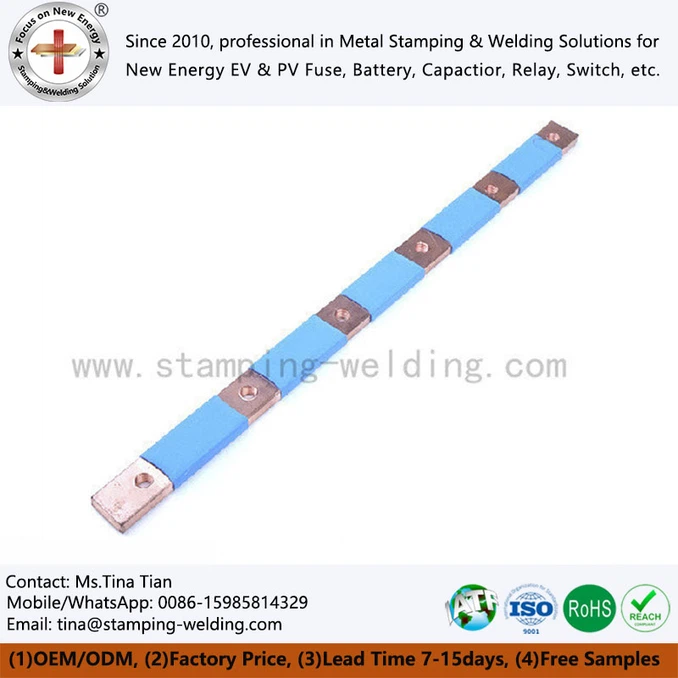
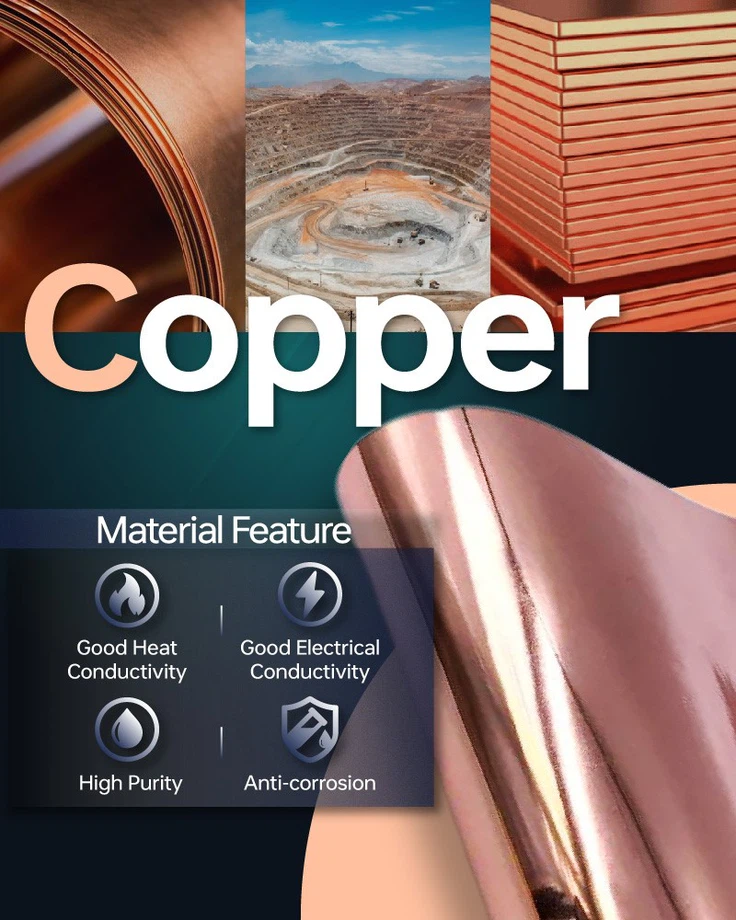
The primary way to improve conductivity is to use high-purity electrolytic copper (such as C1100); the higher the purity, the better the conductivity. Within the space allowed by the insulation layer, increasing the number or thickness of copper foil layers to increase the total cross-sectional area is an effective way to directly reduce resistance and increase current carrying capacity. Simultaneously, using a tightly stacked multilayer thin copper sheet structure provides better flexibility for the same cross-sectional area compared to a single solid conductor, and effectively suppresses the skin effect under high-frequency AC conditions. To address these requirements, when using a Copper Busbar PVC Insulated design, it is essential to ensure pressure uniformity and electrical continuity between conductor layers.
Improve heat dissipation performance to reduce temperature rise
Conductivity is negatively correlated with temperature; therefore, lowering operating temperature helps maintain low resistance. In terms of structural design, insulating sleeves with grooved inner surfaces or special spacing designs can be used to increase the contact surface area between the conductor and the PVC insulation layer and create tiny air gaps, thereby enhancing heat dissipation. Furthermore, keeping the insulation surface clean, avoiding heat accumulation, and using forced air cooling or water cooling where space permits are all effective measures to reduce busbar temperature rise. In this process, selecting appropriate PVC Insulation and Busbar Sleeves Insulation solutions helps balance insulation strength and heat dissipation efficiency.
Improve connection technology to reduce contact resistance
Contact resistance at connection points often becomes the bottleneck of the entire conductive path. Using drill-free connectors or specialized clamps to reduce contact resistance through large-area compression avoids the reduction in cross-sectional area and localized hot spots caused by drilling. Simultaneously, appropriate torque should be applied to the terminal connection, and the contact surfaces should be tin-plated or silver-plated to ensure long-term stable low-resistance contact. For scenarios requiring frequent assembly or maintenance, standardized interface components such as EV Battery Connectors or Battery Terminal BusBars can be selected to ensure connection reliability and low-resistance characteristics.
Optimize production processes and insulation materials
The integrated extrusion molding process ensures a tight fit between the conductor and the PVC insulation layer, preventing localized overheating caused by air gaps and achieving more uniform heat dissipation. When the thermal conductivity of ordinary PVC becomes a bottleneck, modified polymer materials with better thermal conductivity can be used as the insulation layer to accelerate the transfer of internal heat to the outside. In production, for areas requiring additional protection, Heat Shrink Tubing or Heat Shrink Sleeves BusBars can be used as supplementary insulation to further enhance system safety and compactness.

summary
In summary, improving the conductivity of Insulated Flexible Busbar With PVC Insulation hinges on increasing the effective conductive area, reducing contact resistance, and significantly minimizing operating temperature rise. From high-purity copper laminate structures to optimized heat dissipation and connection designs, and further to advanced extrusion processes and auxiliary insulation applications, the performance of Bars with PVC Insulation still has considerable room for improvement. As the current-carrying density requirements of new energy power systems continue to rise, these technological approaches will provide busbar designers with practical optimization directions.
Contact Us
If you encounter technical difficulties or require customized solutions in improving the conductivity of Insulated Flexible Busbar With PVC Insulation, please feel free to contact us for professional support.