EV fuse ceramic body: Industry application panorama and engineering selection guide
Apr 21, 2026
Industry positioning and core role of EV fuse ceramic body
As the core component of circuit protection, Ceramic body for Siemens LV HRC fuse plays a crucial role in achieving circuit overload and short circuit protection. It is an indispensable security guarantee in various power equipment and application scenarios, covering multiple key industries such as power, industry, new energy, transportation, and electronics. The Ceramic body for EV fuse not only provides structural support and electrical insulation for fuses, but also directly determines the response speed and reliability of fuses under complex working conditions such as high voltage and high current. Without the support of high-performance ceramic shells, fuses are difficult to achieve stable and high-quality protection performance.
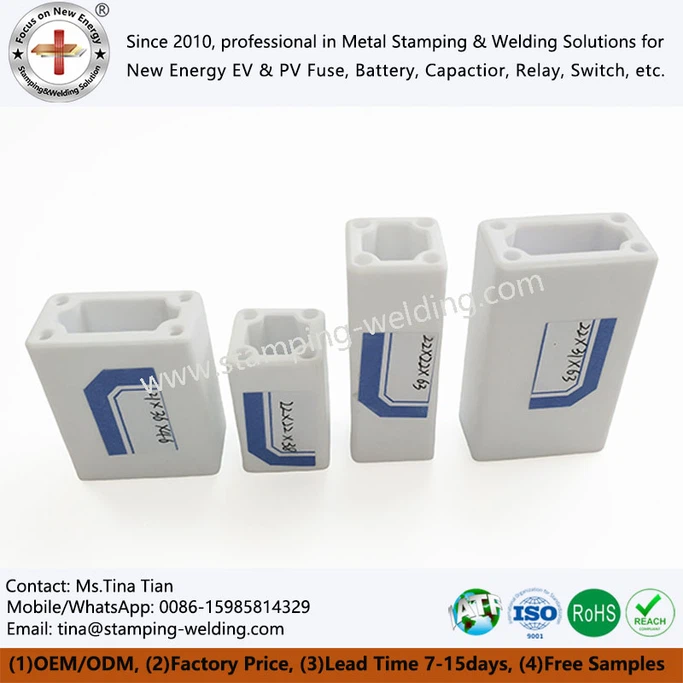
EV fuse ceramic body requirements classified by application scenarios
The performance requirements for Ceramic body for electric vehicle auxiliary fuse vary significantly in different application scenarios, mainly reflected in the following five core devices:
Power system and transmission and distribution equipment: In high-voltage transmission scenarios, ceramic shells are used for drop type current limiting high-voltage fuses, mainly to protect transformers, cables and other equipment in substations and transmission lines above 10kV from short-circuit current impact; In low-voltage distribution scenarios, ceramic shells are commonly used in distribution boxes and cabinets to ensure the safety of lighting and power circuits in residential and industrial areas.
Industrial automation and control equipment: Ceramic shells are widely used in motor protection circuits to prevent equipment such as fans, pumps, and compressors from burning out due to blockage or overload. They often work together with contactors to form dual protection. At the same time, in the power circuits of sensitive components such as PLC modules and sensors, fast melting or slow melting micro fuses are used, and ceramic bodies for overload and short circuit protection fuses need to have high precision and reliability.
New energy and energy storage equipment: As the fastest-growing field in demand for ceramic shells, it covers three major systems: photovoltaics, wind power, and energy storage. In photovoltaic systems, ceramic shells are used for the combiner box and inverter input terminals to prevent series short circuits, and the 1500VDC specification has become the mainstream choice for high-voltage systems; In wind power systems, Ceramic for DC automotive fuses are used for the protection of internal power equipment in converters; In energy storage systems, millisecond level response DC fast fuses rely on ceramic shells to achieve high voltage insulation and fast arc extinguishing.
Transportation and automotive electronic equipment: In new energy vehicles, ceramic shells for 300V~1500V high-voltage DC fuses are used to protect high-voltage components such as battery packs, motor controllers, and car chargers; Traditional cars mainly use plug-in and bolt type ceramic fuses for low-voltage circuits such as engine control units and lighting systems.
Electronic and consumer devices: In the field of consumer electronics, there is a demand for miniaturization and high precision of the Insulating electrical steatite ceramic fused body, which is widely used in devices such as mobile phone chargers, laptop power adapters, microwave ovens, and air conditioners; In the communication equipment scenario, the base station power supply and data center UPS system adopt high breaking capacity ceramic shells to resist lightning strikes or short circuit faults, ensuring the continuity of communication and data transmission.
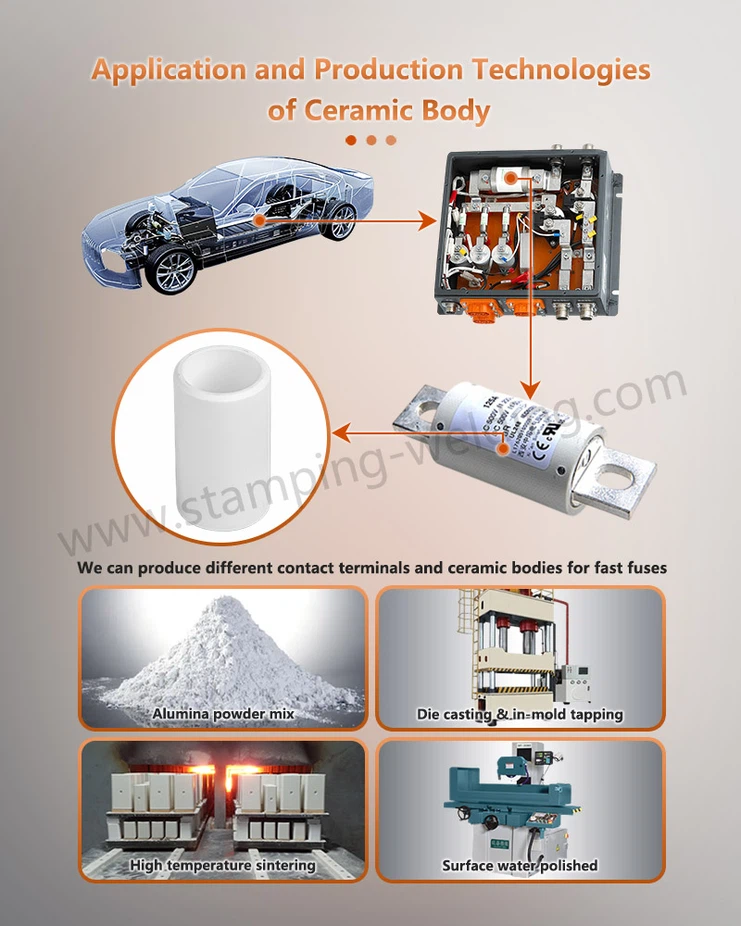
The three major technological trends in current industry applications
At present, there are three obvious development trends in the Ceramic casing for fuse link industry, which have given rise to a large number of new application demands:
The demand in the field of new energy has significantly increased: With the rapid popularization of photovoltaics, energy storage, and new energy vehicles, the demand for ceramic tubes for high-voltage DC fuses above 1000V has surged. The ceramic shell market, especially suitable for high-voltage scenarios in energy storage systems, has shown outstanding annual growth rates and has become the core driving force for industry growth.
Miniaturization and high reliability upgrade: The lightweight and integrated development of consumer electronics and automotive electronics is driving the evolution of Ceramic tube for EV DC fuse towards miniaturization. At the same time, high-end fields such as military and aerospace have put forward higher requirements for anti vibration and high temperature resistance, and the quality standards of core components have been synchronously improved.
The trend of intelligent integration is emerging: some fuses are beginning to integrate status monitoring functions, which can output fuse signals and be linked with smart grids and industrial IoT systems to achieve intelligent control of circuit safety. High performance Ceramic for electric and hybrid vehicle fuses provide the key physical and electrical foundation for such intelligent upgrades.
The decisive influence of materials and processes on the performance of ceramic shells
The performance of Ceramic tube for high voltage fuse depends directly on material selection and manufacturing process. The current mainstream materials include alumina ceramics and beryllium oxide ceramics. The former has excellent insulation properties (insulation resistance ≥ 1000M Ω) and high mechanical strength, as well as resistance to impact, vibration, and chemical corrosion, making it suitable for long-term use in complex environments; The latter is known for its excellent thermal conductivity, which can quickly dissipate the heat generated at the moment of melting, avoiding local overheating and affecting the protection response time and fuse life.
In terms of manufacturing technology, high-precision mold pressing and high-temperature sintering processes ensure the consistency of the size and density of the structure of the Alumina ceramic for bolted connect EV fuse. The combination of metal end caps and ceramic bodies adopts active brazing or silver welding processes, which have the characteristics of high strength and low contact resistance, ensuring stable current conduction under normal working conditions and rapid melting response under abnormal conditions. The full inspection process covers voltage withstand testing, insulation testing, and dimensional inspection to ensure that the delivered products meet engineering level application standards.

contact us
If you need technical selection suggestions or EV fuse ceramic body sample support for specific application scenarios, please feel free to communicate with us at any time. We will provide you with professional engineering docking services.