Insights into key technologies and industry applications of Flexible copper busbars
Apr 21, 2026
Industry development background
Against the backdrop of rapid iteration in power distribution systems, energy storage batteries, industrial complete sets of equipment, and new energy devices, the market's demand for high current carrying, miniaturized layouts, and flexible connections continues to rise. Flexible copper busbars have gradually become the core conductive components in modern high-voltage and high-power electrical systems due to their unique structural characteristics and electrical advantages. By combining product definition, manufacturing process, performance advantages, and practical applications, we can comprehensively clarify the industry value and engineering adaptation significance of Multilayer copper foil flexible busbars, providing professional references for selection design and scenario applications.

Core Manufacturing Process and Quality Control
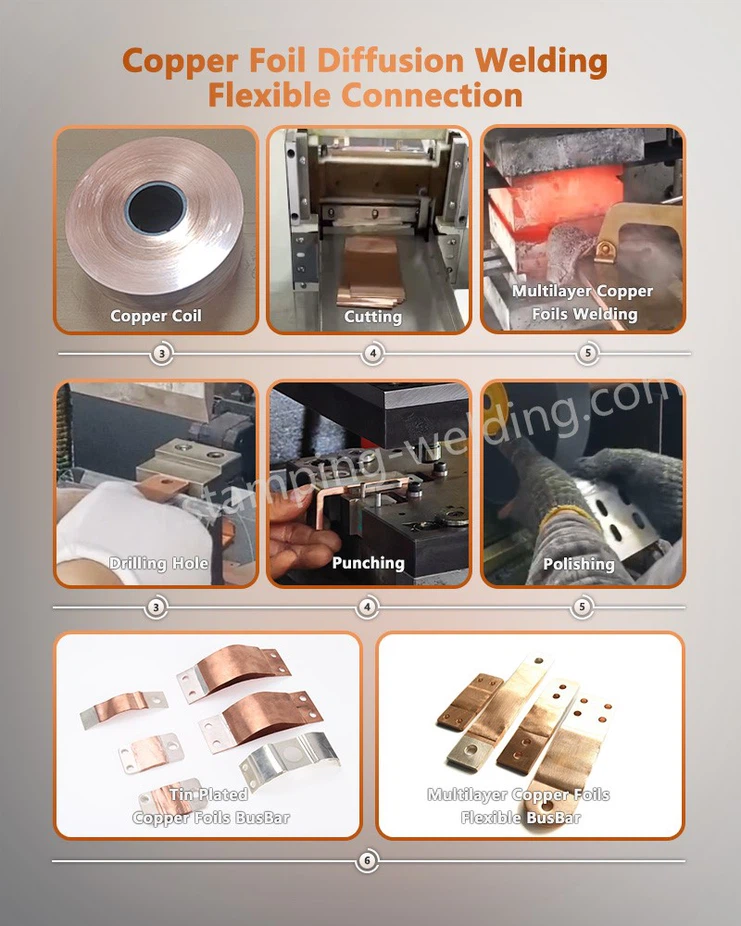
Flexible copper busbars are made from high-purity electrolytic copper foil as the base material, with a copper content of over 99.9%, ensuring excellent conductivity and mechanical stability from the source. The thickness range of conventional single-layer copper foil is 0.03mm to 0.50mm, and the industry standard thickness is 0.10mm. After stacking multiple copper foils, they are processed using pressure welding and molecular diffusion welding processes, relying on pressure combined with high-temperature heating to achieve atomic level fusion of the multi-layer copper foil without the need for additional solder, forming an integrated conductor structure as a whole.
Subsequently, precision forming processes such as cutting, punching, bending, and terminal processing can be carried out according to usage needs. At the same time, surface treatments such as tin plating and silver plating are supported, as well as protective processes such as PVC sleeves and heat shrink insulation coatings, effectively improving the corrosion resistance, insulation protection, and long-term durability of Copper flexible busbars. A comprehensive quality inspection system is in place throughout the entire process, which includes electrical tests such as resistivity, current carrying capacity, and contact resistance, as well as mechanical and heat resistance tests such as bending cycles, vibration tolerance, and cold and hot cycles. Strict measures are taken to prevent delamination, delamination, and welding defects, ensuring stable operation of the product under complex working conditions.
Core performance advantages of the product
Insulated flexible busbar has multiple comprehensive performance advantages and is suitable for various harsh electrical conditions. The high-purity substrate and laminated structure design endow the product with ultra-high conductivity and high current carrying capacity, resulting in lower resistance loss and meeting the long-term operational needs of high-power distribution scenarios. Different from traditional rigid busbars, the product has excellent flexibility and can be bent, twisted, and shaped arbitrarily, perfectly adapting to narrow spaces and irregular installation structures, in line with the development trend of equipment modularization and miniaturization.
The flexible structure of the Flexible busbar copper can effectively buffer the vibration impact during equipment operation, counteract the mechanical stress caused by thermal expansion and contraction, and significantly reduce the risk of component fatigue fracture and circuit failure. At the same time, the product supports comprehensive customization of size, shape, hole position, coating, and insulation method, adapting to diverse needs from small battery modules to large power equipment. The stacked structure expands the heat dissipation area of the conductor, improves heat dissipation efficiency, optimizes inductance parameters, reduces electromagnetic interference, and adapts to the usage standards of high-frequency equipment and precision electrical systems.

Mainstream application areas and scenarios
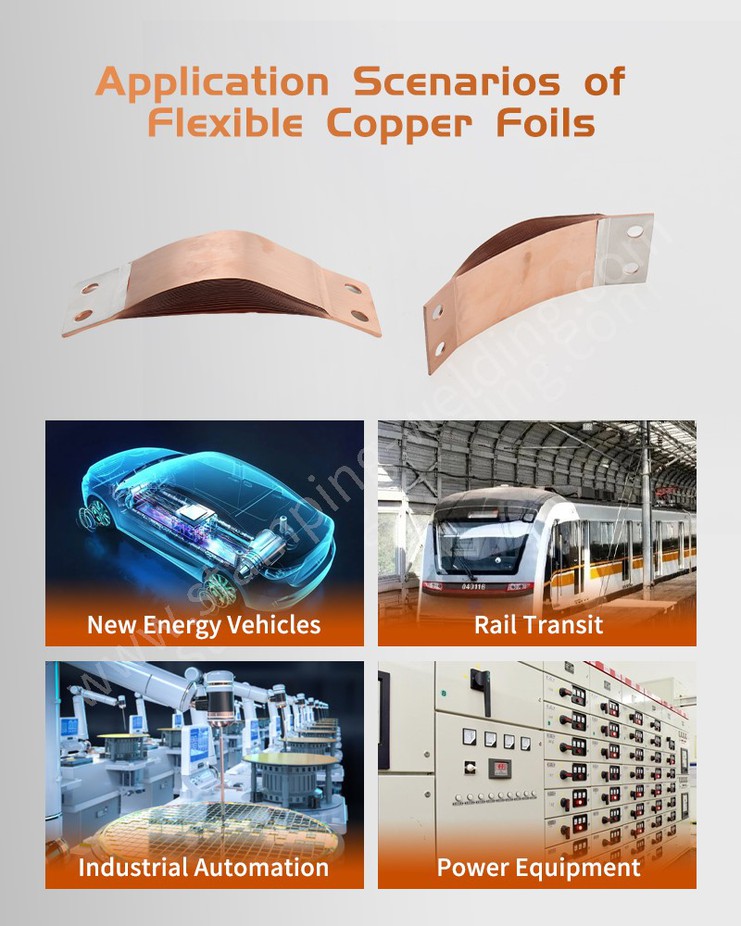
Relying on stable comprehensive performance, Multilayer bus bars have widely covered various industrial and new energy fields. In the context of power distribution, it can be used in conjunction with switchgear, bus ducts, and distribution cabinets to solve the problem of flexible connections in narrow spaces and compensate for the limitations of rigid busbars in special installation environments. In the field of heavy industry and industrial equipment, it is suitable for transformers, generators, industrial furnaces, welding equipment, and heavy machinery, and can withstand high currents, vibrations, and temperature differences for a long time to ensure continuous and stable power transmission.
The new energy track is one of the core application scenarios, widely used in power battery packs, energy storage systems, and electrical connections for new energy vehicles. It relies on flexible shaping capabilities to adapt to the three-dimensional layout of battery packs, buffering driving vibrations and temperature cycling changes. In addition, with its low impedance and low interference characteristics, Flexible copper laminated busbars are also suitable for inverters, frequency converters, data centers, and high-frequency precision electronic equipment, providing reliable flexible conductive solutions for high-end electrical systems.
contact us
To gain a deeper understanding of the specification selection and process plan of Flexible copper busbars, please feel free to communicate with us at any time. We can provide you with professional customized supporting suggestions and technical support based on actual working conditions.