Fusing Electronic Ceramic: sophisticated circuit protection art and core material analysis
May 11, 2026
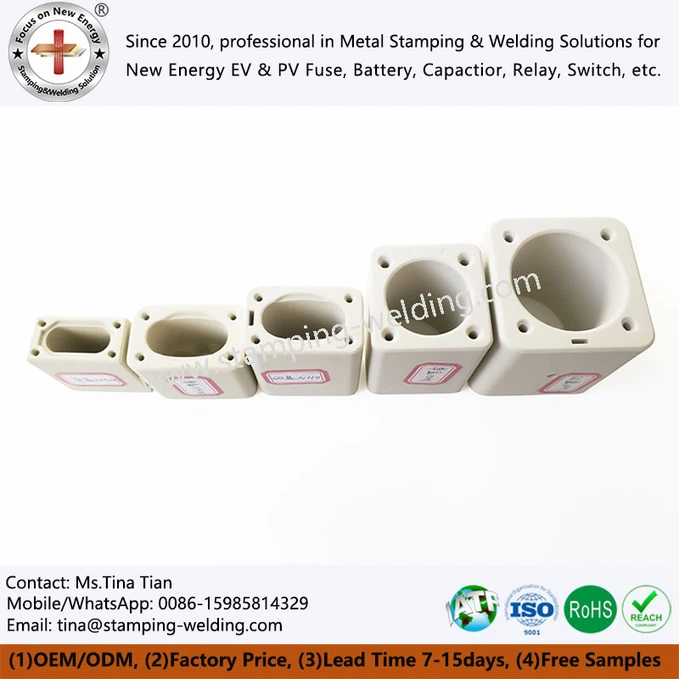
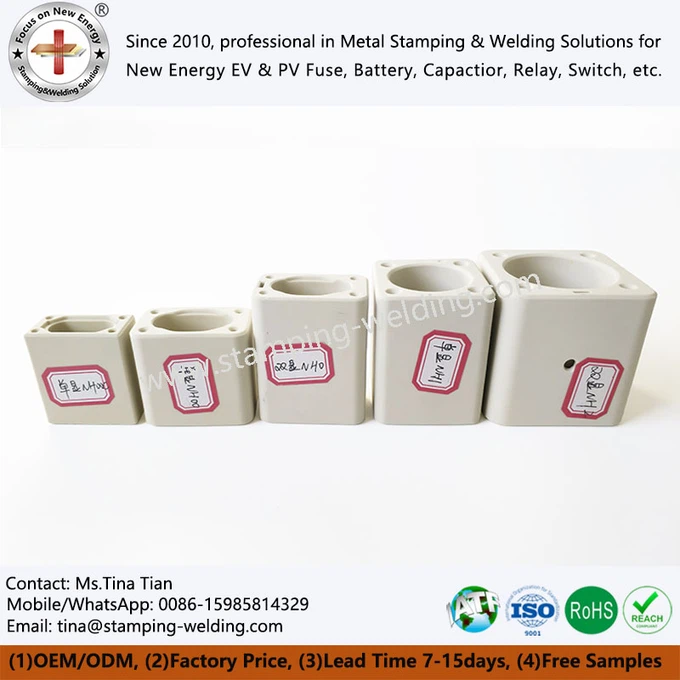
As an extremely widely used current protection device, ceramic fuses are widely used in high and low voltage power distribution systems, control systems and various types of electrical equipment. They are mainly responsible for short circuit and overcurrent protection tasks. Its core working principle is: when the current through the fuse exceeds the specified value, the fuse will generate heat and melt, thereby cutting off the circuit and protecting the safety of the entire system. Among them, the ceramic shell plays a vital role. Take the RN2 fuse as an example. The special alumina ceramic shell it uses can withstand high temperatures above 1700°C, which is like putting on "fireproof armor" for the circuit. Its unique bellows-shaped design hides a secret: the multi-layer shed structure effectively increases the creepage distance and prevents surface flashover under high voltage; the honeycomb-shaped inner wall increases the heat dissipation area, allowing the heat during fusing to be quickly dispersed; the matte glaze treatment can avoid the adhesion of metal vapor and maintain long-term insulation performance.
Protective properties
The ceramic shell of the high-voltage fuse is made of special alumina ceramic material, which can withstand high-temperature environments above 1700°C, providing reliable physical protection for the circuit system. Its bellows-like structure incorporates the following key technical features: Multi-layer shed structure: effectively increases the creepage distance and prevents surface flashover under 10kV high voltage conditions. Honeycomb inner wall design: By increasing the heat dissipation area, the heat generated at the moment of fusing is quickly dispersed. Matte glaze treatment: avoid metal vapor adhesion and maintain insulation performance for a long time. This structural design ensures the stability and safety of Electrotechnical Ceramics in high-pressure application scenarios.
Craftsmanship
In terms of the cooperation between the melt and the arc extinguishing system, the ceramic fuse shows an extremely high level of craftsmanship. The core melt is often designed with copper-silver alloy gradient wire. Through the segmented melt diameter (the thick end carries normal current, and the thin end accurately senses overload) and spiral winding structure, electromagnetic force is used to accelerate arc separation during fusing. At the same time, the inside of the insulating shell is usually filled with quartz sand with a particle size of 0.3-0.5mm. These sand particles can form a labyrinth-like arc extinguishing channel. Together with the air-tight welding of the metal end cap, it ensures that no splash occurs at the moment of fusing and the arc is quickly extinguished. In response to the special needs of high-voltage power systems such as 10kV, high-quality ceramic fuses will also be integrated into the voltage equalizing ring design to balance the electric field distribution, adopt an elastic support structure to withstand the huge electromagnetic force impact during short circuit, and be equipped with a visual indicator window (such as judging the fusing status through color-changing silicone), so that you can intuitively understand the status of the equipment without dismantling it.
Material details
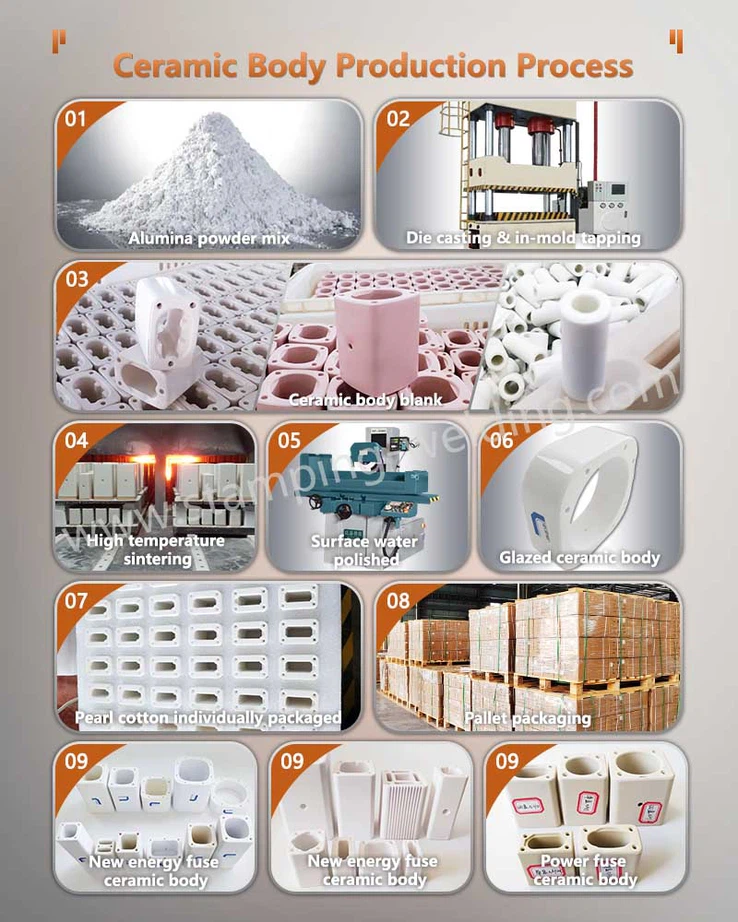
From a material science perspective, the ceramics used in fuses fall into the category of "electronic ceramics". Electrical Alumina Ceramic Fused Body refers to functional ceramics used to produce electronic components and structural parts of electronic systems. In addition to having high hardness and other mechanical properties, they are "indifferent" to changes in the surrounding environment and have excellent stability. Among the large family of electronic ceramics, those closely related to fuses mainly include: insulating device porcelain (referred to as device porcelain), which has excellent electrical insulation properties and is often used in structural parts, substrates and casings in electronic equipment and devices; and alumina porcelain and talc porcelain, etc., which have become the preferred materials for manufacturing high-voltage and high-current fuse shells due to their excellent high temperature resistance, insulation and mechanical strength properties.

contact us
Our company specializes in the production of Fusing Electronic Ceramic series products, which are suitable for NH/blade fuses and EV fuse systems. We can provide customized ceramic housing solutions for various high-voltage fuses. We welcome technical docking.