Guide to Repairing Scratches on the Prismatic Cell Aluminum Battery Case
May 23, 2026
In the production and operation and maintenance of the new energy lithium battery industry, Prismatic Cell Aluminum Battery Case are prone to surface scratches during handling, assembly, and use. This not only affects the battery's appearance integrity but can also, in severe cases, damage the casing's protective structure, weaken the battery's insulation and corrosion resistance, and even lead to safety hazards such as electrolyte leakage, short circuits, and thermal runaway. The current industry standard for handling this issue is to implement graded repair and assessment based on the depth and extent of the scratches. For various surface damages on lithium-ion battery aluminum shells, standardized processes are used to distinguish between repairable defects and unusable defects, balancing battery safety and product yield. This approach is widely applicable to various square lithium battery casing operation and maintenance scenarios.
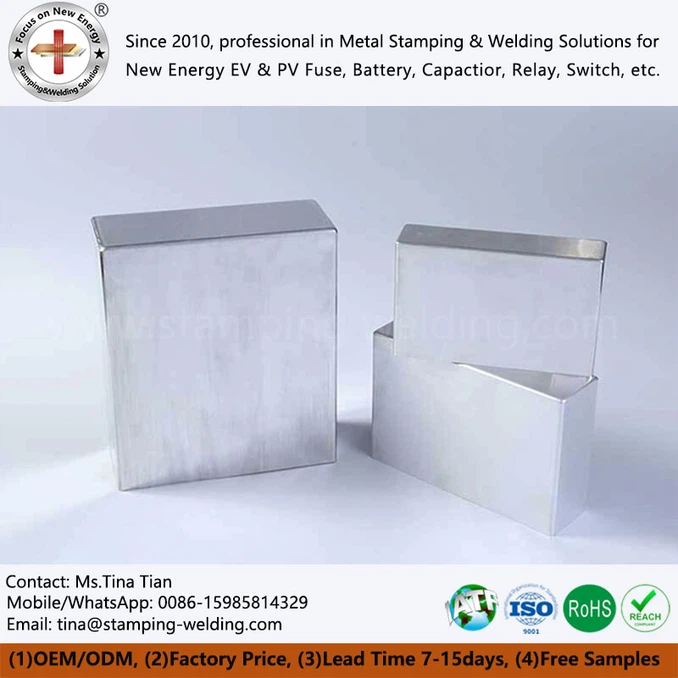
Minor scratches
For minor hairline scratches that only damage the surface oxide layer, the industry standard is to use physical polishing to achieve non-destructive repair. These fine scratches do not damage the aluminum substrate and are the most common minor defects in battery shell production and application. During repair, high-grit sandpaper of 1500 grit or higher should be used, along with clean water, to gently polish in the same direction as the scratch, gradually fading and eliminating the scratch. Afterwards, thoroughly clean the shell surface of dust and stains. Because polishing will damage the original anti-corrosion oxide layer of the aluminum, to prevent subsequent oxidation and corrosion, a special aluminum polishing compound should be used for surface polishing, or a transparent protective coating should be applied for sealing and protection, effectively restoring the surface protection performance of the rechargeable aluminum shell and ensuring the basic corrosion resistance and insulation of the shell.
Moderate scars
For moderate damage with noticeable scratches of considerable width and depth but no shell breakage, professional repair coating techniques are required. This type of damage is common in aluminum alloy prismatic battery cases. Simple sanding cannot completely repair the dents; a special aluminum alloy repair paste is needed to fill and level the surface, precisely filling the scratched and dented areas. After the filler material has completely cured and dried, fine sandpaper is used to refine the surface until it is smooth and flat. Finally, a painting or electrostatic powder coating process is used to reshape the surface, fully restoring the shell's smoothness and original insulating protective layer. This brings the Power Battery Shell's protective performance and appearance quality back to standard, meeting the requirements for new energy battery assembly and use.
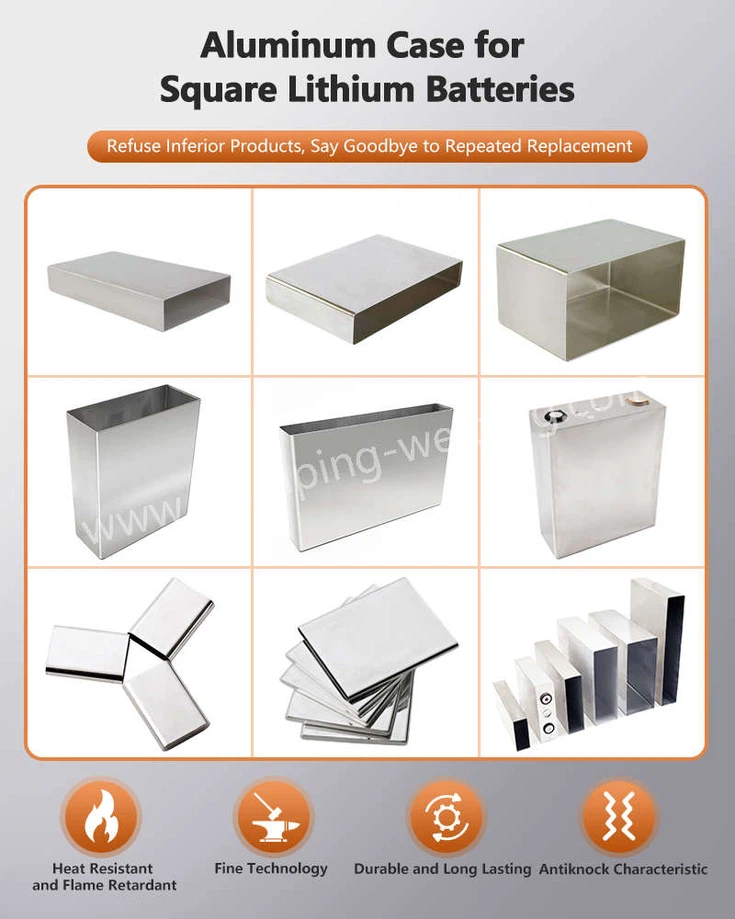
Deep damage
Deep scratches with obvious dents, severely weakened wall thickness, and a risk of penetration are considered high-risk defects and must be strictly assessed and scrapped according to standards. The wall thickness of a typical square lithium-ion battery aluminum shell is only between 0.8mm and 1.5mm. Deep scratches significantly weaken the shell's structural strength, damage the protective structure of the aluminum battery casing, and easily lead to internal electrolyte leakage and external moisture intrusion, potentially inducing major safety accidents such as short circuits and thermal runaway. For such severely damaged Lithium Batteries Square Aluminum Shells, the industry explicitly prohibits repair and reuse. They must undergo professional wall thickness and cell condition testing and assessment before being scrapped directly, thus preventing potential safety hazards in power battery operation from the source.
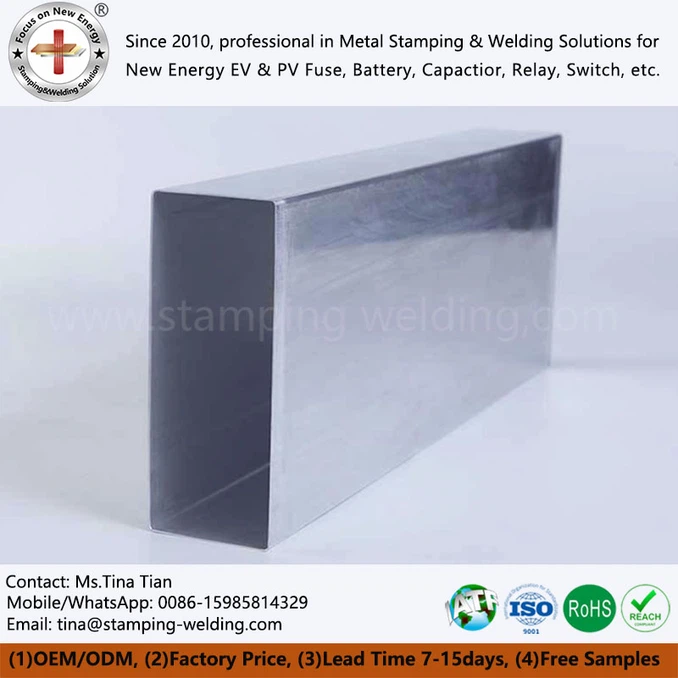
Safe operating procedures
The industry has established standardized safety operating procedures for various Prismatic Cell Aluminum Battery Case. To adapt to diverse lithium battery product categories, repair work on casings of different specifications, such as Battery Aluminum Cases, New Energy Aluminum Battery Cases, and EV Car Battery Shells, must strictly adhere to safety prohibitions and operating guidelines. Strongly corrosive chemical reagents are strictly prohibited throughout the repair process to avoid corroding the aluminum substrate and contaminating the internal battery cells. Furthermore, all repair materials must be insulating to prevent conductive material residue from causing short circuits at the terminals. Before repair, the battery voltage and internal resistance must be accurately tested to confirm that the prismatic cell aluminum shell is free of hidden damage to the battery cells, always prioritizing safety in all operations.
Contact Us
Mastering the graded repair standards for Prismatic Cell Aluminum Battery Case is crucial for safe battery operation and maintenance. For professional aluminum casing damage assessment and process solutions, please feel free to contact us for consultation.