Exploring methods for optimizing the terminal resistance of Flexible Braided Copper Busbar
May 23, 2026
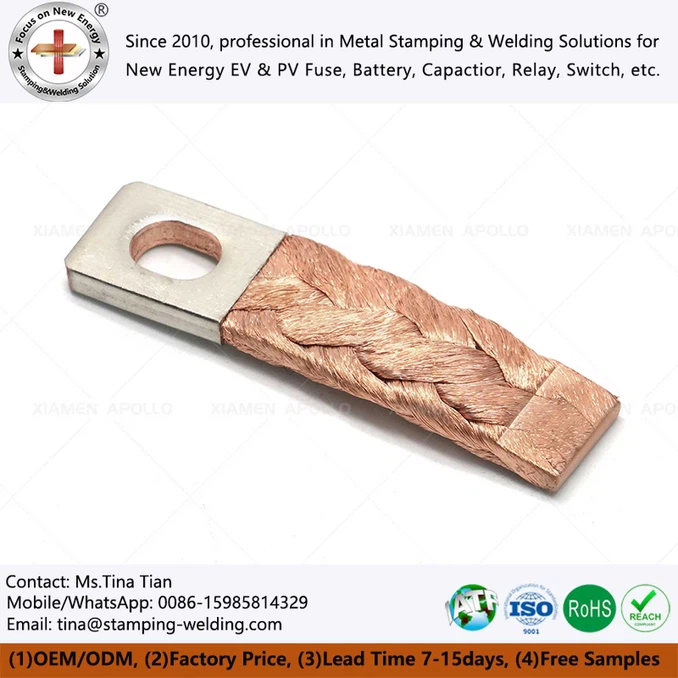
In power electronics and new energy equipment, Flexible Braided Copper Busbar are widely used in applications requiring compensation for installation errors, vibration absorption, and dynamic connections. The contact resistance at their terminals directly affects system temperature rise and long-term reliability. To address the contact resistance issue at the terminals of flexible braided busbars, the industry has developed standardized optimization measures covering connection processes, surface treatments, and fastening structures.
Process upgrade
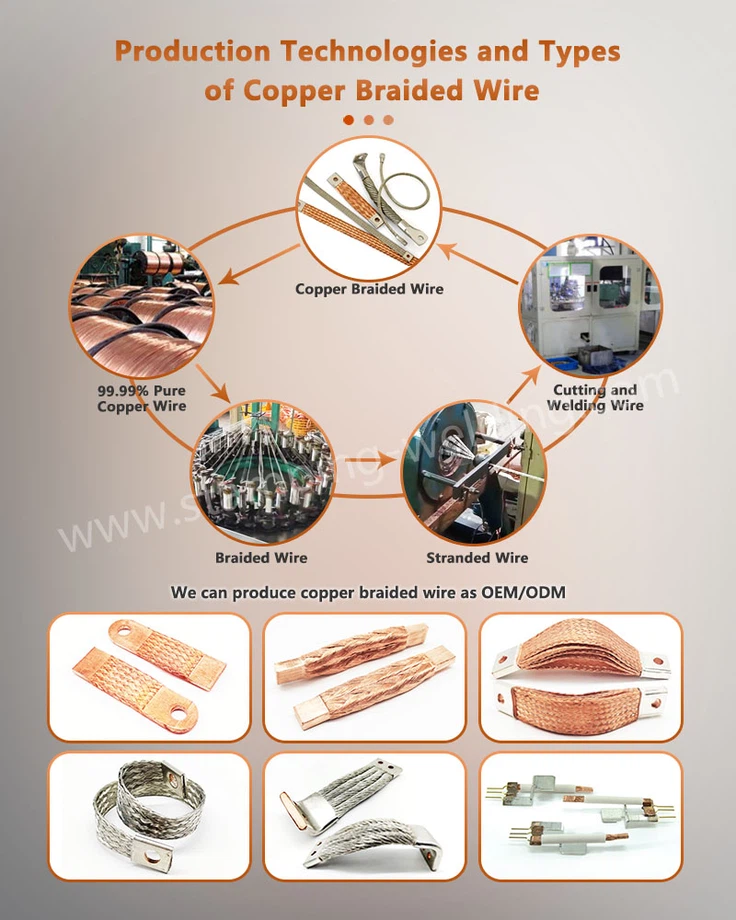
Standardizing and upgrading the end-connection process is a fundamental and core method for reducing contact resistance. Conventional Braided Wire Copper BusBars are formed by braiding multiple strands of fine copper wire. Direct crimping results in significant gaps inside the end, leading to insufficient conductive cross-section and high resistance. To address this industry pain point, current mainstream construction solutions employ high-pressure cold welding or ultrasonic fusion to fuse the scattered fine copper wires into a dense, solid copper body, completely eliminating internal gaps and effectively reducing the connector's own resistance. This process is also applicable to various flat copper braided connectors such as Flat Copper Braided Flexible Connectors. Furthermore, contact resistance is inversely related to contact surface pressure. During construction, a standard torque wrench must be used to ensure the bolt preload meets industry standards. Uniform pressure is used to break up the microscopic protrusions on the contact surface, achieving a tight metal-to-metal fit and constructing a stable conductive path, thus optimizing the conductivity of the flex bus bar connection from a structural perspective.
Surface finishing
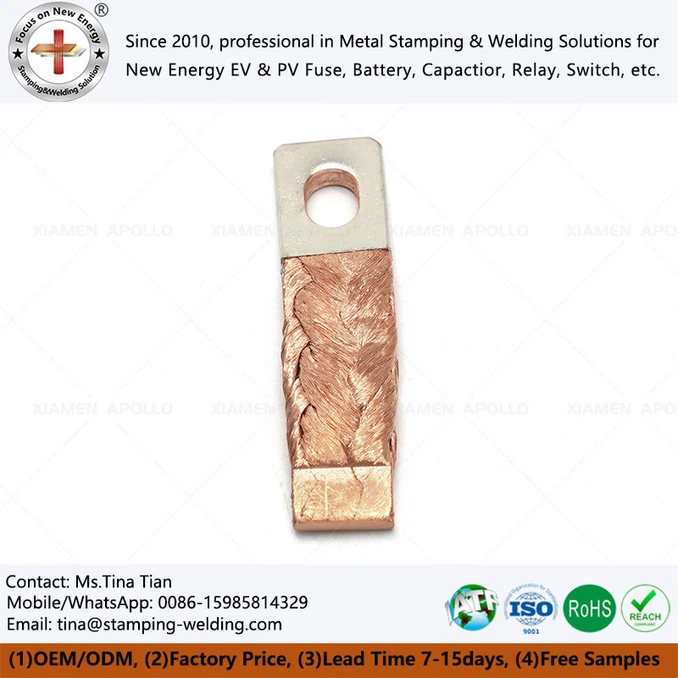
Refined surface treatment of metal contact surfaces is crucial for controlling contact resistance and delaying equipment aging. Exposed copper components are highly susceptible to oxidation in the natural environment, forming a high-resistance oxide film that significantly weakens conductivity. Therefore, corrosion-resistant and conductive treatment of copper braided wire terminals is essential. The industry prioritizes silver plating for terminals, followed by tin plating. Braided tin-coated copper flexible wire connectors, with their stable surface structure, can resist daily oxidation, while silver plating, with its excellent conductivity and low-resistance oxide properties, is the optimal choice for long-term stable operation. For unplated bare copper connectors, such as conventional flat copper braided wire, the surface oxide layer and oil must be thoroughly cleaned with fine sandpaper and a copper wire brush before splicing until a pure metallic luster is revealed, laying the foundation for a low-resistance connection. This treatment method is also applicable to round braided flexible cords and other circular braided conductive components.
Protection optimization
With complementary auxiliary protection and conductivity optimization measures, the low-resistance connection effect can be further consolidated, adapting to the needs of long-term operation. During component overlap construction, uniformly applying a special anti-oxidation conductive paste is a standard practice. The conductive paste isolates air to prevent secondary oxidation, while filling microscopic gaps on the contact surface, expanding the conductive path, reducing connection voltage drop, and is widely compatible with various copper braided connectors such as Flexible Copper Braided Connectors. Considering the thermal expansion and contraction conditions of electrical equipment during operation, which can easily lead to problems such as loosening of fasteners and increased contact resistance, spring washers or disc springs should be added during construction. The continuous compensating pressure of the elastic components avoids the risk of loosening during long-term operation, ensuring the connection stability of the Copper Stranded Flexible Connection. Simultaneously, using large-diameter standard flat washers can distribute the bolt tightening pressure, allowing the pressure to evenly cover the entire overlap surface, avoiding copper damage or poor contact caused by uneven local pressure, effectively optimizing the overall connection quality of Flexible Copper Braid Connectors.
Operation and maintenance empowerment
In the field of power engineering, flexible bars and copper jumpers are crucial components for flexible connections in equipment, and high-quality process control is one of the core technical standards for Flexible Braided Copper Busbar manufacturers. Compared to traditional components, stranded and braided conductive products such as copper-stranded flexible bars, copper-stranded wires, and twisted copper wires, with their flexible structural characteristics and excellent conductivity, are widely used in various high and low voltage electrical equipment. Standardized end treatment, surface protection, and fastening processes can completely solve the problem of abnormal resistance in the operation of copper-braided bars for electrical applications, comprehensively improving the operational stability, safety, and service life of flexible copper braided bars and various flexible conductive connectors, providing a solid guarantee for the stable operation of power systems, energy storage equipment, and industrial electrical equipment.
Contact Us
For precise optimization of the contact performance of Flexible Braided Copper Busbar and adaptation to various electrical connection scenarios, please contact us at any time to obtain professional process solutions and customized selection services.