How is the Corrosion Resistance of Brass Stampings, and What Methods Can Be Used to Improve Their Corrosion Resistance?
Aug 16, 2024

Brass (copper-zinc alloy) is widely used in electronics, electrical, automotive, construction and other industries due to its excellent mechanical properties, electrical conductivity and thermal conductivity. Especially in applications involving connectors, terminals and structural parts, brass stampings have become the preferred material for many engineers. However, brass materials may be affected by corrosion in certain environments, which affects their service life and performance. Therefore, understanding the corrosion resistance of brass stampings and effective methods to improve their corrosion resistance is essential to ensure product quality and extend service life.
Corrosion resistance of brass stampings
Brass has good corrosion resistance, especially in atmospheric environments. The natural oxide layer of copper can prevent further oxidation, thereby playing a protective role. However, the zinc content in brass affects its corrosion resistance. Zinc is a relatively active metal. In certain corrosive environments, such as marine climates or acidic environments, the corrosion rate of brass will increase, which in turn affects its stability.
1.Pitting
Pitting is a common form of corrosion for brass stampings in corrosive environments. Due to the uneven metal composition of brass, local areas may become the starting point of corrosion in the presence of oxidants, resulting in pitting. Pitting usually occurs in tiny areas on the surface of brass. Over time, these small holes will gradually expand and may eventually lead to material failure.
2.Stress Corrosion Cracking (SCC)
Brass stampings may suffer from stress corrosion cracking under the combined action of stress and corrosive media. This form of corrosion usually occurs in an ammonia environment, especially in brass with a high zinc content. Stress corrosion cracking will cause brittle fracture of the material, seriously affecting its service life.
3.Dezincification Corrosion
Dezincification corrosion is another common form of corrosion of brass in a corrosive environment, especially in an acidic or chloride-containing environment. Dezincification corrosion usually manifests itself as the brass surface becoming porous, brittle, and changing color. This form of corrosion will cause a significant decrease in the mechanical properties of brass stampings.
Effective methods to improve the corrosion resistance of brass stampings
In order to improve the corrosion resistance of brass stampings, engineers and material scientists can take a variety of measures. These methods can be used alone or in combination to achieve the best anti-corrosion effect.
Alloy composition optimization
By adjusting the alloy composition of brass, its corrosion resistance can be significantly improved. For example, adding a small amount of elements such as aluminum, tin or silicon can enhance the corrosion resistance of brass. Aluminum can form a dense aluminum oxide film on the surface of brass to prevent further corrosion. The addition of tin can effectively reduce the risk of stress corrosion cracking, while silicon can improve the corrosion resistance and mechanical strength of brass.
Surface treatment technology
Surface treatment is another important method to improve the corrosion resistance of brass stampings. Common surface treatment methods include:
- Electroplating: By plating a layer of corrosion-resistant metal (such as nickel, chromium, etc.) on the surface of brass, it can effectively isolate the external corrosive medium and prevent the corrosion of brass. The thickness and uniformity of the electroplating layer directly affect the anti-corrosion effect.
- Passivation treatment: Passivation is to form an oxide film on the surface of brass by chemical methods to increase its corrosion resistance. The brass surface after passivation treatment is more corrosion-resistant, especially in acidic or humid environments.
- Coating technology: Applying an organic or inorganic coating, such as a polymer coating or a ceramic coating, to the surface of brass can enhance its corrosion resistance. These coatings can act as a shield to prevent corrosive media from contacting the brass surface.
Environmental control
Controlling the use environment of brass stampings is also one of the effective means to extend their service life and improve corrosion resistance. For example, when using brass products in marine environments or areas with severe industrial pollution, minimizing their exposure to high salt or acidic gas environments can significantly reduce the corrosion rate. In addition, regular cleaning of the brass surface to remove corrosion products can also help maintain its corrosion resistance.
Stress control
When designing and using brass stampings, try to avoid applying excessive mechanical or thermal stress, reduce the generation of stress concentration areas, and help prevent the occurrence of stress corrosion cracking. Stress concentration can be reduced by optimizing structural design, reasonably selecting material thickness and shape, and controlling the forming process. In addition, for brass parts with potential stress corrosion cracking risks, heat treatment processes such as stress relief annealing can be considered to reduce internal residual stress.
Cathodic protection
Cathode protection is a method of preventing corrosion by applying a cathodic potential to a metal material. For brass stampings, a sacrificial anode (metal such as zinc or magnesium) can be connected to its surface to put the brass in a cathodic state, thereby preventing it from electrochemical corrosion. This method is particularly effective in marine environments or other highly corrosive environments.
Development of new materials
With the development of materials science, researchers are constantly developing new brass alloys to improve their corrosion resistance. For example, low-zinc and high-copper alloys developed in recent years, as well as brass alloys with trace amounts of rare earth elements, have shown better corrosion resistance. These new alloys significantly improve the corrosion resistance of brass by improving the microstructure and phase composition of the alloy.
Nano-coating technology
Nano-coating technology is an emerging anti-corrosion method in recent years. By applying a nano-level anti-corrosion coating on the surface of brass, its corrosion resistance can be greatly improved. These nano-coatings have higher density and better adhesion, can effectively isolate corrosive media, and extend the service life of brass stampings. In addition, nano-coatings can also give brass surfaces more functions, such as self-cleaning and antibacterial, further enhancing the application value of materials.
Regular maintenance and inspection
Regular maintenance and inspection are important measures to ensure the long-term and stable operation of brass stampings. Through regular inspections, early signs of corrosion can be discovered in time and appropriate protective measures can be taken. For example, regular application of protective oil or rust inhibitor and timely repair of surface damage can delay the corrosion process. In addition, modern non-destructive testing technologies, such as ultrasonic testing and X-ray testing, can also be used to monitor the internal defects of brass parts and prevent further development of corrosion problems.
Brass stampings are widely used in various fields due to their excellent mechanical properties and conductivity. However, corrosion problems are always an important factor affecting their service life and performance. Through various methods such as alloy composition optimization, surface treatment technology, environmental control, stress control, cathodic protection, new material development, nano-coating technology, and regular maintenance and inspection, the corrosion resistance of brass stampings can be significantly improved and their service life can be extended.
In practical applications, the corresponding anti-corrosion measures should be reasonably selected according to the use environment and specific needs of brass stampings to ensure that they can still maintain excellent performance in complex environments. This not only helps to improve the reliability and safety of the product, but also effectively reduces maintenance costs and improves overall economic benefits.
The metal brass stamping parts we produce have good corrosion resistance and can maintain the best performance in complex environments. If you are interested in our metal brass stamping parts, you can click the link below to learn more:
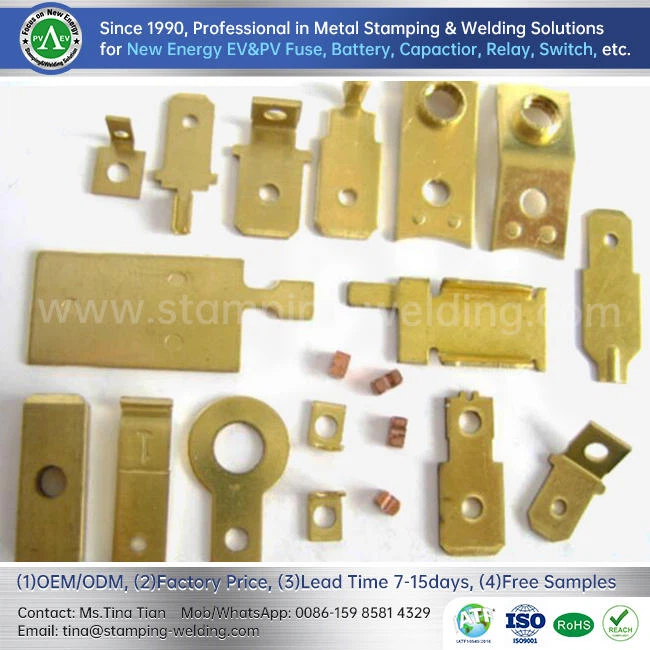
We believe that through our professional technical support and high-quality after-sales service, we can bring greater value and competitive advantages to customers. If you have any interest or questions about our brass custom stamping parts, please feel free to contact us, we look forward to working with you!