Aluminum alloy sheet stamping technology
Aug 16, 2024
Aluminum alloys are widely used in aerospace, automotive, electronics and construction due to their excellent properties, such as light weight, high strength and corrosion resistance. As an important manufacturing process, aluminum alloy sheet stamping technology is efficient, precise and economical. This article will deeply explore the basic principles, process flow, application fields and challenges of aluminum alloy sheet stamping technology.
1. Overview of stamping technology
Stamping technology is the process of deforming aluminum alloy sheets into the desired shape through dies and stamping equipment. This process mainly includes shearing, bending, stretching and forming operations. The main advantage of stamping is that it can achieve high-precision forming at high production efficiency and is suitable for mass production.
Basic principles of stamping: Stamping technology is based on the plastic deformation of materials under the pressure of the die. The stamping process usually includes the following steps: material preparation, die design, stamping operation, and finished product inspection. By applying pressure to the aluminum alloy sheet, it can be shaped in the die to produce complex parts.
Types of stamping: Stamping can be divided into many types, such as shearing stamping, bending stamping, stretching stamping and flanging stamping. Each type has specific application scenarios and technical requirements.

2. Characteristics of aluminum alloy sheets
Aluminum alloy sheets are widely used in the manufacturing industry due to their advantages such as light weight, high strength and good corrosion resistance. However, their characteristics also pose challenges to the stamping process.
Mechanical properties of aluminum alloys: The strength and hardness of aluminum alloys are usually lower than those of steel, but their density is also lower. During the stamping process, aluminum alloys have strong plastic deformation capabilities, but are prone to uneven material flow.
Heat treatment of aluminum alloys: The mechanical properties and plastic deformation capabilities of aluminum alloys will vary under different heat treatment conditions. Common heat treatment methods include solution treatment, aging treatment, etc.
3. Stamping Process
The stamping process of aluminum alloy sheets usually includes the following steps:
3.1 Material preparation
First, it is necessary to select suitable aluminum alloy sheets, cut and clean them to ensure that there is no dirt and oxide layer on their surface.
3.2 Die design
The design of the die is the key to stamping technology. A good die design should ensure uniform deformation of the aluminum alloy sheet during the stamping process. Die design needs to consider factors such as material fluidity, thickness variation and processing accuracy.
3.3 Stamping operation
The stamping operation involves placing the aluminum alloy sheet into the stamping equipment and completing the forming by applying pressure. During the operation, the pressure, speed and temperature need to be controlled to ensure the quality of the finished product.
3.4 Finished product inspection
After stamping, the finished product needs to be inspected to ensure that it meets the design requirements. Common inspection methods include dimensional measurement, surface inspection and mechanical property testing.

4. Application fields
Aluminum alloy sheet stamping technology has been widely used in many fields:
4.1 Automobile manufacturing
In automobile manufacturing, aluminum alloy sheets are often used to manufacture body panels, interior parts and structural parts. Stamping technology can provide high-precision parts while reducing the weight of the body and improving fuel efficiency.
4.2 Aerospace
The aerospace field has strict requirements on the strength and weight of materials. The stamping technology of aluminum alloy sheets can produce high-strength and lightweight structural parts to meet the needs of aerospace equipment.
4.3 Construction engineering
In construction engineering, aluminum alloy sheets are used to manufacture window frames, curtain walls and decorative parts. Stamping technology can ensure the beautiful appearance and stable structure of these parts.
5. Challenges and Solutions
Although aluminum alloy sheet stamping technology has many advantages, it also faces some challenges in practical applications:
5.1 Uneven material flow
Aluminum alloy may have uneven material flow problems during the stamping process. Solutions include optimizing mold design, controlling stamping parameters, and using appropriate lubricants.
5.2 Surface quality problems
The stamping process may cause scratches, pits, and other problems on the surface of aluminum alloy sheets. This can be solved by improving mold surface treatment and improving material cleanliness.
5.3 Effect of heat treatment on formability
The heat treatment state of aluminum alloy has a significant effect on stamping formability. It is necessary to select a suitable heat treatment solution based on the specific aluminum alloy grade and usage requirements.

6. Future Development Trends
With the advancement of science and technology and the development of manufacturing technology, aluminum alloy sheet stamping technology is also evolving. Future development trends include:
6.1 Automation and intelligence
The application of automation and intelligent technology will improve the efficiency and accuracy of the stamping process. Advanced robotics and intelligent control systems will gradually replace traditional manual operations.
6.2 Development of high-performance aluminum alloys
The development of new high-performance aluminum alloys will broaden the application scope of stamping technology and provide better strength and toughness.
6.3 Environmental protection and sustainable development
Environmental protection and sustainable development will become an important direction for future stamping technology. Reducing energy consumption and waste generation will become the focus of future technology development.
our Products
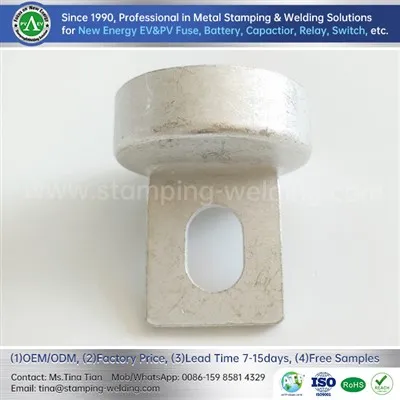
The Aluminum Sheet Metal Stamping we provide fully embodies high precision and reliability in the production process. Through advanced CNC stamping equipment and precision molds, the dimensional tolerance of each product is ensured to reach the micron level, meeting various high-demand application standards. The automated production line and strict quality control measures within the factory further improve the consistency and stability of the product. This high-precision manufacturing not only reduces the need for subsequent processing, but also ensures the reliability and long-term durability of the product in actual use.
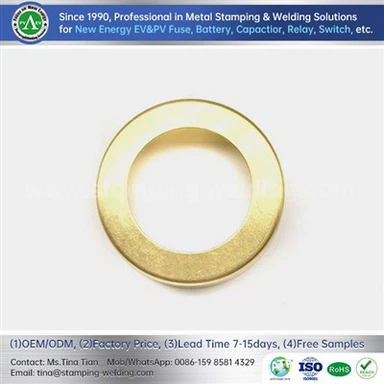
The aluminum alloy materials and brass materials selected for Aluminum Alloy Stamping Part have significant advantages, making our stamping parts outstanding in many aspects. Aluminum alloys are ideal for various industrial applications due to their high strength, light weight and excellent high temperature resistance. Brass materials, on the other hand, play an important role in fields such as electrical connectors due to their excellent corrosion resistance, processing performance and conductivity. Our continuous innovation in material selection and process technology ensures the excellent performance and technological leadership of our products.
https://www.stamping-welding.com/metal-stamping/aluminum-stamping-parts/

contact us