Selection of Residential Energy Storage Systems Increasingly Focused on Precision: Load Matching, System Configuration, and Safety Design Become Key Factors
Nov 10, 2026
Against the backdrop of the global energy transition, adjustments to electricity pricing mechanisms, and the continued growth of distributed photovoltaics (PV), residential energy storage systems are increasingly becoming a vital component of home energy management. By integrating PV power generation with battery storage, households can manage the storage and discharge of electricity based on their actual consumption needs. This increases the self-consumption of clean energy and provides backup power for critical loads during grid outages or periods of unstable power supply.
As application scenarios diversify, residential energy storage products have evolved from simple battery units into comprehensive system solutions that integrate PV generation, storage batteries, inverters, and energy management functions. For purchasers, system integrators, and engineers, selecting residential energy storage equipment requires more than just looking at battery capacity or price; it necessitates a holistic evaluation of household load characteristics, grid conditions, installation environments, system efficiency, and long-term operating costs.
Assessing Household Electricity Needs to Determine System Configuration
The selection of a residential energy storage system should begin with an assessment of household electricity needs. Variations in consumption habits, the scale of installed PV capacity, and requirements for backup power directly influence the necessary battery capacity, inverter power rating, and system operational strategy. Opting for high-capacity batteries or high-power equipment without careful analysis may simply inflate the initial investment without delivering commensurate value.
For households with rooftop PV installations, "self-generation and self-consumption" is a common operating model. During the day, PV-generated electricity first meets the household's load requirements, with any surplus stored in the battery for use at night or during periods of low sunlight. Determining the appropriate storage capacity for such setups requires calculations based on the installed PV capacity, local solar irradiance, and the household's average daily electricity consumption. A well-configured home solar battery storage system can reduce reliance on grid-supplied electricity while maximizing the local consumption of PV-generated power.
The price differential between peak and off-peak electricity is another key factor influencing the economic viability of residential energy storage. In regions with time-of-use (TOU) electricity pricing, users can charge their batteries during off-peak hours and discharge them during peak periods, thereby lowering their overall electricity costs. However, actual returns are influenced by factors such as electricity price differentials, charge/discharge efficiency, battery cycle life, and local electricity pricing policies; therefore, investment returns cannot be assessed solely based on peak-to-valley price spreads.
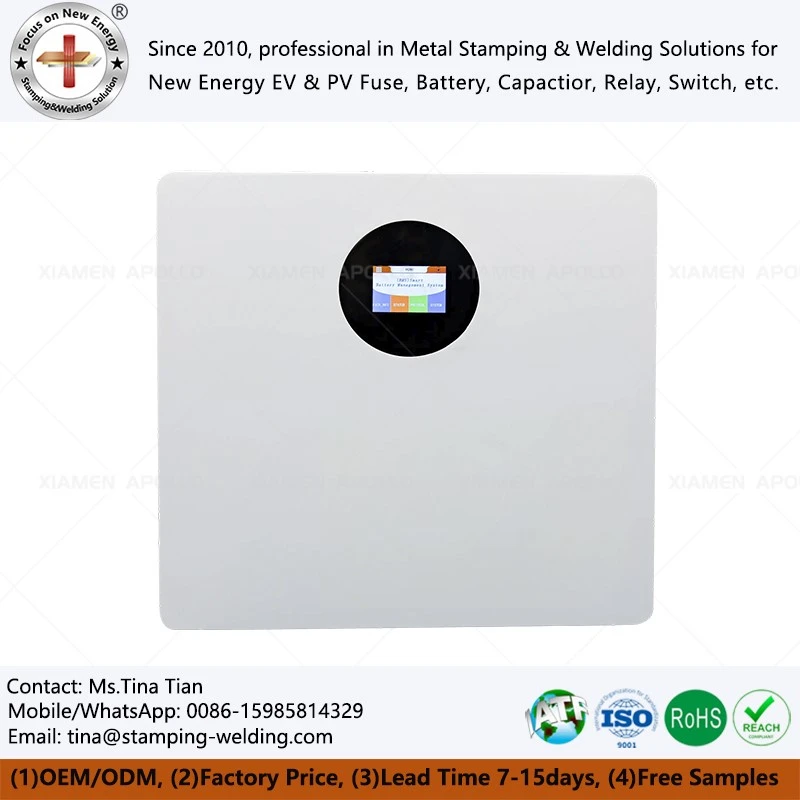
In regions with unstable power grids or a risk of blackouts, energy storage systems must also serve as an emergency backup power source. Critical loads-such as refrigerators, lighting, communication equipment, and security systems-typically require priority support. During engineering design, it is essential to define the list of backup loads, required duration of operation, and maximum startup power, and to configure battery capacity and inverter output capabilities accordingly. Some households opt for wall-mounted energy storage units, such as the Powerwall, to accommodate indoor installations or limited space.
Furthermore, in scenarios where feeding excess solar energy back into the grid is prohibited, an energy storage system can absorb surplus photovoltaic (PV) power by charging the batteries. In conjunction with an energy management system (EMS) that regulates grid-tied power output, this helps minimize unnecessary losses in PV generation. Such configurations require reliable power monitoring and "anti-backfeed" (or zero-export) control functions to ensure compliance with local grid interconnection requirements.
Assessing Household Electricity Usage and Installation Environment
Once the application objectives are clear, it is necessary to evaluate household electricity consumption data and on-site installation conditions. It is advisable to analyze electricity meter records over a period of time to understand consumption patterns, peak loads, and fluctuations throughout the day. Since appliances like air conditioners, electric water heaters, kitchen equipment, and water pumps may operate simultaneously, system design must account for instantaneous power demand and equipment startup currents, rather than relying solely on average household power consumption.
Grid conditions also influence the design of an energy storage system. Single-phase and three-phase power environments dictate different requirements for inverter types, output power, and electrical connection methods. Before purchasing and installation, verify local grid interconnection standards, grid-tie permits, metering protocols, and any anti-backfeed requirements. If the system is intended to switch to off-grid operation during a power outage, ensure that the inverter is capable of independent power supply and that the transition process meets the operational needs of critical loads.
The installation environment is a key factor affecting both the safety and the service life of the equipment. Residential energy storage batteries should generally be installed in a well-ventilated, dry location that allows for easy maintenance. They must be kept away from direct sunlight, exposure to rain, and high-temperature heat sources. For outdoor installations, it is crucial to verify the equipment's enclosure protection rating (IP rating), operating temperature range, and resistance to water and dust. For rooftop or wall-mounted installations, the load-bearing capacity of the structure, the integrity of the mounting hardware, and the availability of space for maintenance must be evaluated.
In cold regions, low temperatures can impair battery charge and discharge performance; consequently, some battery systems may require low-temperature protection or integrated heating functions. In high-temperature environments, attention must be paid to battery thermal management, inverter heat dissipation, and installation spacing to mitigate the impact of prolonged high-temperature operation on equipment performance.
Focus on Battery Capacity and Charge/Discharge Rates to Avoid Configuration Discrepancies
Battery capacity is a fundamental parameter when selecting a residential energy storage system, typically expressed in kilowatt-hours (kWh). However, when purchasing, it is important to distinguish between nominal capacity and usable capacity. Nominal capacity represents the rated energy storage capability under specified conditions, whereas usable capacity is further influenced by factors such as the depth of discharge (DoD), system protection strategies, ambient temperature, and the settings of the battery management system (BMS).
For example, a battery pack with a nominal capacity of 10 kWh and an allowable depth of discharge of 90% would have a theoretical usable capacity of approximately 9 kWh under those specific conditions. Actual power delivery capability must also account for inverter conversion losses, the power consumption of auxiliary equipment, and the operating environment. Therefore, system design should be based on the power requirements of critical loads and the expected backup duration, rather than simply equating the nominal battery capacity to the actual available energy.
Currently, lithium iron phosphate (LiFePO4) batteries are gaining traction for residential energy storage applications. While LiFePO4 batteries offer superior thermal stability and a long cycle life, their actual performance depends on factors such as cell quality, battery pack architecture, thermal management design, and the battery management system. When selecting a LiFePO4 battery for residential energy storage, one should verify cell specifications, cycle life test conditions, operating temperature ranges, overcharge/over-discharge protection, and relevant safety certifications.
The charge/discharge rate-often denoted by the "C" rating-determines the current at which a battery can absorb or deliver energy. "1C" indicates that, under ideal conditions, a battery can be fully charged or discharged within approximately one hour; "0.5C" corresponds to a duration of about two hours. For instance, a battery with a nominal capacity of 16 kWh has a theoretical discharge power of approximately 8 kW at a 0.5C rate-though the actual power output is further constrained by factors such as battery voltage, inverter capacity, and system control strategies.
For households with only basic, everyday electrical loads, a high battery C-rate is not strictly necessary. However, if the system is required to power air conditioners, water pumps, or other high-load equipment, it is essential to carefully evaluate the continuous discharge power, peak power, and short-term overload capacity. Ensuring a proper power match between the battery and the inverter is critical to preventing frequent power-limiting events or system shutdowns triggered by protective mechanisms.
Selecting an Energy Storage System Architecture Based on Power Supply Requirements
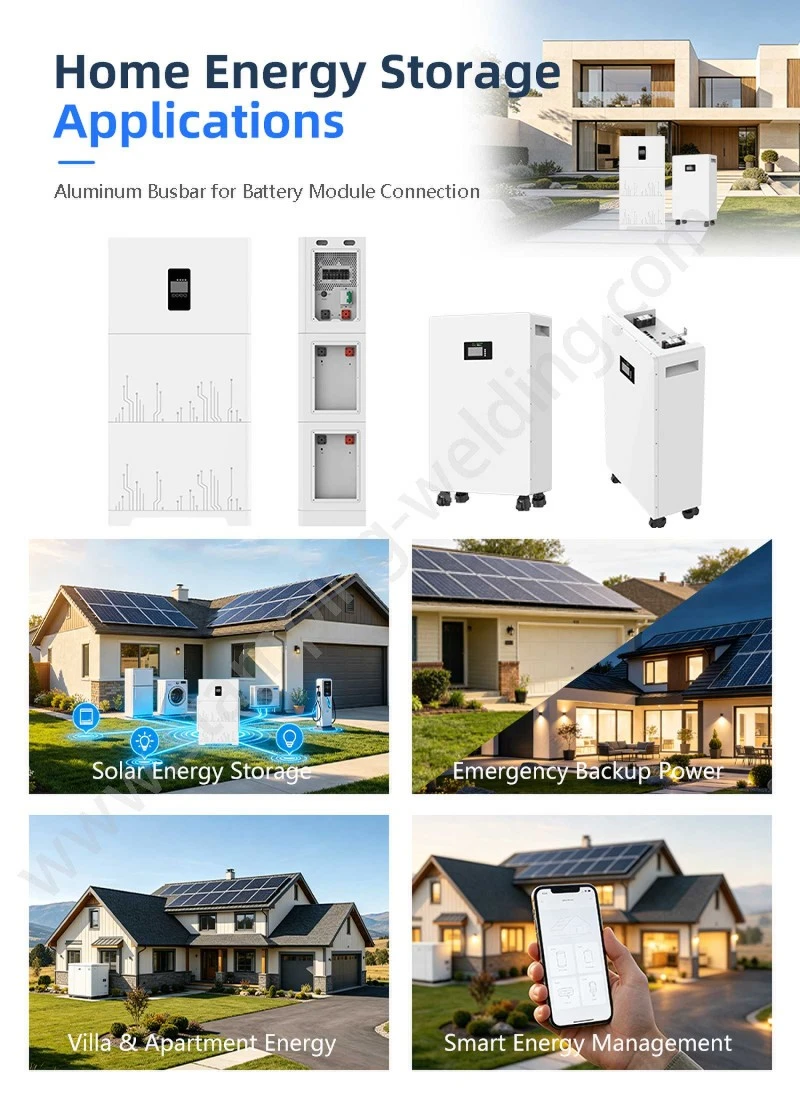
Residential energy storage systems typically consist of photovoltaic (PV) modules, storage batteries, an inverter, power distribution and protection equipment, and an energy management system. Different architectures vary in terms of equipment integration, installation complexity, scalability, and operational management; the choice should be based on the specific requirements of the project.
For households or small businesses with limited installation space and relatively low electricity consumption, highly integrated units can reduce the need for external connections. "Plug-and-play" residential energy storage solutions generally emphasize modular installation and simplified wiring; however, before deployment, it is still necessary to verify electrical interfaces, installation conditions, protection configurations, and compliance with local electrical codes. If an "all-in-one" (AIO) energy storage system is chosen, one must also confirm the compatibility between the battery, inverter, and control modules, as well as the ease of future maintenance and capacity expansion.
For households that already have a PV system and wish to add energy storage, a "hybrid" residential energy storage system is a suitable option. Such systems utilize a hybrid inverter to coordinate PV power generation, battery charging/discharging, and grid power supply, allowing for operational modes to be adjusted based on household load requirements and electricity pricing strategies. When implementing a solar-plus-storage lithium-ion battery system, particular attention should be paid to communication protocols between the battery and inverter, DC voltage ranges, charging currents, and protection logic to avoid compatibility issues between components.
In terms of installation, wall-mounted residential energy storage systems utilize vertical wall space, making them ideal for residential environments with limited floor area. Modular, stackable systems, by contrast, offer greater flexibility, allowing for the expansion of battery capacity to meet future energy demands. Regardless of the configuration, it is essential to verify the equipment's weight, the load-bearing capacity of the mounting brackets, the space required for wiring and maintenance, and the connection specifications between battery modules.
For mobile power supply, temporary backup, or outdoor applications, 220V portable energy storage systems can serve as standalone power sources. These differ from stationary residential energy storage systems in areas such as capacity scalability, continuous power output, heat dissipation, and protective design. When selecting such products, requirements should be defined based on the specific load types and intended duration of use; they cannot be directly compared against the configuration standards used for stationary energy storage systems.
The Role of Inverters and Energy Management Systems in Overall Performance
The energy storage inverter is responsible for power conversion and system regulation; its performance directly dictates the efficiency with which the photovoltaic (PV) system, batteries, and household loads interact. Selecting a residential energy storage inverter requires evaluating factors such as the household power supply type, rated output power, DC input range, charge/discharge current, and the ability to operate both on-grid and off-grid.
Single-phase systems are typically suited for residential or small commercial settings connected to a single-phase grid. In these designs, attention must be paid to the power distribution of major household loads to prevent long-term overloading of a single-phase circuit. Three-phase systems are designed for environments with three-phase power supply, higher load demands, or a diverse range of equipment; in these cases, inverter specifications must be determined based on the load distribution across each phase.
In off-grid backup mode, an inverter's continuous output power and short-term overload capacity are particularly critical. Certain motor-driven appliances require a high inrush current during startup; if an inverter's peak output capacity is insufficient, it may lead to startup failure or trigger system protection mechanisms. Consequently, engineering design should separately account for continuous load power, startup power requirements, and the priority levels of critical loads.
Furthermore, the energy management system (EMS) must coordinate charging and discharging strategies by analyzing PV generation, battery state-of-charge (SoC), household load demands, and grid status. For hybrid residential solar storage systems, the control system should also support essential functions such as operational data monitoring, fault alerts, and remote management, enabling users to stay informed about battery status, system power output, and equipment performance.
Evaluating System Value Through Safety Design and Full-Lifecycle Cost Assessment
Residential energy storage systems are electrical installations designed for long-term operation; therefore, safety must be integrated into every stage-from individual battery cells and packs to inverters, power distribution protection, and on-site installation. Battery systems must incorporate safeguards against overcharging, over-discharging, overcurrent, short circuits, and abnormal temperatures, with a Battery Management System (BMS) continuously monitoring the state of the cells. System design must also account for fault isolation, fire safety requirements, cable cross-sectional sizing, temperature rise at connection terminals, and grounding protection.
When purchasing, one should not rely solely on battery capacity or nominal cycle counts. It is crucial to examine the specific conditions under which cycle life is measured-such as test temperature, charge/discharge rates, depth of discharge (DoD), and capacity retention criteria. Cycle life data from different manufacturers cannot be directly compared if the testing conditions differ.
Full-lifecycle cost assessment requires a comprehensive analysis of factors including equipment procurement, installation, routine maintenance, battery replacement, energy conversion losses, and potential savings on electricity bills. The actual economic viability of a residential power system depends not only on the initial investment but also on local electricity pricing policies, solar generation potential, household load profiles, and system operational strategies.
For residential solar energy storage systems, an optimized capacity design is far more valuable than simply increasing battery size. The system should be designed to meet daily electricity consumption and backup power needs while balancing equipment utilization, operational safety, and long-term maintenance costs to maximize overall value.
Prioritizing System Compatibility and Engineering Validation in Procurement
Residential energy storage systems are evolving from standalone battery units into integrated solutions that combine photovoltaics (PV), energy storage, inverters, and intelligent control. Selecting the right system begins with an analysis of household load profiles, followed by determining the optimal system architecture based on power supply type, installation environment, battery technology, inverter capabilities, and local grid-connection requirements. Only through proper compatibility between all components can a system achieve an ideal balance of energy efficiency, supply reliability, and long-term operational cost-effectiveness.
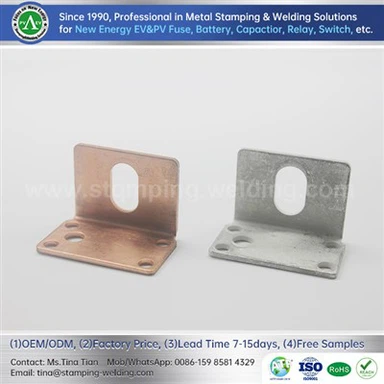
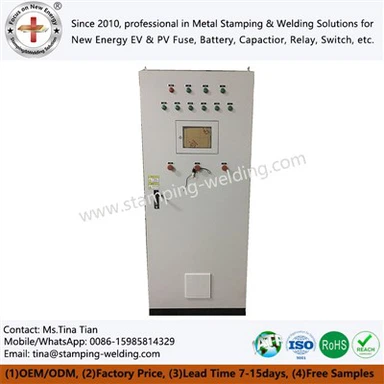
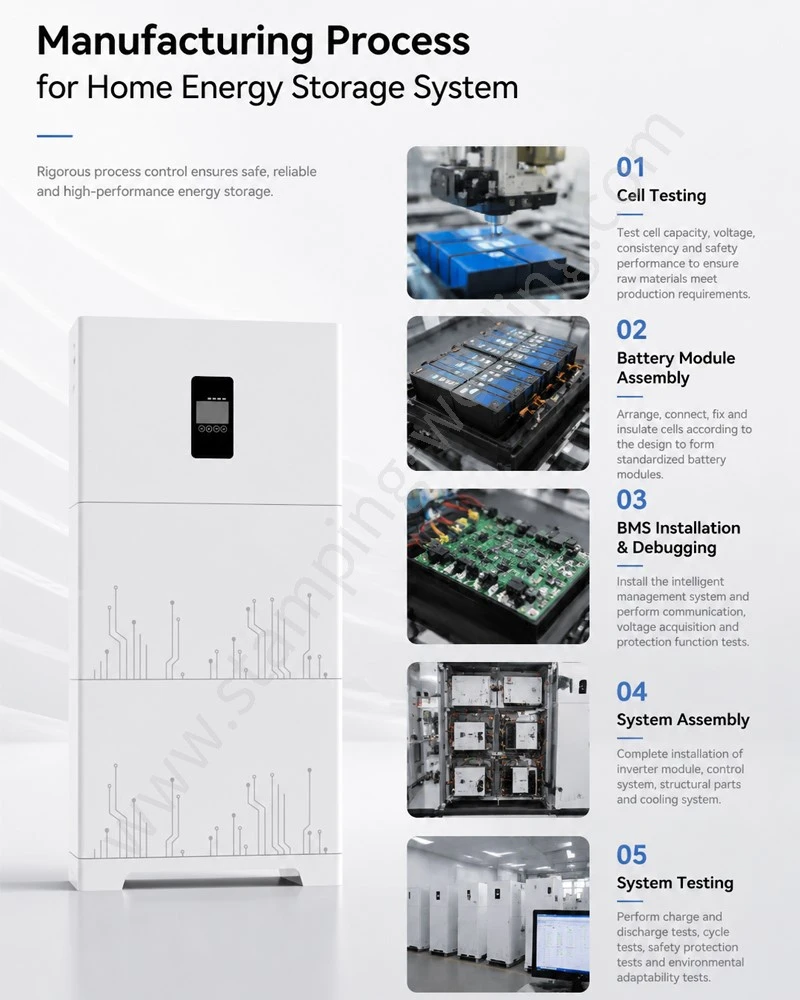
For purchasers of energy storage equipment, system integrators, and project developers, the selection phase should include a rigorous review of battery specifications, inverter technical parameters, BMS communication protocols, protection functions, installation dimensions, environmental adaptability, and relevant test documentation. When dealing with customized battery packs, energy storage cabinets, busbars, conductive components, or precision metal structural parts, it is also necessary to evaluate material selection, current-carrying capacity, connection methods, insulation requirements, structural integrity, and manufacturing consistency across batches.
For projects involving residential energy storage systems or their associated structural components, providing details such as target capacity, battery type, system voltage, continuous output power, installation space, operating environment, and relevant technical drawings will facilitate assessments of materials and structures, interface compatibility, sample validation, and the feasibility of mass production. Early-stage engineering collaboration helps mitigate system integration risks while enhancing the stability and maintainability of energy storage products in real-world applications.
contact us