China’s electrical cabinet industry accelerates its transition toward intelligence and modularity: New energy and data center development expand the market for power distribution equipment.
Nov 07, 2026
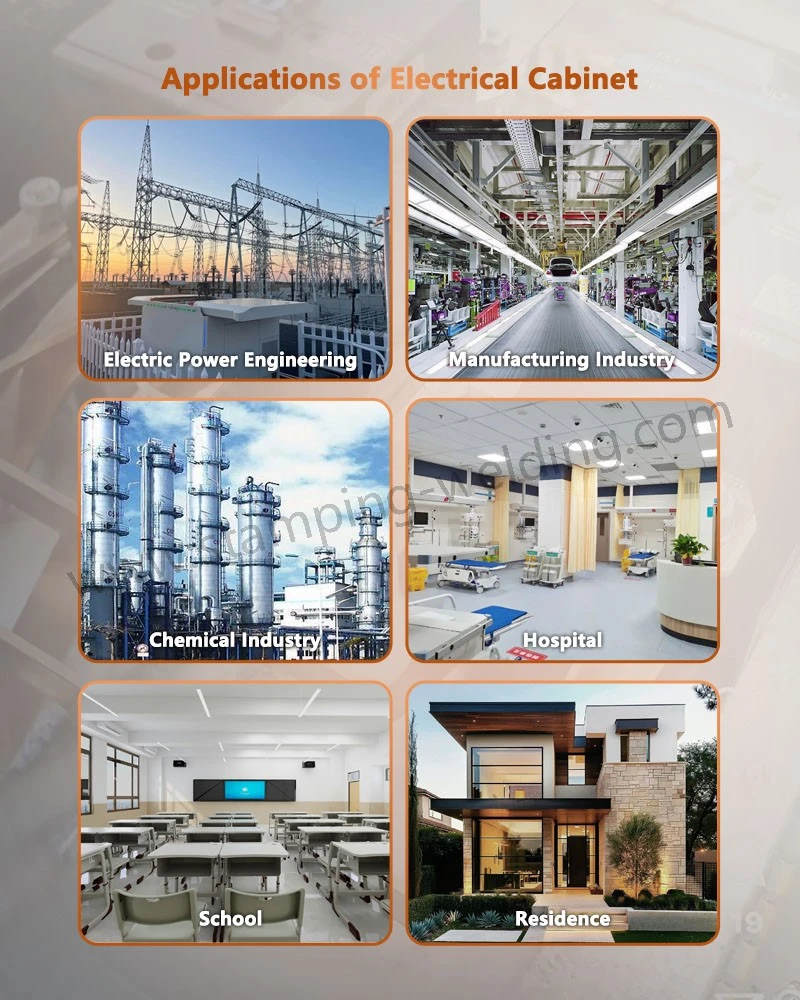
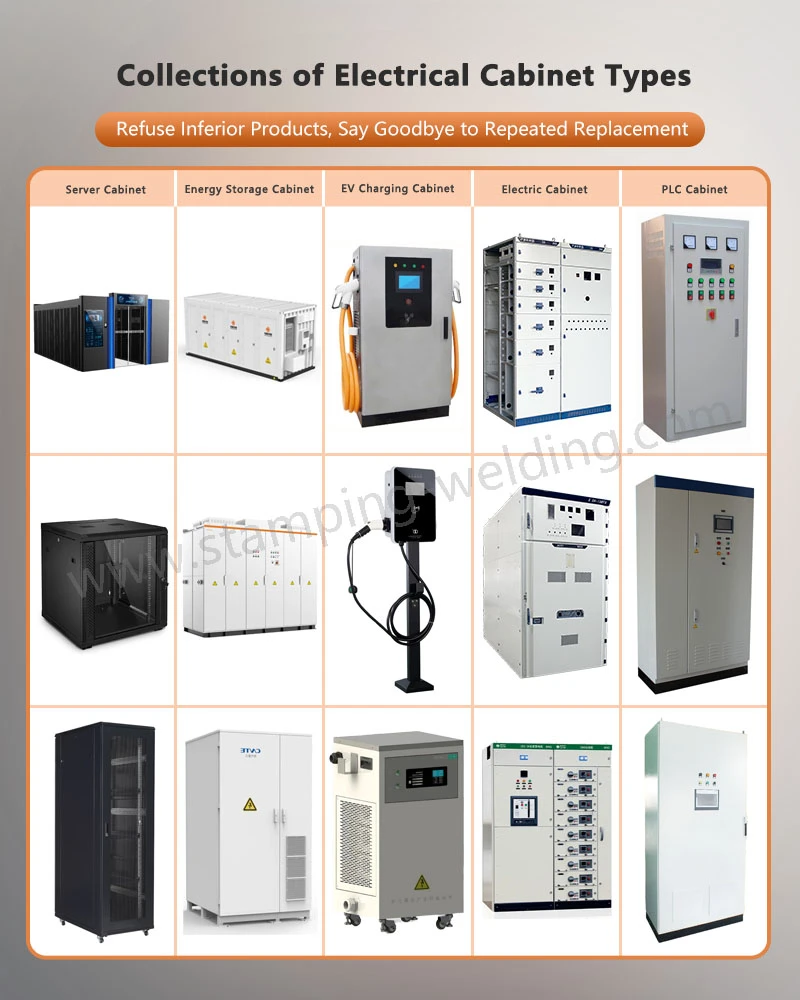
Driven by the development of new power systems, the expansion of new energy projects, and the ongoing upgrades to data center infrastructure, China's electrical enclosure industry is currently undergoing a phase of both product structural adjustment and technological iteration. As essential components in power transmission and distribution (T&D) and industrial control systems, electrical enclosures facilitate power distribution, circuit protection, equipment control, and operational monitoring. They are utilized across a wide range of sectors, including power grid infrastructure, new energy generation, energy storage systems, data centers, industrial automation, rail transit, and broader public infrastructure.
In terms of product categories, electrical enclosures primarily encompass high-voltage switchgear, medium- and low-voltage distribution cabinets, ring main units (RMUs), low-voltage control cabinets, PLC control cabinets, prefabricated substations, and various distribution enclosures for cables and fiber optics. As downstream applications increasingly demand higher reliability in power supply, greater equipment integration, and enhanced operational management capabilities, industry competition has shifted from basic enclosure fabrication toward structural design, intelligent power distribution, system integration, and precision manufacturing.
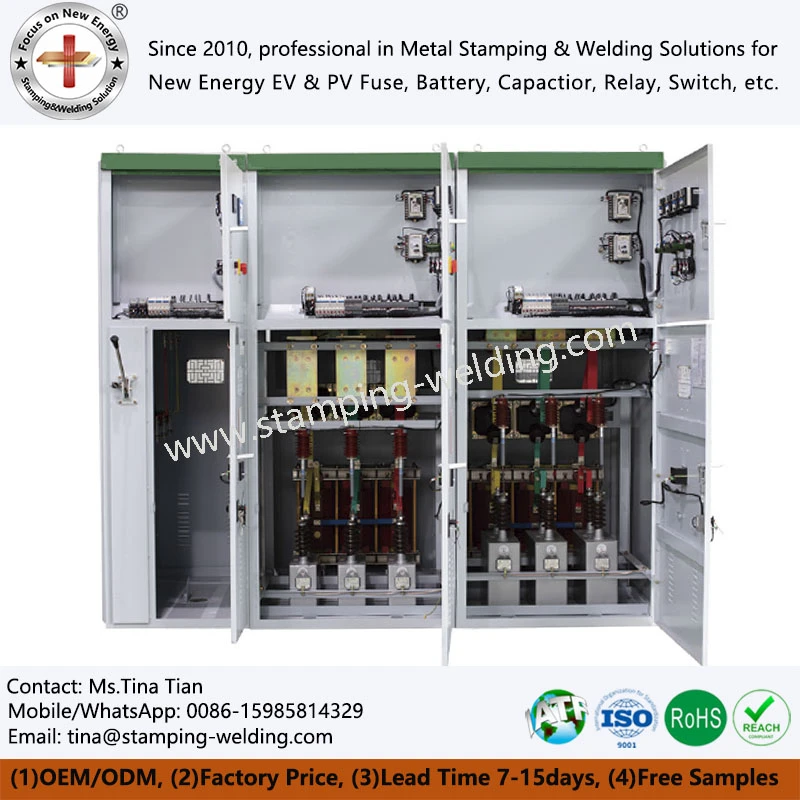
The modernization of power distribution networks and the development of new energy infrastructure are fueling industry growth
Since 2025, market demand for electrical enclosures has been characterized by a dual trend: the replacement of legacy power distribution equipment and the expansion into emerging application scenarios. Within traditional power systems, the automation of distribution networks, the replacement of aging switchgear, and the ongoing upgrades to urban and rural power grids continue to drive procurement demand for high- and low-voltage distribution equipment. As distribution systems evolve toward digitalization and intelligence, there is growing interest in equipment equipped with features such as condition monitoring, communication interfaces, and fault diagnostics.
The growth of the new energy sector has further broadened the scope for electrical enclosures. In photovoltaic (PV), wind power, and energy storage projects, AC and DC distribution cabinets, combiner units, and control cabinets are critical for the aggregation, distribution, isolation, and protection of electrical energy. In large-scale energy storage power stations and commercial/industrial energy storage systems, in particular, robust electrical connections and power distribution management are required to link battery clusters, power conversion systems (PCS), transformers, and grid-connection equipment. This necessitates more rigorous standards for internal layout, insulation, thermal management, and electrical safety within the enclosures.
The construction of data centers has also emerged as a key growth driver for the power distribution cabinet market. As server scale expands and power density per rack increases, data centers face growing demands for power continuity, distribution capacity, and precision in power management. Data center distribution cabinets must go beyond basic power distribution; they must also support modular deployment, equipment scalability, cable management, and operational status monitoring to accommodate data center infrastructure of varying scales.
Furthermore, sectors such as electric vehicle (EV) charging infrastructure, industrial automation, rail transit, petrochemicals, and metallurgy continue to drive demand for specialized power distribution and control equipment. Because different application scenarios vary in terms of voltage levels, load characteristics, environmental conditions, and protection requirements, electrical cabinet products are increasingly evolving toward greater specialization and scenario-specific designs.
Intelligence and Environmental Sustainability: Key Drivers for the Technological Evolution of Electrical Cabinets
Intelligence is a primary trend in the current technological development of electrical cabinets. While traditional power distribution equipment relies on circuit breakers, relays, and mechanical operating mechanisms for circuit control and protection, a new generation of intelligent distribution cabinets integrates modules for monitoring temperature, current, voltage, and localized operational status. These cabinets then transmit operational data to higher-level monitoring systems via communication interfaces.
By continuously collecting key electrical parameters, facility managers can more promptly identify abnormal temperature rises, load fluctuations, and potential faults. This reduces the burden of manual inspections and provides data-driven support for preventive maintenance. The value of an "intelligent distribution cabinet" extends beyond mere monitoring; it encompasses sensor placement, internal cable management, the integration of communication modules, and electromagnetic compatibility (EMC) design. The cabinet structure must provide adequate space for electronic components, control units, and auxiliary power supplies, while ensuring effective heat dissipation and electrical isolation during operation.
Environmental sustainability is also shaping the design of medium- and high-voltage power distribution equipment. Traditional gas-insulated switchgear (GIS) often utilizes sulfur hexafluoride (SF6) as an insulating and arc-quenching medium; however, SF6 has a high global warming potential. In response to increasingly stringent environmental standards, the industry is focusing on eco-friendly insulation solutions that employ dry air, nitrogen, or other alternative media. The selection of specific technical approaches requires a comprehensive evaluation based on factors such as voltage levels, insulation performance, equipment footprint, operating environments, and maintenance requirements.
Meanwhile, the manufacturing of electrical enclosures is evolving toward higher material utilization and greater structural reliability. By optimizing panel nesting, bending configurations, the layout of stiffeners, and connection methods, it is possible to meet mechanical strength requirements while effectively controlling both the weight of the enclosure and material consumption. For outdoor equipment, additional measures-such as anti-corrosion coatings, sealed structures, and waterproof designs-are essential to enhance the equipment's resilience against fluctuations in temperature and humidity, as well as exposure to dust and corrosive environments.
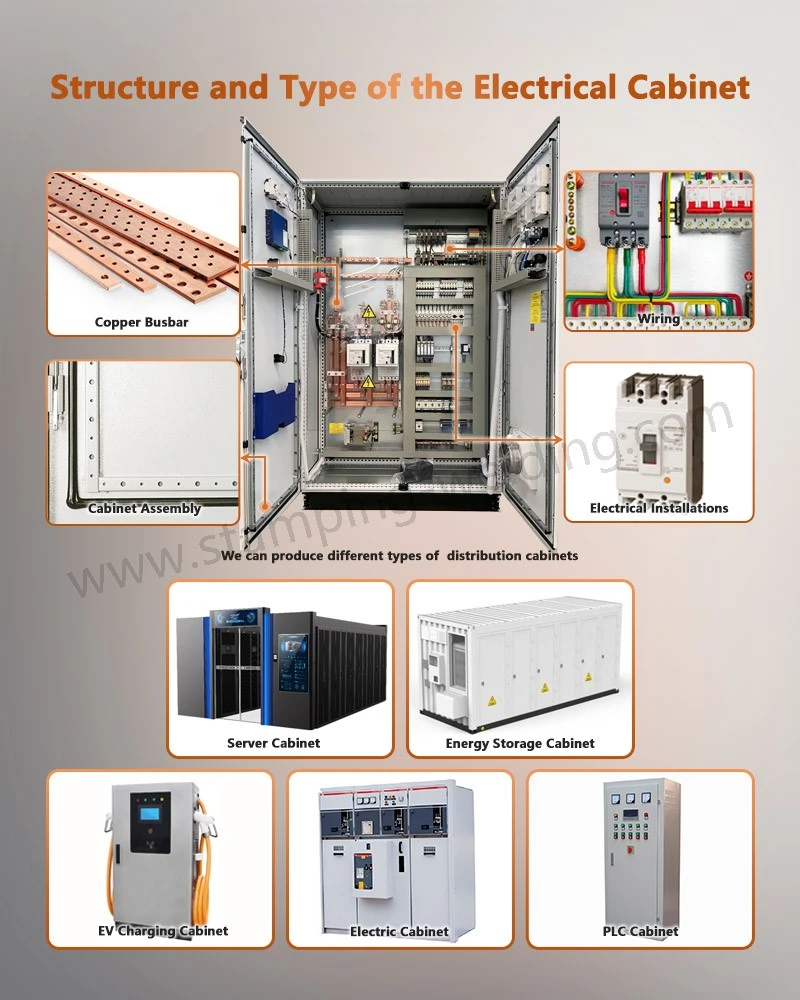
Modularization and Prefabrication Enhance Deployment Efficiency for Power Distribution Equipment
Modular design is transforming the way traditional electrical enclosures are manufactured and installed. While conventional enclosures often require site-specific structural configuration and internal component installation, modular design utilizes standardized functional units, mounting interfaces, and enclosure dimensions. This improves compatibility across different pieces of equipment, facilitating future maintenance, capacity expansion, and component replacement.
Modular distribution cabinets are typically designed with distinct zones based on power distribution circuits, functional units, and installation requirements. This approach reduces the need for on-site assembly and ensures greater consistency in equipment configuration. For large-scale industrial projects and data centers, modular structures help shorten deployment cycles and allow for system expansion in response to changing load demands.
In renewable energy power plants and major infrastructure projects, prefabricated power distribution modules and integrated equipment solutions are increasingly being adopted. These products typically undergo enclosure fabrication, equipment installation, internal wiring, and preliminary testing within a factory environment before being transported to the project site for final installation and system-wide commissioning. This manufacturing model shifts more quality control processes to the factory, minimizing the impact of on-site construction conditions on assembly quality.
With the advancement of DC power distribution and energy storage technologies, DC-based enclosures have emerged as a new product category. Compared to traditional AC power distribution systems, DC systems impose distinct design requirements regarding circuit protection, fault isolation, insulation clearances, and connection structures. Manufacturers must develop enclosure structures that account for system voltage, current ratings, short-circuit current levels, and equipment layout, ensuring that internal components have sufficient installation space and maintain safe clearances.
Enclosure Materials and Structural Design Influence Long-Term Operational Reliability
Electrical enclosures serve not only as housings for electrical components but also as critical mechanical structures that ensure the safe operation of the equipment. The materials used for the enclosure, the thickness of the panels, the quality of welding, surface treatment, and the sealing structure all influence a product's mechanical strength, corrosion resistance, and environmental adaptability.
Common materials for these enclosures include cold-rolled steel, stainless steel, galvanized steel, and aluminum alloy. Steel enclosures offer excellent structural strength and versatility in fabrication, making them well-suited for industrial power distribution cabinets, control cabinets, and outdoor equipment housings. Stainless steel is typically used in environments characterized by high humidity, strong corrosive agents, or strict hygienic requirements. Aluminum alloy, known for its lightweight nature and flexible processing options, can be selected based on specific load-bearing requirements and installation conditions.
Steel distribution cabinets are widely used in industrial and outdoor power distribution settings. Their manufacturing process generally involves laser cutting, CNC punching, bending, welding, grinding, and surface coating. The design of the enclosure must account for factors such as the rigidity of the door panels, the precision of mounting holes, the load-bearing capacity of hinges, and the layout of internal mounting rails-all to ensure that manufacturing tolerances or structural deformation do not interfere with the installation of electrical components.
For wall-mounted metal distribution equipment, key design considerations include the mounting method, load-bearing capacity, enclosure depth, and space for maintenance. Such equipment is commonly used in building power distribution, telecommunications infrastructure, industrial control, and small-scale power distribution systems. The design must accommodate internal component installation while also facilitating secure wall mounting, door operation, and convenient cable entry and exit.
Furthermore, outdoor power distribution equipment must be configured with features to protect against rain, dust, corrosion, and condensation. Components such as sealing gaskets, door locks, ventilation systems, and cable entry/exit interfaces are critical to the product's overall protective performance. The product's ingress protection (IP) rating should be determined based on its specific structural design and test results, rather than being inferred solely from the material type or external appearance.
The Evolution Toward Integration and Specialization in Cable and Fiber Optic Distribution Equipment
As industrial communications, smart grids, and data center network infrastructure continue to advance, cable and fiber optic distribution equipment has emerged as a significant specialized segment within the electrical enclosure industry. Compared to traditional power distribution cabinets, this type of equipment places a greater emphasis on line distribution, connection protection, port management, and the efficiency of long-term maintenance. Cable distribution cabinets are primarily used for the centralized management and distribution of cable lines.
Their design must account for factors such as the number of cables, bending radii, securing methods, cable entry/exit directions, and space for future maintenance. In the context of communication networks and fiber-optic access, the cabinet interior must also be configured to accommodate fiber splicing, fiber storage (coiling), adapter installation, and patch cord management.
Outdoor fiber-optic distribution cabinets are typically deployed at communication network nodes. They must be capable of withstanding environmental conditions such as direct sunlight, precipitation, temperature fluctuations, and dust. The cabinet structure must balance protective performance, space for fiber routing, and ease of on-site maintenance. The design of these cabinets-based on fiber capacity, installation method, and network topology-must ensure that fiber bending radii are maintained and that the internal layout does not become overly congested.
In large-scale fiber-optic networks, fiber distribution hub cabinets are used to centrally manage fiber lines and connection interfaces, thereby improving the efficiency of line identification, distribution, and maintenance. Modular fiber cabinets utilize modular trays, adapter panels, and internal mounting structures to adapt to varying fiber capacities and network expansion requirements.
As the construction of data centers and communication infrastructure continues, power distribution and fiber-optic distribution equipment often require integrated planning. Electrical cable distribution cabinets must be designed with consideration for cable types, installation locations, and maintenance requirements, ensuring clear routing paths and adequate isolation between different lines.
For projects requiring unified management of multiple communication and distribution interfaces, modular distribution structures-beyond standard fiber distribution hub cabinets-should be configured according to the scale of the local network to prevent inefficient space utilization or limitations on future capacity expansion.
Industry competition is shifting from low-cost processing toward comprehensive manufacturing capabilities
Currently, the Chinese electrical cabinet industry features a large number of participants, with the market exhibiting a clear, tiered competitive structure. The technical threshold for basic cabinet fabrication is relatively low; some companies compete primarily through sheet metal procurement, processing, and fundamental assembly. This has led to a high degree of product homogenization and intense price-based competition.
In contrast, the mid-to-high-end market places greater emphasis on product design capabilities, integrated technical solutions, quality management, and project delivery proficiency. Particularly in sectors such as power grids, new energy, data centers, and industrial automation, purchasers look beyond the external appearance and material costs of enclosures.
They also evaluate factors like electrical safety, structural integrity, insulation performance, thermal management, manufacturing precision, and batch consistency. Manufacturers with integrated capabilities-encompassing structural R&D, precision sheet metal fabrication, welding, surface treatment, and quality inspection-are better positioned to secure complex enclosure projects and customized assignments.
In terms of cost structure, fluctuations in the prices of steel, copper, and electrical components directly impact production costs. Purchased items-such as circuit breakers, protective devices, switching components, and control modules-account for a significant portion of the total cost of complete equipment assemblies. Consequently, companies must leverage supply chain management, structural optimization, and production planning to mitigate the risks posed by raw material price volatility and lead-time fluctuations.
Overseas markets offer new growth opportunities for domestic electrical enclosure manufacturers. Regions such as Southeast Asia, the Middle East, and North Africa have a growing demand for power distribution equipment, driven by power grid upgrades, new energy projects, and the development of industrial infrastructure. However, because electrical standards, certification systems, environmental conditions, and project acceptance criteria vary by country and region, products destined for export must undergo targeted design adjustments and compliance assessments.
Industry development continues to face challenges related to costs, supply chains, and technical standards
While the new energy and digital infrastructure sectors have created fresh market opportunities for the electrical enclosure industry, the sector still confronts several significant challenges.
First, the market for low-end enclosures is characterized by intense price competition. An over-reliance on low-margin, low-price orders can squeeze budgets for R&D and quality control, ultimately hindering long-term development. Furthermore, investment volatility in the traditional real estate sector and certain manufacturing industries can lead to fluctuating demand for power distribution equipment, resulting in unstable order cycles for manufacturers.
Second, reliance on external suppliers for core electrical components introduces supply chain risks. Variations in the lead times and pricing of critical items-such as circuit breakers, protective relays, and intelligent monitoring modules-can disrupt the production schedules for complete enclosure assemblies. To counter this, companies need to establish robust supplier management systems and account for component interchangeability and supply chain compatibility during the product design phase.
Moreover, as electrical enclosures become increasingly intelligent and integrated into broader systems, manufacturers must navigate more complex technical standards and rigorous quality verification requirements. Different application domains have distinct requirements regarding insulation, temperature rise, short-circuit withstand capability, mechanical protection, and electromagnetic compatibility (EMC).
Consequently, a standard, one-size-fits-all enclosure design cannot satisfy the requirements of every project. Conducting design verification, in-process inspections, and factory acceptance testing tailored to specific operating conditions is essential for enhancing product reliability.
In engineering procurement, greater emphasis is placed on how well an enclosure's structure aligns with the specific requirements of a project.
When procuring electrical enclosures or power distribution boxes, selection should not be based solely on external dimensions or material costs. Instead, it requires a comprehensive evaluation of the equipment's intended use, installation environment, internal component layout, cable entry/exit methods, ingress protection (IP) ratings, thermal management, and space for future maintenance. This is particularly critical for projects in data centers, renewable energy storage, and industrial automation, where the enclosure structure must be planned in tandem with the electrical system design. This proactive approach helps prevent issues such as installation interference, insufficient space, complex cable management, or inadequate heat dissipation.
During the custom manufacturing process, the purchaser can provide product drawings, enclosure dimensions, material specifications, sheet metal thickness, mounting hole configurations, surface treatment requirements, and the intended operating environment. This allows the manufacturer to assess the feasibility of sheet metal fabrication, bending, welding, assembly, and surface finishing. For large-scale projects, it is also necessary to establish clear dimensional tolerances, inspection standards, sample approval procedures, and delivery schedules.
For applications in power distribution, renewable energy storage, data centers, and industrial control, suppliers with expertise in precision sheet metal fabrication, structural design optimization, and consistent, high-volume manufacturing are best positioned to support a project-from initial drawing review and prototyping to final mass-production delivery. If you are developing custom electrical enclosures, power distribution boxes, or fiber-optic distribution cabinets, please share your specific application scenarios and technical drawings so that we can discuss material selection, structural design, manufacturing processes, and quality verification requirements in greater detail.
contact us