The Upgrading Industrial-Grade Busbar Heat-Shrink Insulation Technology: Driving Enhanced Safety in New Energy and Power Connection Systems
Nov 05, 2026
With the ongoing development of new energy vehicles, energy storage systems, photovoltaic power generation, and industrial power distribution equipment, there is an increasing demand for high-current electrical connection systems to offer superior insulation, heat resistance, and long-term operational stability. As critical conductive components within power equipment, busbars are responsible for power transmission and circuit connectivity; the quality of their surface insulation directly impacts the equipment's electrical safety, operational efficiency, and service life. Against this backdrop, heat-shrink insulation technology has emerged as a vital protective method for copper busbars and connection components used in new energy batteries.
Industrial-grade heat-shrink tubing for busbars is typically manufactured from polymer materials, such as cross-linked polyolefins. Through a radiation cross-linking process, a stable, three-dimensional molecular network is formed, allowing the material to shrink at a predetermined ratio upon heating and wrap tightly around the surface of the busbar. This heat-shrink capability accommodates various dimensions of conductive busbars, providing both electrical insulation and mechanical protection for exposed conductive surfaces, while simultaneously reducing the risk of accidental contact between adjacent conductors.
In practical applications, heat-shrink insulation serves not merely as a surface protective layer, but as an integral element of busbar structural design and electrical connection processes. For connection components that must be customized based on equipment space, installation dimensions, and electrical parameters, the use of copper busbars with heat-shrink tubing effectively integrates conductive structures with insulation, minimizing the need for secondary on-site processing and enhancing the consistency of component assembly.
Advancements in Heat-Shrink Tubing Materials and Cross-linking/Shrinkage Technology
The core performance of busbar heat-shrink tubing depends on the composition of the polymer material, the cross-linking process, and its shrinkage characteristics. Common materials include polyolefins, as well as certain fluoropolymers that offer exceptional chemical and temperature resistance. Through processes such as electron-beam irradiation, a stable, cross-linked network structure is formed within the material. During production, the tubing is expanded and set; when subsequently heated, it reverts to its pre-defined, shrunk state.
This molecular structure ensures that, once installed, the heat-shrink material provides excellent dimensional stability and robust mechanical protection. Compared to standard insulating sleeves, cross-linked heat-shrinkable materials can shrink to conform to the shape of a conductor. They are suitable for use on rectangular copper busbars, irregularly shaped connecting bars, and conductive components with varying cross-sectional dimensions.
Some heat-shrinkable products feature a dual-layer (inner and outer) structure. The outer layer provides electrical insulation, mechanical protection, and environmental shielding, while the inner layer consists of a hot-melt adhesive that softens during heating to fill interfacial gaps, ensuring a tighter fit between the sleeve and the covered component. Note, however, that not all busbar heat-shrinkable tubing utilizes a dual-layer design; the specific choice depends on the required protection level and the application environment.
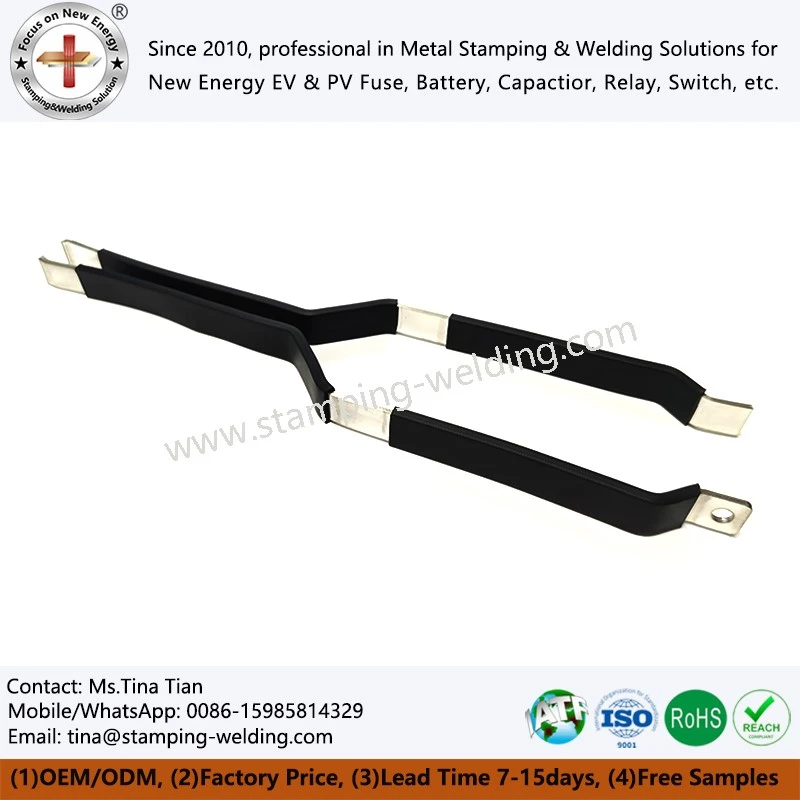
In new energy vehicles and industrial power distribution equipment, copper busbars covered with orange heat-shrinkable tubing are a common configuration. The orange insulation serves as a visual identifier for high-voltage electrical connections, facilitating equipment assembly, circuit inspection, and routine maintenance. In practice, color-coding requirements should be determined based on the equipment's voltage rating and relevant safety standards.
Insulation Performance and Environmental Resistance as Key Technical Indicators
The primary function of busbar heat-shrinkable tubing is to provide reliable electrical insulation for conductive components, while simultaneously protecting the conductor surface from moisture, dust, corrosive agents, and mechanical abrasion.
In terms of electrical performance, the insulating material must possess adequate dielectric strength, insulation resistance, and voltage-withstand capability. For low- and medium-voltage power distribution equipment, heat-shrinkable tubing enhances insulation between busbars, reducing the risk of short circuits caused by insufficient installation spacing or the ingress of foreign objects. It is important to note, however, that heat-shrinkable tubing cannot serve as a substitute for the electrical clearances, creepage distances, or other insulation safeguards mandated by the equipment's design specifications.
Temperature resistance is another critical factor in product selection. During long-term operation, busbars generate Joule heat, and connection points may be further affected by contact resistance and load fluctuations. Consequently, the long-term operating temperature rating of the heat-shrinkable material must align with the actual temperature rise of the busbars, the equipment's operating environment, and the requirements of the overall insulation system.
In applications subject to significant temperature fluctuations, it is also necessary to consider the material's shrinkage stability, flexibility, and resistance to cracking over long-term thermal cycling. Furthermore, flame retardancy, UV resistance, and chemical corrosion resistance are critical criteria for evaluating industrial-grade products. Since performance varies depending on the material and formulation, selection for engineering applications should be based on actual product test reports and relevant standards, rather than relying solely on the material's name to gauge its protective capabilities.
For connection structures that require both electrical insulation and precise dimensional fit, heat-shrink-insulated copper busbars offer an integrated solution. By combining the copper conductor with a heat-shrinkable insulating layer, this approach minimizes the dimensional deviations and assembly uncertainties often associated with traditional on-site insulation wrapping methods.
Integrated Application of Copper Busbars and Heat-Shrink Insulation
As electrical equipment trends toward greater compactness and higher power density, busbar connection structures are evolving from simple conductive components into integrated assemblies. While traditional bare copper busbars offer excellent electrical conductivity, their use in power distribution spaces-where multiple conductors are densely packed-necessitates additional considerations for inter-phase insulation, accidental contact prevention, and protection against external environmental factors.
Applying a heat-shrinkable insulating layer to the surface of a copper busbar enhances insulation at connection points while preserving the conductive path. These heat-shrink-insulated copper busbars are typically custom-designed based on the busbar's cross-section, length, bend geometry, and available installation space, ensuring the insulation layer conforms to the specific assembly structure.
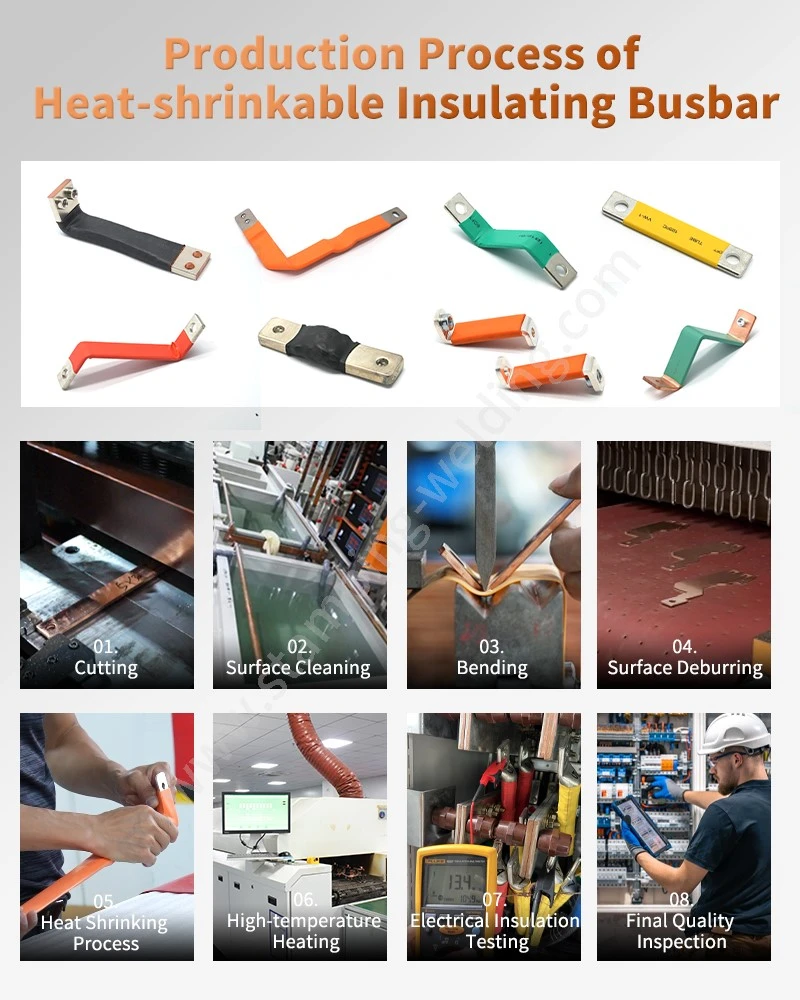
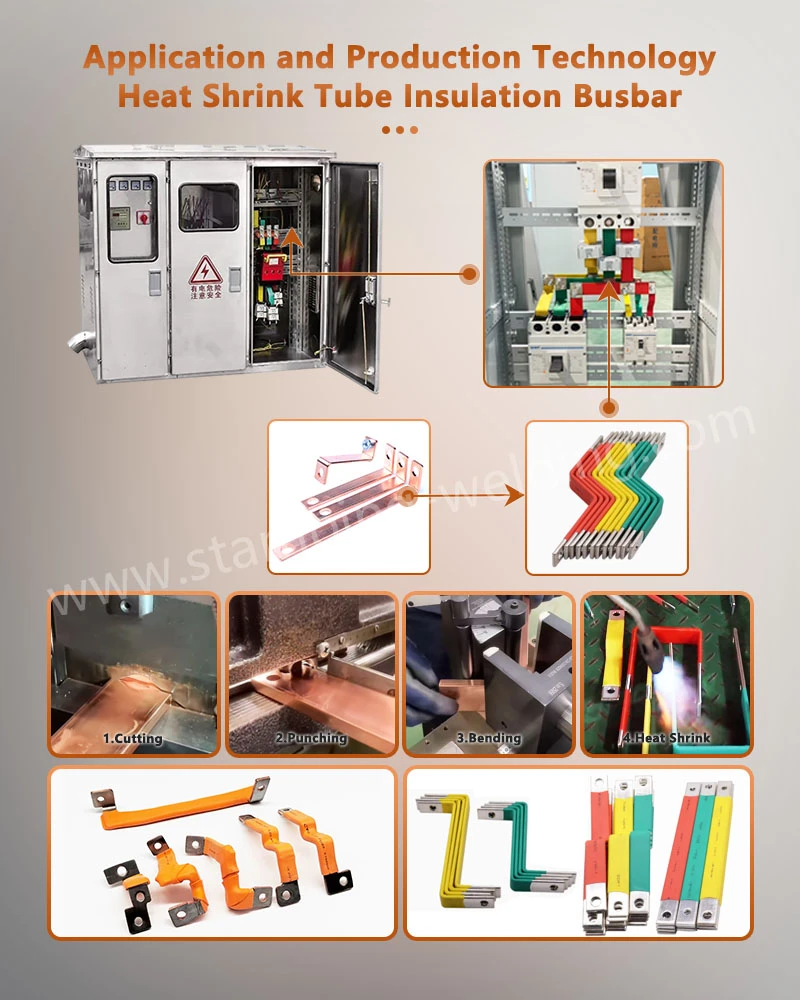
During the manufacturing process, the copper undergoes cutting, stamping, bending, drilling, deburring, and necessary surface treatments, followed by the application of heat-shrink tubing according to product specifications. For components featuring multiple bends or complex connection interfaces, it is essential to evaluate factors such as the shrinkage margin of the tubing, its adaptability to bends, and the integrity of the surface finish post-installation.
In new energy battery systems, flat copper busbars equipped with heat-shrink tubing are used for electrical connections between battery modules or at various electrical interfaces. Beyond meeting current-carrying capacity requirements, such components must also account for vibration, thermal cycling, spatial constraints, and insulation protection standards.
For connection points subject to relative displacement or vibration, an assessment of the actual operating conditions is required to determine whether a flexible connection structure is necessary; one should not rely solely on a heat-shrinkable insulating layer to manage mechanical stress.
Heat-Shrink Insulation Process and Quality Control in Busbar Manufacturing
The quality of heat-shrinkable busbar assemblies depends not only on the materials themselves but also on the precision of conductor machining, surface condition, and the heat-shrink application process.
First, before undergoing the insulation process, copper busbars must undergo dimensional inspection and edge treatment. Sharp corners or burrs resulting from stamping, cutting, or bending can damage the insulating layer during the heat-shrink installation or subsequent operation; therefore, surface conditions must be improved through processes such as deburring and chamfering.
Second, the shrinkage ratio must be determined based on the busbar's cross-sectional dimensions and the specifications of the heat-shrink tubing. Since various heat-shrink materials possess different radial shrinkage capabilities, selection must account for the inner diameter before shrinkage, the inner diameter after full shrinkage, and the wall thickness of the product. This ensures the tubing fully encapsulates the busbar without being excessively stretched or insufficiently shrunk.
For copper flat busbars utilizing PVC heat-shrink insulation, the compatibility between the PVC material and the busbar's geometry must be carefully considered during manufacturing. Different insulating materials vary in terms of temperature resistance, flame retardancy, and shrinkage characteristics; these must be verified against the specific operating environment.
Heat-shrink installation is typically performed using hot-air equipment. During the process, heat must be applied uniformly across the target area to prevent localized overheating, material scorching, or incomplete shrinkage. For products featuring an internal hot-melt adhesive layer, it is also essential to ensure that the adhesive melts sufficiently to create a bond that meets design specifications.
Following the heat-shrink process, the insulation layer must be inspected for defects such as wrinkles, air bubbles, damage, areas that are too thin, or incomplete sealing at the ends. For mass-produced items, technical specifications should dictate further checks-including dimensional verification, insulation performance testing, and, where necessary, withstand voltage testing-to ensure consistent quality across different production batches.
Growth in Demand for Insulated Busbar Components Driven by New Energy and Industrial Power Distribution
The ongoing development of new energy vehicles (NEVs), energy storage inverters, photovoltaic (PV) inverters, and industrial power supply equipment is expanding the application scope for high-performance busbars and their insulated components.
In the NEV sector, conductive connections within battery packs must meet stringent requirements for space utilization, mechanical reliability, and electrical safety. Copper busbars with heat-shrink insulation provide essential protective coverage, making them well-suited for battery packs and high-voltage power distribution architectures.
In energy storage systems, numerous high-current connection points exist between battery clusters, combiner units, and power conversion equipment. Busbars must not only feature a sufficient cross-sectional area to carry current but also satisfy requirements for temperature rise control, insulation protection, and long-term maintenance. Utilizing standardized insulated busbar components helps ensure consistent assembly of internal electrical connections.
For applications with limited space, copper busbars with heat-shrink insulation can be customized to fit specific installation interfaces, ensuring an optimal alignment between the conductive sections, connection holes, and insulated areas. This is particularly beneficial in equipment with dense, multi-circuit layouts, as it reduces the need for additional on-site insulation work during installation.
Furthermore, heat-shrink insulated busbars are increasingly used in industrial power distribution cabinets, uninterruptible power supply (UPS) systems, server power supply units, and other equipment requiring high-current transmission. Since different applications have varying requirements for insulation thickness, flame retardancy, operating temperature, and voltage withstand capacity, product design must be tailored to specific electrical parameters.
Synergistic Design of Busbar Surface Treatment and Heat-Shrink Insulation
Beyond the insulation material itself, the surface treatment of copper busbars significantly influences the performance of the entire connection assembly.
While bare copper offers excellent electrical conductivity, it is prone to oxidation when exposed to air over time. Depending on the requirements of the contact interface and the operating environment, surface treatments such as tin or silver plating can be applied to improve the condition of the contact surfaces and ensure stable, long-term electrical connectivity. When designing structures that utilize pure solid copper busbars with heat-shrink tubing, key considerations include the electrical conductivity of the copper, the thickness of the busbar, the positioning of connection holes, and the coverage area of the heat-shrink insulation.
The actual current-carrying capacity of a busbar cannot be determined solely by the material name; it must be evaluated based on factors such as cross-sectional area, installation method, heat dissipation conditions, and allowable temperature rise.
For components requiring tin plating, a design incorporating both a tin-plated copper busbar and an external heat-shrink insulating sleeve can be employed. It is important to note that the plating serves to enhance surface protection and contact characteristics, while the heat-shrink tubing provides external electrical insulation; these functions are distinct and cannot replace one another.
During the manufacturing process, care must be taken to ensure that the heating step for the heat-shrink tubing does not adversely affect the busbar's surface treatment, welded areas, or other functional components. For products involving welding, riveting, or composite joining, production sequences should be carefully planned, and critical connection zones must undergo rigorous quality inspection.
The Trend Toward Customization and Modularization in Heat-Shrink Insulated Busbars
As product platforms for new energy vehicles and energy storage systems continue to evolve, the structural configurations of busbar interconnects are becoming increasingly diverse. Variations in battery capacity, available installation space, and current ratings necessitate specific requirements for busbar dimensions, bending angles, connection hole placement, and insulating materials.
Moving forward, busbar manufacturing will increasingly focus on the integrated design of conductive structures and insulating protection. By consolidating processes such as precision stamping, CNC bending, surface treatment, and the application of heat-shrink tubing, manufacturers can improve dimensional consistency and reduce the labor required for on-site installation.
For battery system interconnects, EV battery connectors must not only meet fundamental current-transmission requirements but also address connection reliability, vibration resistance, electrical insulation, and spatial constraints. In high-voltage applications, in particular, the fit between connectors and busbars-as well as the insulation design-requires systematic validation.
Furthermore, the design of battery terminal busbars is increasingly shifting toward a modular approach. By combining standardized connection interfaces with customized conductive structures, these solutions can accommodate the installation requirements of various battery modules and power systems, thereby enhancing efficiency in both product development and equipment assembly.
In terms of industry trends, heat-shrink insulated busbars have evolved beyond simple combinations of copper bars and sleeves; they are now comprehensive connection components that integrate conductive materials, insulation, precision machining, and electrical validation. The quality of their manufacture directly impacts the safety, stability, and service life of electrical systems in the new energy sector.
For procurement projects involving new energy vehicles, battery manufacturing, energy storage systems, or industrial power distribution equipment, it is advisable to define key specifications-such as busbar material, conductive cross-sectional area, rated current, connection hole positioning, bending dimensions, surface treatment, heat-shrink insulation materials, and voltage withstand requirements-during the early stages of product development. Providing product drawings or samples for engineering evaluation is also recommended.
For projects with constrained installation space or complex connection geometries, further consultation regarding custom busbar design, precision machining, insulation sleeve selection, and volume manufacturing solutions is encouraged. Confirming technical parameters and quality acceptance criteria in advance helps minimize design changes and on-site assembly issues. We invite engineering and procurement teams to submit product drawings and technical requirements to initiate sample evaluation and inquiries for customized busbar connection components.
contact us