How to connect on copper busbars?
Apr 28, 2023
product definition
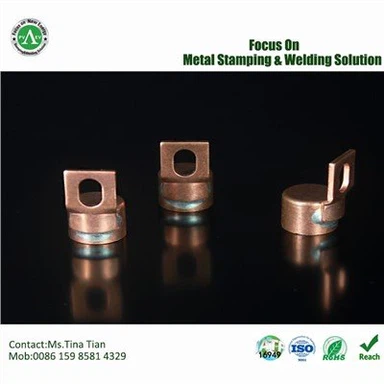
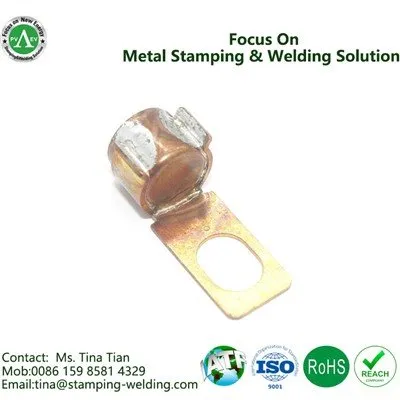
Customized busbars refer to conductive busbars that are specially designed and manufactured according to the voltage level, current carrying capacity, installation space and connection method of a specific electrical system. They are usually made of copper or aluminum as the base material and are made through processes such as cutting, bending, punching, tin plating or insulation coating. Different from standard cross-section finished copper bars, the core value of customized busbars lies in the "installation site-centered" design concept - it must not only meet the current carrying capacity, but also accurately adapt to the terminal spacing of the switchgear, avoid the interference area of other components in the cabinet, and achieve the optimal electrical path in a limited space. Industrial BusBar and BusBar Electric are common descriptions of this type of product. The former emphasizes its application attributes in industrial environments, and the latter highlights its essential function as a current distribution conductor.
Electric BusBar can also refer to the role of the bus itself as the "current highway" in the electrical system - it collects and distributes electric energy from the incoming end to multiple outgoing branches, replacing the messy wiring of multiple parallel cables and making the inside of the distribution cabinet neat and orderly. In the context of BusBar for Siemens or Copper BusBar for Siemens, the customized busbar needs to match the interface size and installation hole position of Siemens-specific switchgear (such as 8PT low-voltage cabinet or Sivacon busbar system). This requires manufacturers not only to master the general manufacturing technology of busbars, but also to be familiar with the mechanical interface standards of different brands of switchgear.

Material advantages
The material selection of a custom busbar directly affects its current carrying capacity, mechanical strength and long-term reliability. In terms of substrate, the most commonly used is electrolytic copper (grade C11000 or T2), with a copper content of not less than 99.9% and a conductivity of 97% to 101% IACS. For weight-sensitive applications (such as busbars in electric vehicle charging facilities), aluminum busbars (grade 1060 or 6061) can be used, which weigh only 30% of copper busbars, but have a current-carrying capacity of about 70% to 80% of copper for the same cross-sectional area. Tinned Copper BusBar refers to a copper busbar whose surface has been electroplated with tin. The main function of the tin plating layer is to prevent the copper matrix from oxidizing and sulfurizing in a humid or sulfur-containing environment, while providing a stable and low-impedance contact interface when bolted. The thickness of the tin plating layer is usually 8μm to 12μm, and can be thickened to 15μm for frequently plugged and unplugged connection points. For occasions that require direct overlapping with aluminum equipment terminals, the surface of the copper busbar should be tin-plated or nickel-plated to inhibit electrochemical corrosion between copper and aluminum. When choosing busbar materials, you also need to consider the long-term operating temperature - copper busbars allow continuous operating temperatures up to 120°C (limited by tin plating), while aluminum busbars are usually limited to 90°C.

Application industry
Customized busbars are widely used in power distribution, industrial automation, new energy power generation, rail transit and other industries. In the field of power distribution, low-voltage distribution cabinets, capacitor compensation cabinets and dual power switching cabinets in substations use a large number of customized busbars to connect circuit breakers, isolating switches and bus tie systems - BusBar in Substation is a typical representative of this scenario. The busbars in the substation are not only responsible for current transmission under normal working conditions, but also must withstand huge electric power when a short-circuit fault occurs without causing structural damage. In the field of industrial automation, in PLC control cabinets, variable frequency drive cabinets and soft start cabinets, customized busbars are used to connect the output of the rectifier module to the DC bus, or to connect the power inputs of multiple drives in parallel. Compared with cable connections, they can reduce line voltage drops and improve heat dissipation efficiency.
In the field of new energy power generation, customized busbars are responsible for high-current, low-inductance connections between photovoltaic inverters and the internal power modules of wind power converters. In the application of BusBar for Bussmann, the customized busbar needs to be used with Bussmann brand fuses or fuse-type isolating switches. At this time, the busbar needs to be accurately processed with mounting holes and positioning bosses that match the fuse terminals. As a professional manufacturer in the industry, BusBar Company usually provides value-added technical services such as bus impedance calculation, temperature rise verification and installation drawing in addition to standard bus bar products.

FAQ
Q: What are the problems when copper busbars and aluminum busbars are directly connected?
A: When copper and aluminum are in direct contact, electrochemical corrosion will occur in a humid environment, causing the contact resistance to continue to rise and generate heat. The correct approach is to install a copper-aluminum transition piece between the copper busbar and the aluminum busbar, or to tin/nickel the copper busbar connection surface before connecting it to the aluminum busbar.
Q: How to judge whether the cross-sectional area of the busbar is sufficient?
A: After running at full load for 1 hour, use an infrared thermometer to measure the surface temperature of the busbar (especially at the connection points and inside the bends). If the temperature exceeds the ambient temperature 40K (such as ambient 30°C, busbar 70°C) or exceeds the temperature rise limit specified by the equipment, the cross-sectional area is too small.
Q: Why does the bend of the busbar easily generate heat?
A: The copper material on the outside of the bend is stretched and the inside is compressed, resulting in a local increase in resistivity. In addition, when the bending radius is too small, the current line is distorted and the current density is concentrated on the inside of the bend. The solution is to control the bending radius to more than 2 times the thickness of the busbar.
Q: How to choose the type of busbar coating?
A: Ordinary indoor power distribution cabinets can be tin-plated; high-temperature environments (such as near heating elements) can be nickel-plated; high-frequency applications (such as inverters) can be silver-plated to reduce skin effect losses.
contact us
If you want to obtain a Custom Bus Bars solution and three-dimensional drawings for your current project, please submit the electrical parameters and installation interface dimensions, and the engineering team will provide a technical solution and quotation.