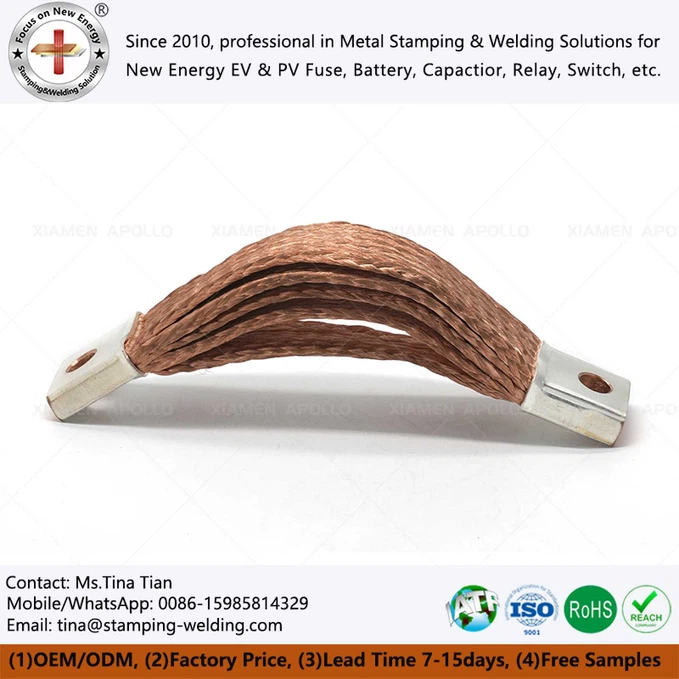
How to improve the temperature resistance of Braided Wire Copper Bus Bar?
May 16, 2026
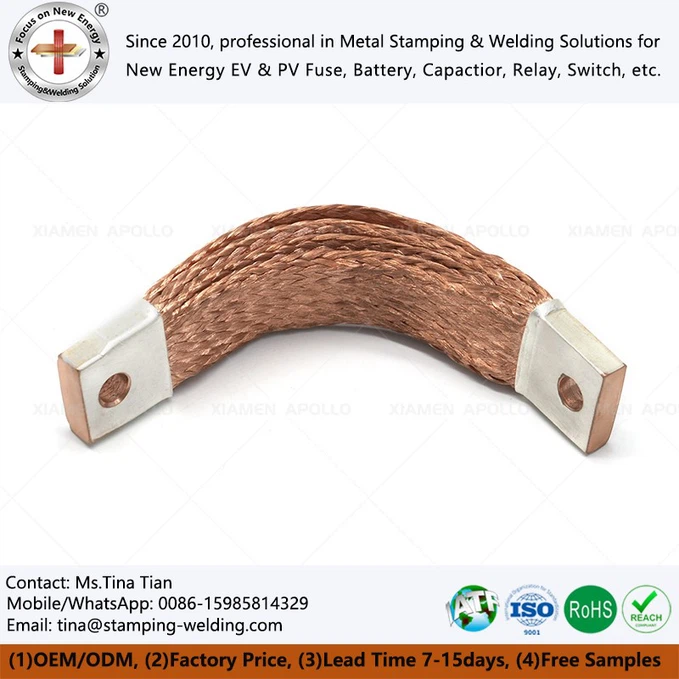
With the rapid development of new energy vehicles, energy storage systems, and high-power power electronic equipment, Braided Wire Copper Bus Bar, as key conductive connectors, directly determine the safety and reliability of the entire system due to their temperature resistance. Under the dual challenges of high temperature and high current, traditional bar solutions often face the risks of accelerated oxidation, insulation aging, and even thermal failure. To overcome this bottleneck, the industry is comprehensively improving the temperature resistance limit and long-term stability of braided wire copper bars from five core dimensions: optimizing busbar materials, improving surface treatment processes, upgrading insulation protection, refining structural processes, and improving system heat dissipation.
Material upgrade
The first step in improving temperature resistance is to reduce heat generation at the source and strengthen the heat-resistant substrate of the material. Replacing ordinary copper with high-purity oxygen-free copper (OFC) can significantly reduce impurity content and improve conductivity, thereby reducing Joule heating generated when current flows. Furthermore, to address the softening issue under high-temperature conditions, trace amounts of alloying elements such as silver (Ag), tin (Sn), or chromium (Zr) can be added to the copper matrix. This trace alloying treatment can significantly improve the creep resistance and softening temperature of copper, ensuring that the flexible bus bar is less prone to annealing deformation under sustained high-temperature environments and maintains excellent mechanical strength.
Surface coating treatment
Pure copper oxidizes readily at high temperatures, leading to a surge in contact resistance and a vicious cycle of overheating. Advanced surface plating processes can effectively isolate it from air and enhance its oxidation resistance. Silver plating, with its excellent high-temperature oxidation resistance (withstanding temperatures above 250℃) and superior conductivity, is the preferred choice for high-frequency or extremely high-temperature equipment. Nickel plating offers strong corrosion resistance and high-temperature resistance (up to approximately 300℃), making it ideal for harsh industrial environments. For conventional high-temperature applications, tin plating is an economical and practical solution, providing good oxidation resistance and typically meeting operating temperatures of 130℃ to 150℃ for Flexible Insulated Copper Bus bars.
Insulation protection iteration
Traditional PVC sheaths are prone to aging, melting, and even releasing toxic gases at high temperatures, making them unsuitable for the demands of modern high-end equipment. Currently, the industry is fully shifting towards insulation materials with higher temperature resistance. Silicone rubber insulation, with its excellent flexibility, aging resistance, and flame retardant properties, can typically withstand a wide temperature range of -60℃ to +180℃; fluoroplastics (such as FEP, PFA, and PTFE) insulation possesses outstanding high and low temperature resistance (typically withstanding -60℃ to +200℃ or even higher) and extremely strong resistance to acid and alkali corrosion. In applications with extreme fire resistance requirements, composite insulation structures using mica tape overlay and an outer fiberglass braided layer can withstand temperatures of several hundred degrees Celsius, providing indestructible protection for flexible bus bars.
Structural process optimization
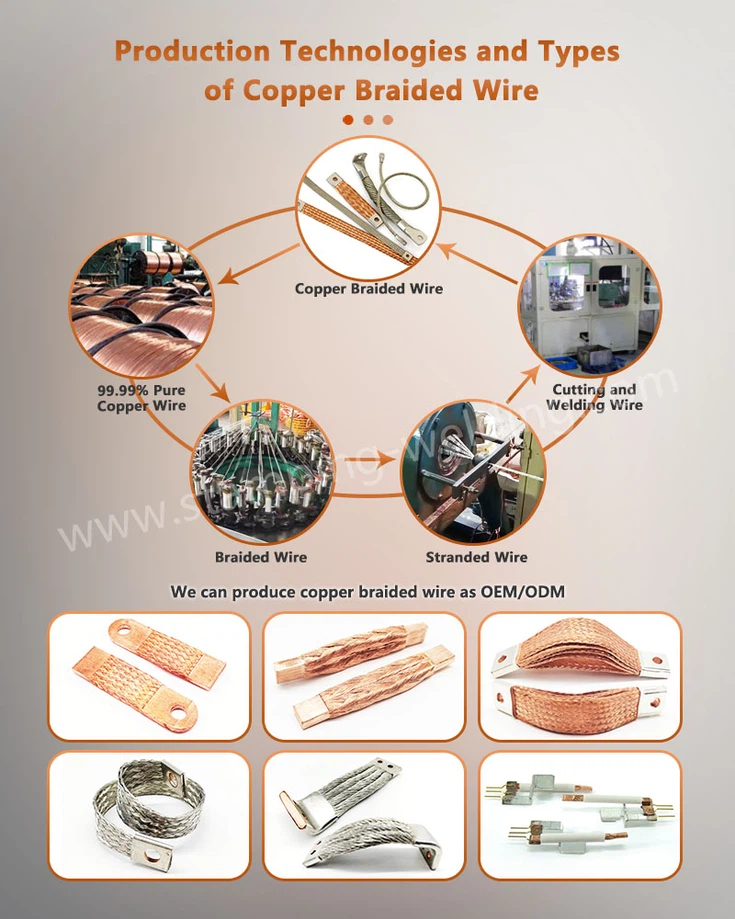
Refined manufacturing processes are equally crucial for improving current carrying capacity and temperature resistance. By increasing the cross-braiding density of the copper wires and employing advanced thermoplastic compression technology, the gaps between the copper wires can be significantly reduced, increasing the effective contact area, thereby lowering the overall resistance and raising the upper limit of temperature resistance. Simultaneously, high-quality heat-shrink tubing is used to seal and protect the connections at both ends of the bus bar, effectively preventing air intrusion and oxidation corrosion at high temperatures, ensuring the long-term electrical stability of the connection points.
Improved system heat dissipation
Besides improvements to the bar itself, enhancing the external operating environment is also crucial to preventing heat buildup. Where space permits, the bars can be vertically installed to increase air convection cooling, or aluminum or copper heat sinks can be added to the bus bars to expand the heat dissipation area. Furthermore, during installation, it is essential to ensure that the contact surfaces of the flexible bars with other electrical equipment (such as circuit breakers and transformers) are flat and secure, and that conductive grease is applied to further reduce contact resistance, thus preventing the formation of localized hot spots at the system level.
summary
In summary, improving the temperature resistance of Braided Wire Copper Bus Bar is a systematic project encompassing materials science, surface engineering, and structural design. Through comprehensive optimization across these five dimensions, not only can the service life of the busbars be significantly extended, but a solid guarantee can also be provided for the safe and stable operation of new energy and high-end power equipment.
Contact Us
If you are looking for Braided Wire Copper Bus Bar solutions using high-purity oxygen-free copper, silver/nickel plating, and high-temperature resistant insulation materials, please feel free to contact us. We will tailor a safe and reliable power transmission solution for you.