Evolution of core manufacturing processes and technologies for Automotive BusBar PET Insulation
May 16, 2026
In the wave of evolution towards higher voltage and higher power in new energy vehicles and energy storage systems, film capacitors, as key components of DC-Link, directly affect the safety and efficiency of the entire vehicle. As the "highway" for current transmission within the capacitor, the manufacturing process of Automotive BusBar PET Insulation is facing stringent challenges in achieving extremely low self-inductance, excellent insulation, and high current-carrying capacity. Currently, the core manufacturing processes in this field are undergoing in-depth optimization and technological upgrades around the following four key aspects.
Precision forming and surface engineering
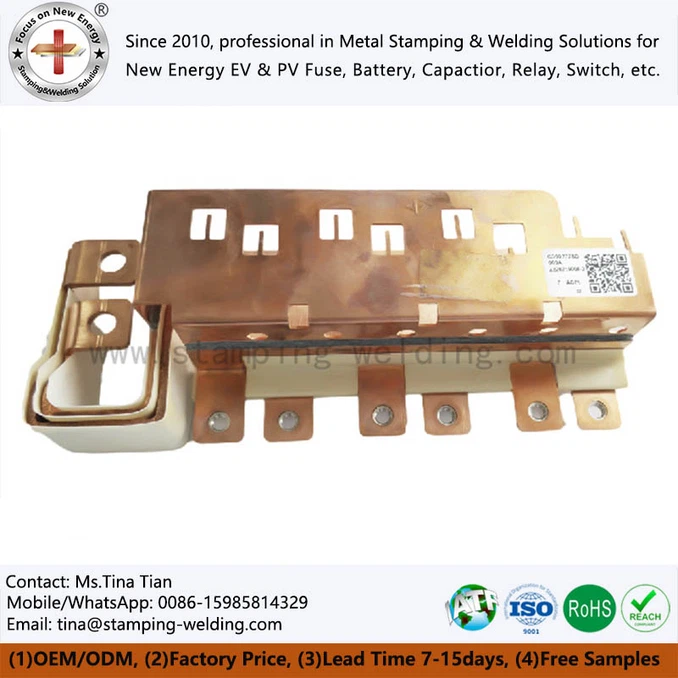
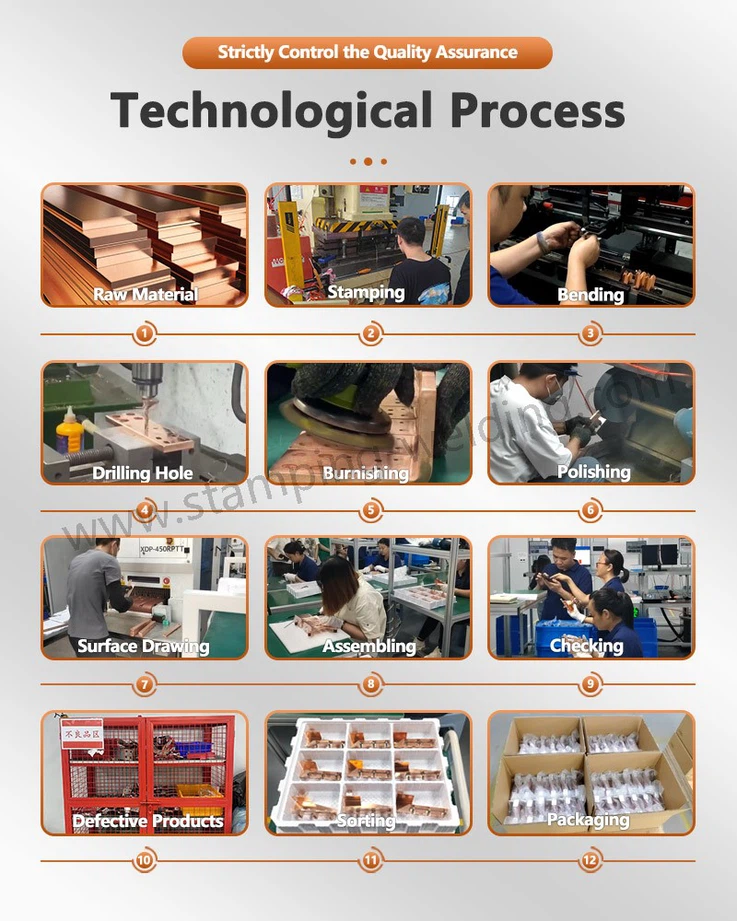
The processing precision of the busbar conductors directly determines the assembly quality and electrical performance of the components. In the cutting and blanking stage, the industry generally uses high-precision laser cutting or CNC stamping equipment to cut high-purity copper or aluminum plates with micron-level precision, ensuring that the basic geometry of the Copper Bar for Electric Vehicle Capacitors perfectly matches the design tolerances. Subsequent forming and bending processes utilize precision molds to achieve three-dimensional shaping of the busbar, meeting the compact internal space layout of the capacitor. Furthermore, surface treatment and cleaning are the cornerstones of long-term reliability. Through grinding, deburring, and chemical cleaning processes such as degreasing and passivation, impurities and oxide layers on the metal surface are thoroughly removed, providing a clean and active surface for subsequent insulation bonding and welding.
Insulation and lamination processes
Insulation performance is a prerequisite for the safe operation of busbars at voltage levels of 800V or even higher. In the insulation process, a high-performance insulating film such as PET (polyester) or PI (polyimide) is typically applied between the positive and negative bars or onto the conductor surface. Subsequently, advanced high-temperature hot pressing or lamination processes are used to achieve a tight molecular-level bond between the insulating film and the metal busbar. This process not only eliminates micro-bubbles between layers, preventing partial discharge, but also significantly improves the overall withstand voltage rating and insulation strength, creating highly reliable insulated bars.
Advanced connectivity technology
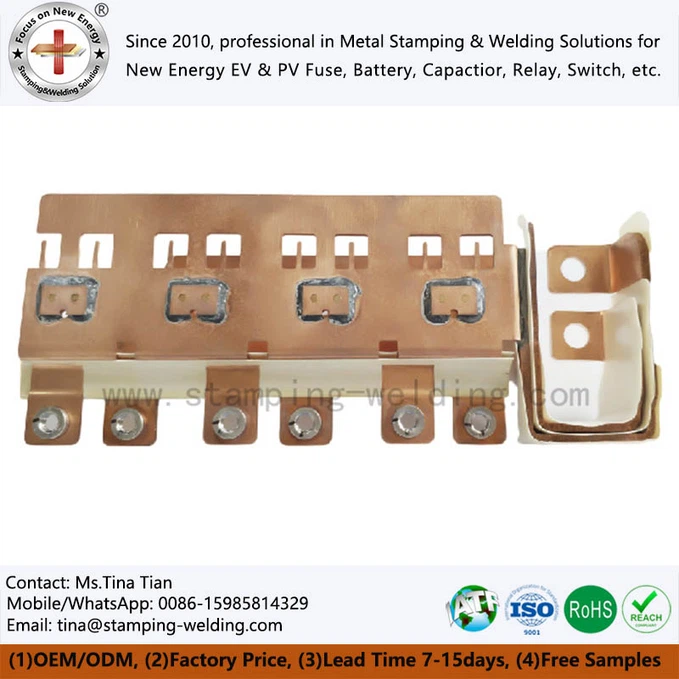
To reduce parasitic inductance and improve current transmission efficiency, connection and welding technologies are undergoing a leap from traditional processes to advanced manufacturing. In the terminal fixing stage, laser welding and precision crimping are gradually replacing traditional soldering. This solderless connection process not only achieves high-strength bonding of copper/aluminum materials but also significantly reduces contact resistance, avoiding the short-circuit risk caused by whisker growth. Meanwhile, integrated design has become an important trend in industry development. Modern EV Capacitor Busbars often combine with FPCs (Flexible Printed Circuits) or PCBs, using automated equipment to precisely cut and hot-press signal acquisition components and power transmission terminals, forming an intelligent component that integrates power transmission and status monitoring.
Rigorous packaging and full inspection
The final packaging and testing stage is the ultimate test before product delivery. The assembled capacitor busbar assembly is placed in a housing and vacuum-sealed with special epoxy resin or polyurethane. This process not only provides moisture and shock protection but also further enhances the overall insulation performance and mechanical strength of the assembly. During the electrical testing phase, each busbar must undergo rigorous testing of four core parameters: capacitance, loss tangent, insulation resistance, and withstand voltage, ensuring stable electrical characteristics even under extreme conditions such as high temperature, high frequency, and severe vibration.
summary
In summary, the manufacturing process of Automotive BusBar PET Insulation is a systematic engineering project integrating precision machining, materials science, and automated control. With continuous technological iteration, these processes will continue to drive the development of busbars for power capacitors towards lighter, smaller, and more efficient designs, providing solid hardware support for the widespread application of green energy.
Contact Us
If you are looking for Automotive BusBar PET Insulation solutions with precision molding, high-voltage insulation, and integrated capabilities, please feel free to contact us. We will safeguard your new energy projects with our top-notch manufacturing processes.