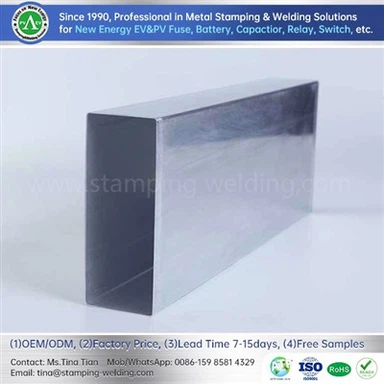
Improving electrical system performance: key advantages and application prospects of capacitor busbars for new energy vehicles
Aug 14, 2024
As an important development direction in the field of modern transportation, new energy vehicles (NEVs) are facing many technical challenges and opportunities. Among them, the performance of the electrical system is crucial to the overall performance of new energy vehicles. As a core component in the electrical system of new energy vehicles, the performance improvement of capacitor busbars directly affects the stability, efficiency and reliability of the power system. This article will explore the key advantages of capacitor busbars in new energy vehicles and look forward to their future application prospects.
The basic concept and function of capacitor busbar
The capacitor busbar is a conductive element that connects the capacitor to other components in the electrical system. Its main function is to achieve parallel connection of capacitors and ensure a stable supply of electrical energy. In the electrical system of new energy vehicles, the capacitor busbar is not only a simple connection tool for capacitors, but also has multiple functions such as regulating voltage, filtering, and reducing electromagnetic interference (EMI).
The design and manufacturing quality of the capacitor busbar directly affect the performance of the electrical system of new energy vehicles. Therefore, improving the performance of the capacitor busbar can significantly improve the working efficiency and reliability of the entire vehicle's electrical system.

Key advantages of capacitor busbars in new energy vehicles
1. Improve power conversion efficiency
The electrical system of new energy vehicles requires a large number of power conversion and storage operations, which place high demands on power conversion efficiency. Capacitor busbars can effectively reduce the loss during power transmission and improve power conversion efficiency through high-quality materials and precise design. For example, the use of high-conductivity materials can reduce the resistance loss of power during transmission, thereby improving the overall utilization of power.
2. Improve voltage stability
The stability and conductivity of capacitor busbars are crucial to voltage stability. Capacitor busbars can reduce voltage fluctuations through optimized design, thereby improving the stability of electrical systems. For example, the use of low-impedance capacitor busbars can effectively suppress voltage fluctuations and ensure the voltage stability of electrical systems under different load conditions. This is especially important for the power system and charging system of new energy vehicles, because voltage stability directly affects the operating efficiency of the motor and the safety of the charging process.
3. Reduce electromagnetic interference (EMI)
In the electrical system of new energy vehicles, electromagnetic interference (EMI) is an important issue. Capacitor busbars can reduce the generation and propagation of electromagnetic interference through reasonable layout and shielding design. For example, the use of good grounding design and high shielding performance materials can effectively reduce the impact of electromagnetic interference on the electrical system, thereby improving the anti-interference ability and overall reliability of the system.
4. Improve heat dissipation performance
Capacitors generate heat during operation, and heat dissipation directly affects the life of the capacitor and the stability of the electrical system. The heat dissipation design of the capacitor busbar is a key factor in ensuring the normal operation of the system. By adopting materials with good thermal conductivity and optimized heat dissipation structure, the capacitor busbar can effectively extract heat from the capacitor and keep the capacitor working within a suitable temperature range, thereby improving the overall performance and life of the electrical system.
5. Enhance mechanical strength and reliability
The electrical system of new energy vehicles needs to operate stably under various complex working environments. The mechanical strength and reliability of the capacitor busbar are crucial to the overall stability of the system. High-strength materials and precise manufacturing processes can improve the vibration resistance and mechanical shock resistance of the capacitor busbar, thereby enhancing the overall reliability of the system. For example, the use of high-strength aluminum alloy or copper alloy materials can improve the mechanical strength of the capacitor busbar and ensure stability under various working conditions.

Application prospects of capacitor busbars
1. Electric vehicles (EVs)
The electrical system of electric vehicles requires high power density and high efficiency. Capacitor busbars can meet the needs of high power density in electric vehicles by optimizing design and materials. For example, between the power battery and the motor of an electric vehicle, the capacitor busbar can provide a stable power supply and improve the operating efficiency of the motor. At the same time, by reducing electromagnetic interference and improving voltage stability, the overall performance and safety of electric vehicles are improved.
2. Plug-in hybrid electric vehicles (PHEVs)
Plug-in hybrid electric vehicles combine the advantages of internal combustion engines and motors, and the complexity of the electrical system is required to be higher. Capacitor busbars can ensure the stability of plug-in hybrid electric vehicles in different operating modes through efficient power conversion and stable voltage supply. For example, in electric mode, capacitor busbars can provide stable power support, and in hybrid mode, they can effectively balance the power demand between the internal combustion engine and the motor.
3. Hydrogen fuel cell vehicles (FCVs)
Hydrogen fuel cell vehicles rely on hydrogen fuel cells to generate electricity, and the electrical system requires efficient power management. Capacitor busbars can improve the conversion efficiency and stability of power in hydrogen fuel cell vehicles. For example, capacitor busbars can be used for power transmission between battery packs and motors, improving the starting performance and operating efficiency of motors. At the same time, by reducing electromagnetic interference and improving heat dissipation performance, the overall reliability of hydrogen fuel cell vehicles can be improved.
4. Future technological development
With the continuous advancement of new energy vehicle technology, the performance requirements for capacitor busbars are also increasing. In the future, capacitor busbars will develop towards higher conductivity, lower resistance loss and better heat dissipation performance. At the same time, with the intelligent development of new energy vehicles, the design of capacitor busbars will pay more attention to compatibility with intelligent control systems to achieve more efficient power management and more stable electrical systems.

Conclusion
Capacitor busbars play a key role in the electrical system of new energy vehicles, and their performance directly affects the stability, efficiency and reliability of the electrical system. By improving the conductivity, voltage stability, electromagnetic interference suppression, heat dissipation and mechanical strength of capacitor busbars, the overall performance and safety of new energy vehicles can be significantly improved. In the future, with the continuous development of new energy vehicle technology, capacitor busbars will play a more important role in power conversion and management, providing strong support for the popularization and development of new energy vehicles.
our Products
Experience the perfect combination of excellent performance and cutting-edge technology with our EV Capacitors Copper Busbar. We use high-purity copper materials and advanced precision processing technology to ensure that each busbar has ultra-high electrical conductivity and strong mechanical strength to meet the stringent requirements of high-load and high-current environments. Precision tin plating further improves corrosion resistance and welding performance, making the product stable and reliable under various harsh conditions. Our busbars are widely used in battery systems, motor drive systems, charging systems and other fields, ensuring the efficient operation and long-term stability of the electrical system of new energy vehicles. Through environmentally friendly and energy-saving production concepts and efficient customer service, we are committed to providing you with high-quality, low-impact solutions.

contact us