


Key points of structure and process design for Lifepo4 Power Cells
Feb 24, 2026
Core characteristics and structural composition of batteries
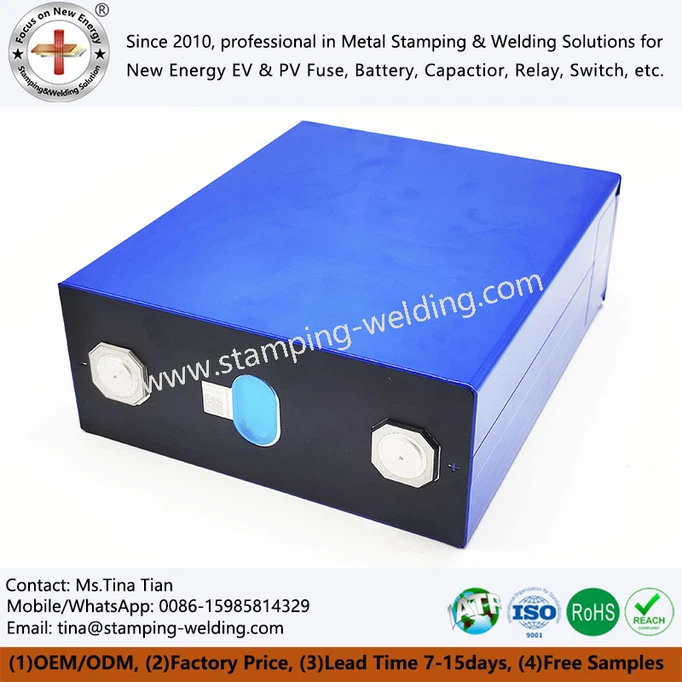
Lifepo4 Power Cells is a lithium-ion battery category with an aluminum alloy shell. The core consists of battery cells, electrolyte, shell, top cover, and other components, which are laser welded to form a sealed whole. Its working principle is based on the migration of lithium ions between the positive and negative electrodes to achieve energy storage and release. This type of Power Battery Cell has multiple significant advantages. The aluminum alloy thin shell design significantly reduces the overall weight of the battery, while balancing portability and usability; The structural characteristics of the alloy shell enhance the safety performance of the battery, effectively preventing the risks of combustion and explosion; The chemical stability of aluminum shell combined with non flammable electrolyte further extends the service life of the battery; The structural design of square battery cells improves space utilization and makes Lithium ion Batteries more resistant to external damage. With these advantages, square aluminum shell Lithium-ion Batteries are widely used in the field of new energy, especially becoming one of the core energy components of electric vehicles and portable electronic devices.
Core Process and Quality Control of Electrode Manufacturing
Electrode production is the fundamental process of Lifepo4 Power Cells production, covering key steps such as mixing and pulping, coating and slicing, rolling, slitting, and laser electrode ear forming. The parameter control and operation specifications of each step directly determine the quality of the electrode. There are two processes for mixed material pulping: wet process and dry process. The wet process has short time consumption and good flowability of the slurry, while the dry process can achieve high dispersion of the slurry. Both processes require control of material physicochemical characteristics, stirring speed and time parameters to ensure uniform dispersion and good settling of the slurry. At the same time, it is necessary to avoid problems such as impurity mixing and prolonged storage of the slurry. Screening treatment before discharge can also effectively prevent subsequent coating breakage. Coating films can be coated with single-sided or double-sided gap coating methods, which require precise control of the tape speed, slurry flow rate, oven temperature and humidity, etc. The focus is on monitoring the density, size, and appearance of the extreme surface to avoid misalignment, coating cracking, and negative and positive surface density issues. The stability of coating parameters directly affects the capacity and safety performance of Lithium Batteries. The rolling process uses rollers to compact the polarizer, with the core controlling the main cylinder pressure, tension in each link, and rolling speed. It pays attention to the uniformity of polarizer compaction density and thickness rebound, and promptly solves common defects such as sickle bending, wavy edges, and broken strips. Slitting and laser ear forming require control of parameters such as tension, speed, and power to ensure precise width and ear size of the electrode without obvious burrs. To address the issue of powder loss in slitting electrode pieces, comprehensive solutions can be taken from optimizing materials, adjusting process parameters, controlling coating thickness, and improving the production environment of LIthium-ion Batteries for Solar Products.

Key processes and technical requirements for battery cell assembly
Cell assembly is the core process of converting the completed electrodes into cells, including winding/laminating, hot pressing and Hi Pot testing, welding, encapsulation, sealing testing and baking. The core requirements of Lithium SuperPack Batteries are to ensure stable cell structure, good insulation and sealing compliance. The winding process requires the positive and negative electrode sheets to be rolled together with the diaphragm through a needle winding mechanism, strictly controlling the winding tension, speed, and end to end wrapping. Multi stage correction is used to ensure the alignment of the positive and negative electrode sheets, ensuring that the negative electrode sheet completely wraps around the positive electrode sheet in both the horizontal and vertical directions. Solar Energy Storage Systems Lithium Batteries Pack avoids problems such as deformation of the core "S" caused by tension fluctuations, poor coverage of the electrode sheet, and the mixing of metal foreign objects, preventing the risk of short circuit and lithium deposition in the battery cell. Hot pressing and Hi Pot testing require controlling the pressure, temperature, and time of the hot pressing process. Hi Pot testing is used to detect the presence of particles, foreign objects, and damaged membranes inside the battery cells. Lithium Battery Pack screens out defective cells with potential short-circuit hazards. The welding process includes ultrasonic welding and laser welding, which control parameters such as welding energy, amplitude, laser power, and defocus to ensure that the welding tension and appearance meet the standards; The encapsulation of the Mylar film into the shell must ensure a smooth coating and precise control of the insertion thrust. The assembly accuracy of the lithium battery is controlled by pressure sensors and CCD detection.
Key points of liquid injection sealing and chemical separation process
The injection sealing and capacity separation are the final key steps in the finished production of Lithium-ion Battery Pack, including injection, sealing nail welding, airtightness testing, formation, aging, capacity separation, and performance testing. Lithium batteries directly determine the final performance and quality of the battery. The injection process requires the electrolyte to be sucked into the battery cell under high vacuum environment, and the vacuum degree, static positive and negative pressure, and cycle times before injection should be controlled. The injection volume should be controlled by the weight difference before and after injection of the battery cell; The laser welding of sealing nails must ensure the airtightness and explosion-proof strength of the welding. After welding, a secondary hydrogen test should be conducted. The Battery Pack Kit confirms whether the cell seal meets the standard by detecting the hydrogen leakage rate. The chemical conversion process activates the active materials inside the battery cell through low current charging, forming a stable SEI film on the electrode surface, providing a guarantee for the cycle life of lithium batteries; The aging process stabilizes the initial performance of the battery, and the subsequent secondary injection replenishes the internal electrolyte of the battery cell. The capacity division process calibrates the actual capacity of the battery cell through charging and discharging, and conducts OCV testing to detect the IMP, voltage drop, and other electrical performance indicators of the battery cell. For lithium batteries, insulation testing and size inspection of the battery cell are also required. Finally, the performance of the Lithium Ion Battery for Solar Energy System is comprehensively judged by measuring K values and other methods.
contact us
If you have any related needs for Lifepo4 Power Cells process design and customized solutions, please feel free to communicate with us at any time. We will provide you with targeted answers and services based on our professional skills and rich experience. We look forward to your inquiry.


