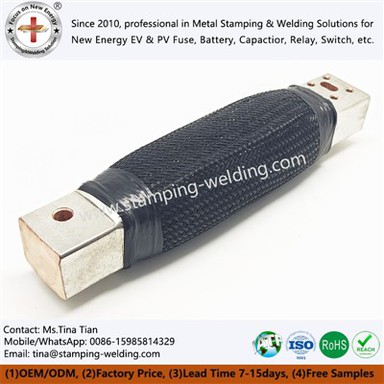
Technical description of Flat Bar Red Pure Copper Nickel Plating
May 15, 2026
definition and technical characteristics
A copper nickel-plated flat hole cable connector is an electrical connection device used for cable terminals. Its name is broken down as follows: Material basis - copper: Copper has excellent electrical and thermal conductivity, low resistivity, can effectively transmit current and reduce energy loss and heat generation. It is a classic material for electrical connections. Surface treatment - nickel plating: A nickel metal layer is covered on the surface of the copper substrate through an electroplating process. The main functions include: significantly improving corrosion resistance and resisting erosion by moisture, salt spray and some chemicals; increasing surface hardness and wear resistance to maintain stable contact in a vibration environment; providing good solderability and preventing the oxidation of the copper substrate to form a non-conductive oxide film. This process is also suitable for the surface protection needs of Nickel Plated Copper Busbars and other similar products.
Structural features - flat hole: The interface used by the connector to insert wires or connectors is flat in shape. Compared with round holes, the flat hole design facilitates firm plane contact with flat busbars, busbars or special connecting pieces. A larger contact area and stable mechanical connection can be obtained through bolt tightening, which is especially suitable for situations where large currents or reliable fixed connections are required. This structure is also a common form in the design of Nickel Plated Copper Flat Bus Bar. Functional positioning - cable joint: As a cable terminal device, it is used to achieve safe electrical connections between cables and equipment or between cables and cables. In summary, this product uses copper as the conductor core, the surface is protected by nickel plating, and adopts a flat hole-shaped connection structure, taking into account excellent electrical conductivity, environmental tolerance, and stable mechanical connection.

Manufacturing process and quality control
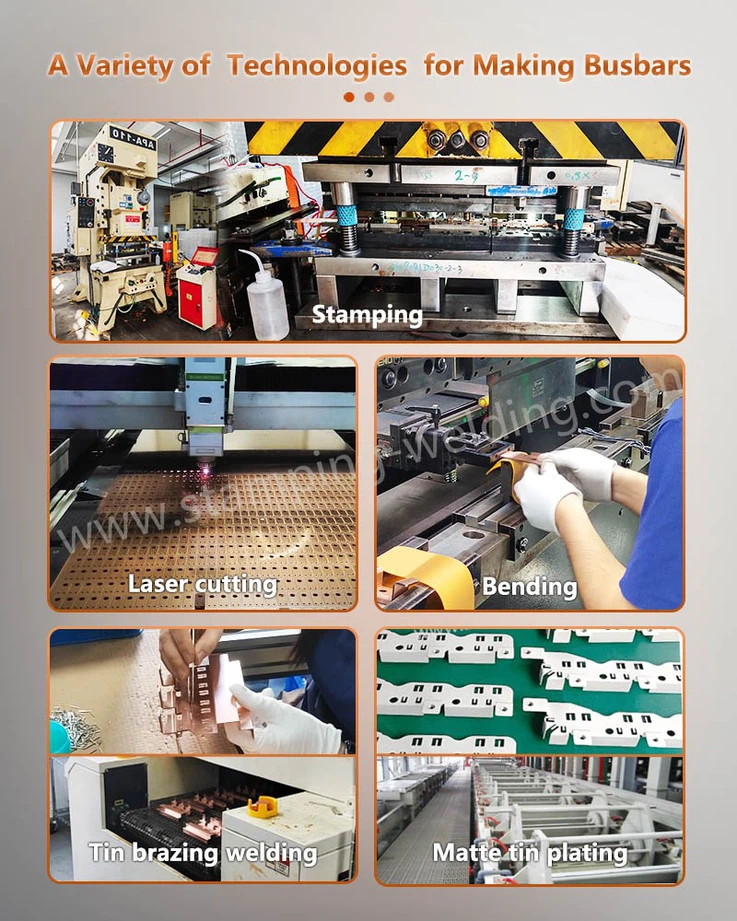
The production of high-quality copper nickel-plated flat hole cable joints relies on rigorous technology: Material selection: Use high-purity copper (such as red copper) to ensure the starting point of electrical conductivity. Precision processing: Through cold heading, stamping or cutting and other processes, the flat hole joint blank is processed into a precise size to ensure accurate hole size and smooth surface without burrs. Electroplating process: The key links include pre-treatment (cleaning, degreasing, activation), nickel plating (pre-plating and main plating to enhance bonding force and thickness uniformity), and post-treatment (passivation, drying). Coating thickness, uniformity and bonding strength are core indicators, which directly affect the anti-corrosion effect and service life. The workmanship standards of Standard Nickel Plating Flat Busbar are highly consistent with this type of connector.
Quality inspection: Finished products are subject to dimensional accuracy inspection, coating thickness measurement (such as eddy current thickness gauge), salt spray test (corrosion resistance), conductive performance test (contact resistance) and mechanical strength test (bolt torque), etc. When selecting a product, users should pay attention to whether the product complies with relevant industry or national standards, and clarify parameters such as rated current, voltage level, applicable cable specifications, and coating thickness.
Technical advantages
This connector is not suitable for every application and is designed to address specific engineering needs: High reliability connection: The flat hole structure is matched with bolt crimping, the connection strength is uniform, the contact resistance is low and stable, and it is not easy to loosen due to vibration. It is suitable for high reliability requirements scenarios such as inside equipment, power distribution units and heavy industrial machinery. Large current carrying capacity: Large contact area and excellent conductive materials can effectively carry higher rated currents and reduce heat generation at joints. They are often used as current collection and distribution points in power transmission, new energy equipment (such as photovoltaic inverters, battery pack connections), rail transit and other fields. Nickel Plated Copper Bus Bar also plays a key role in this type of application.
Harsh environment adaptability: The protection provided by nickel plating can cope with industrial environments with humidity, high salinity (such as coastal areas) or the presence of slightly corrosive gases, and has a longer maintenance-free period than ordinary copper joints. Convenient installation and inspection: the flat hole structure is intuitive, the bolt tightening method is simple and reliable, and the installation tools are universal; the connection status is easy to visually or tool inspect, and maintenance is convenient. Typical applications include: main power access point of industrial automation control cabinet, battery connection of large UPS system, busbar terminal of distribution box, internal power interconnection of special equipment, etc.

Key points for installation and use
Correct installation is a key link to ensure joint performance: Cable pretreatment: Precisely strip the insulation layer according to the stripping length required by the connector to avoid damaging the conductor. Stranded copper wires can be properly twisted and pre-crimped using wire noses if necessary. Contact surface treatment: Before installation, check the inside of the flat hole and the metal surface to be connected (such as busbar) to keep it clean, flat, and free of oxide layer or dirt. If necessary, use special electrical cleaner to clean.
Fastening connection: Insert the treated cable end or connecting piece into the flat hole, and select matching bolts, nuts, flat washers and spring washers. Use a calibrated torque wrench and tighten evenly according to the torque value required in the product manual. Insufficient torque may lead to increased contact resistance and overheating, while excessive torque may damage the threads or crush the conductor. Protection and inspection: After the connection is completed, an appropriate amount of conductive paste (anti-oxidation, anti-corrosion) can be applied or an insulating protective cover can be installed according to environmental needs. During regular inspections, pay attention to check the connection points for signs of abnormal heating, discoloration, looseness or corrosion.

contact us
We are committed to providing stable, weather-resistant and reliable Flat Bar Red Pure Copper Nickel Plating solutions for industrial automation, new energy, power distribution and other scenarios. Our products have uniform coating, excellent conductivity and precise dimensions, which can meet engineering needs under various harsh working conditions. Industry customers are welcome to negotiate purchases and technical exchanges.